Clear Sky Science · en
The impact of trust in AI on digital innovation examining the moderation of intellectual capital and task characteristics
Why our confidence in smart machines matters
As more companies rely on artificial intelligence to design products, analyze markets, and guide strategy, a simple question becomes crucial: how much should managers trust these tools? This study looks at how senior managers’ trust in AI shapes their firms’ digital innovation, and finds that both too little and too much confidence can quietly undermine creative progress.

Finding the sweet spot of trust
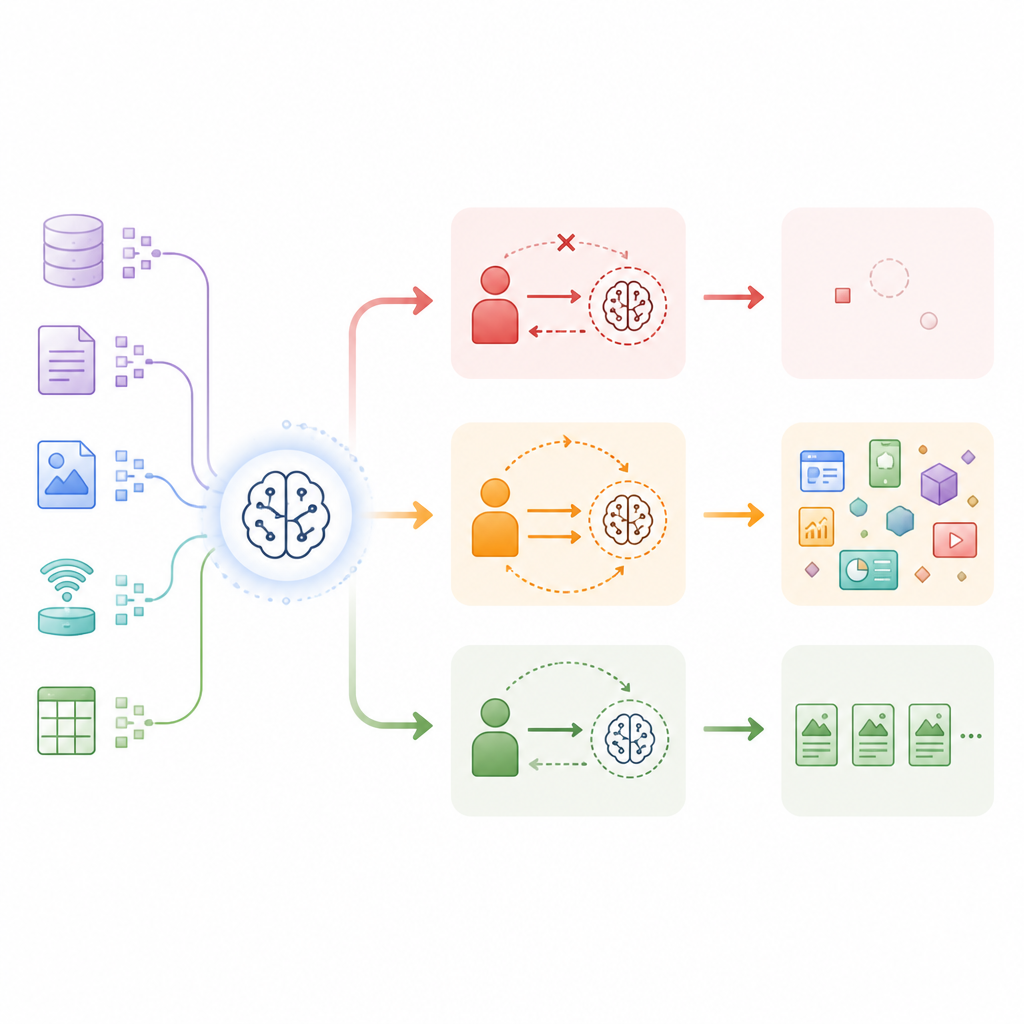
The researchers surveyed 269 senior innovation managers in Chinese firms that already use AI in their work. Instead of asking only whether AI is adopted, they focused on trust: do managers believe AI systems are capable, well intentioned, and consistent with company values? They then compared these beliefs with how managers rated their firms’ digital products and services relative to competitors. The pattern that emerged was not a simple straight line. Moderate trust in AI was linked with the strongest innovation, while very low and very high trust were both associated with weaker results.
When AI lifts the creative load
The first part of this pattern comes from what the authors call the technology driven side of AI. When managers trust AI enough to use it actively, it can automate routine analysis, scan huge amounts of data, and suggest patterns that people might miss. This frees managers to focus on creative choices, long term direction, and cross team coordination. In this balanced zone, people and machines complement each other: AI sifts and recombines information, while humans judge context, set goals, and imagine new offerings. Firms in this zone tend to turn data into sharper insights and more timely digital innovations.
When overconfidence becomes a hidden trap
The second part is the darker side, which the authors describe as a wicked curse. When trust in AI grows too high, managers may stop questioning its outputs. They check data less carefully, overlook bias or errors, and gradually hand over more judgment to algorithms. Over time, this can dull human skills such as critical thinking, intuition, and the ability to spot unusual signals. Innovation then becomes more uniform and fragile, because decisions follow the same automated path and ignore quirky or uncomfortable information that often sparks real breakthroughs.
Why people, tasks, and data change the picture
The study also shows that this trust curve shifts depending on what the company is like and what kind of work AI supports. Firms rich in intellectual capital that is, with skilled employees, strong processes, and deep relationships with partners can enjoy the benefits of AI over a wider range of trust. Their people are better at interpreting AI advice, their routines add checks and balances, and outside partners bring fresh perspectives. Complex tasks make both the upside and downside of trust stronger: AI is more helpful, but mistakes are harder to catch. High quality data improves the payoff from trusting AI and delays problems, but does not remove the risk that managers may still stop questioning the system.
What this means for future innovation
In plain terms, the article concludes that AI supports digital innovation best when it is treated as a powerful partner, not an unquestioned oracle. Managers should build enough trust to use AI boldly, while keeping their own judgment, oversight routines, and learning habits active. Strong human skills, clear processes, good relationships, and sound data can widen the safe zone, but none of them replace the need for constant, thoughtful checking of AI driven decisions.
Citation: Lin, X., Wu, C., Wang, T. et al. The impact of trust in AI on digital innovation examining the moderation of intellectual capital and task characteristics. Sci Rep 16, 15399 (2026). https://doi.org/10.1038/s41598-026-46103-x
Keywords: trust in AI, digital innovation, human AI collaboration, intellectual capital, data quality