Clear Sky Science · en
The de novo transcriptome of the freshwater copepod Cyclops abyssorum tatricus reveals high-elevation adaptation
Tiny Lake Creatures, Big Mountain Story
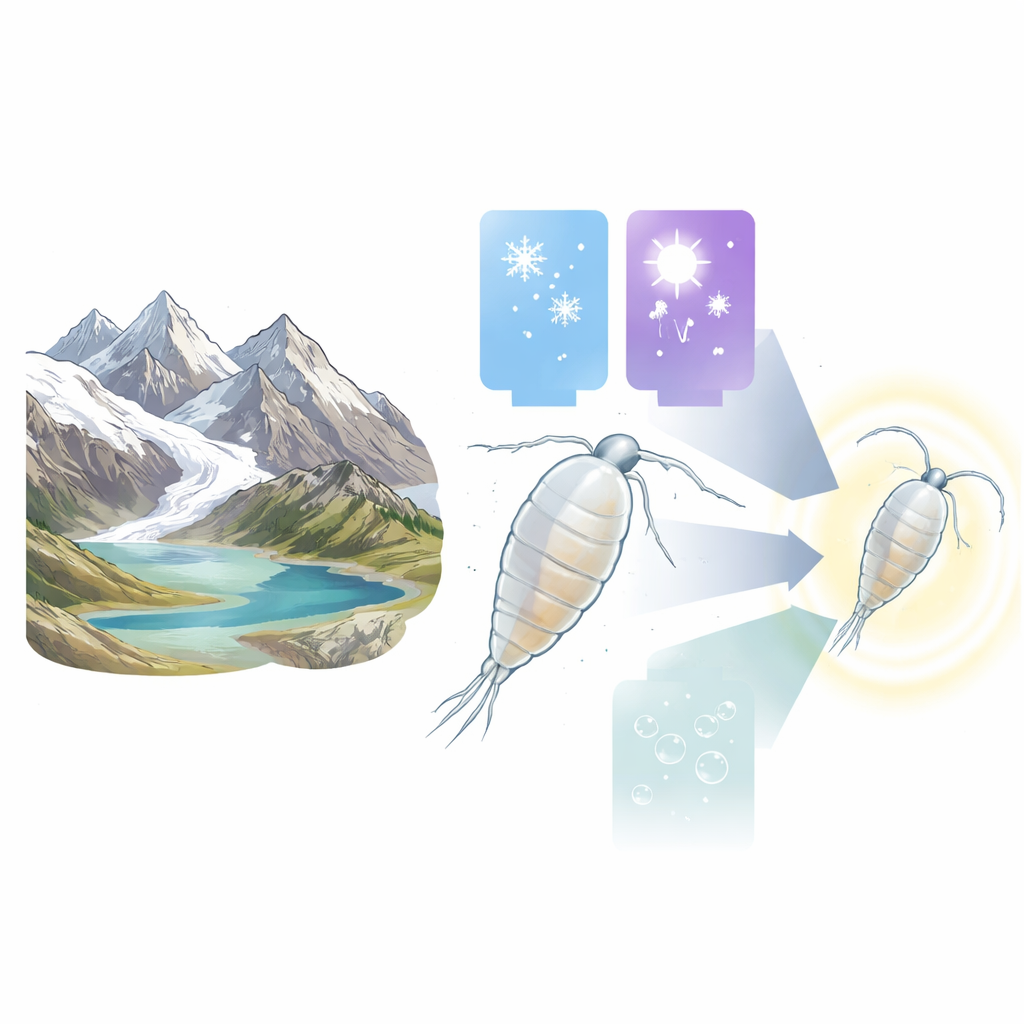
High in the Alps, tiny crustaceans called copepods drift in cold, clear lakes that freeze over in winter and bathe in intense sunlight in summer. Though they are smaller than a grain of rice, these animals help move energy through lake food webs and quietly record how life copes with extreme environments. This study peeks inside their cells to read which genes are switched on, creating a genetic resource that can help scientists understand how mountain lakes – and the creatures that live in them – may respond to a changing climate.
Life on the Edge in Alpine Lakes
The researchers focused on a freshwater copepod named Cyclops abyssorum tatricus, common in high-elevation lakes of the Eastern Alps. These lakes are cold, low in nutrients, and experience dramatic seasonal shifts: clear water in summer, thick ice and low oxygen in winter, and strong ultraviolet (UV) radiation at the surface. To survive, copepods must constantly adjust their bodies and behavior – from how they swim and feed to how they repair sun damage. Many of these adjustments are driven by changes in gene activity, so the team set out to build a complete catalog of the copepod’s active genes, known as a transcriptome.
Building a Gene Catalog from Scratch
Unlike well-studied lab species, this alpine copepod had no existing genetic reference. The team collected animals from two neighboring high-altitude lakes – one glacier-fed and cloudy, the other clear – at two different times of year, including under winter ice. They extracted RNA, the molecule that carries messages from DNA to make proteins, and used a long-read sequencing technology that reads large stretches of genetic code in one piece. Sophisticated computer tools then stitched millions of reads together into 52,521 distinct gene fragments, many of which code for proteins. Quality checks showed that the assembly captured the vast majority of core arthropod genes, indicating a robust and fairly complete catalog.
What the Genes Reveal About Harsh Conditions
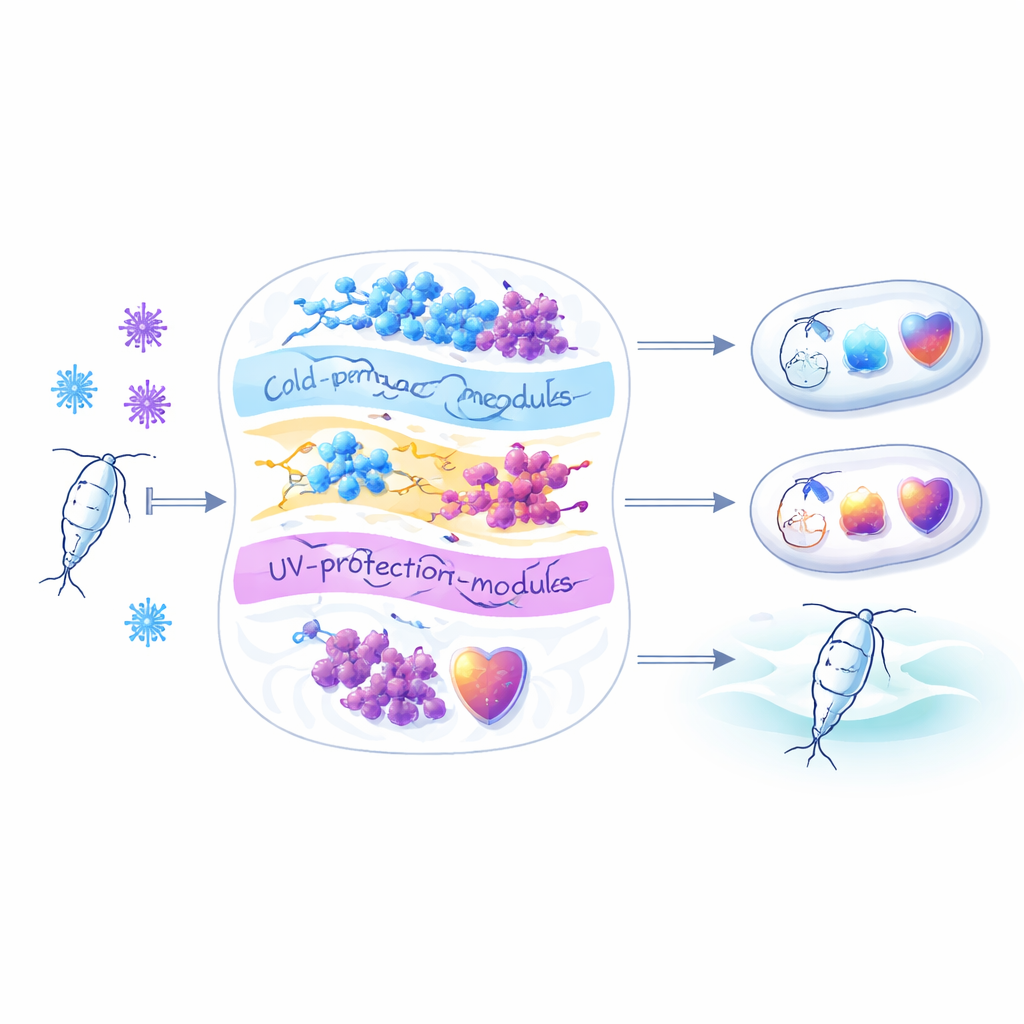
With the transcriptome assembled, the researchers matched each predicted protein to known functions using large international databases. Nearly half of the sequences could be given roles, most of them tied to everyday cell activities such as communication, repair, and metabolism. The team then compared this alpine species with two coastal marine copepods that live in very different environments: a tide-pool dweller and an estuary species. By looking at how often particular gene functions appeared in each species, they could see which types of processes seem especially important in alpine lakes. Genes tied to long-term adjustment to cold, and to protection and repair from UV damage, were more common in the mountain copepod. In contrast, the marine species showed stronger emphasis on short-term cold shock responses, salt balance, and behaviors such as movement and sensory responses.
Shared Solutions and Unique Tricks
The comparison also highlighted what these copepods share. Many gene functions related to reproduction, basic cell structure, and general stress responses appeared in all three species, suggesting a common toolkit that works across ocean and lake habitats. Still, the alpine copepod showed stronger signals in categories related to controlling which genes turn on or off and how cell interiors are organized. These patterns hint that fine-tuned regulation of gene activity may be a key strategy for enduring long winters, ice cover, and intense sunlight at high elevations. At the same time, the presence of similar cold- and UV-related genes in the marine species suggests that some of these defenses are widespread and can be repurposed for different environments.
Why This Genetic Map Matters
This study delivers the first fully annotated gene catalog for a purely freshwater member of this copepod group, creating a foundation for many future experiments. On its own, the transcriptome does not prove which genes caused adaptation, but it provides a powerful roadmap for testing how gene activity shifts with temperature, light, oxygen, or pollution. For non-specialists, the key message is that even tiny lake animals have a rich set of molecular tools that help them cope with the harsh, shifting conditions of alpine ecosystems. Understanding these tools will improve our ability to predict how sensitive mountain lakes – vital sentinels of climate change – and their invisible inhabitants will fare in a warming, brightening world.
Citation: Ambre, P., Morgan, K. & Barbara, T. The de novo transcriptome of the freshwater copepod Cyclops abyssorum tatricus reveals high-elevation adaptation. Sci Rep 16, 10945 (2026). https://doi.org/10.1038/s41598-026-46084-x
Keywords: alpine lakes, copepods, cold adaptation, UV stress, transcriptomics