Clear Sky Science · en
Techno-economic benchmarking of green hydrogen production using fixed and tracking PV systems: a PVsyst–MATLAB integrated analysis
Sunlight Turned into Clean Fuel
Many countries with bright sunshine are searching for ways to turn that light into clean fuel that can power factories, trucks, and even entire cities without releasing carbon pollution. This study looks at how best to use solar panels to make green hydrogen, a fuel produced from water using renewable electricity. By comparing two common ways of mounting solar panels one fixed in place and one that follows the sun the researchers show which setup delivers more hydrogen, at lower cost, for a sun-soaked region like Kandahar in Afghanistan. 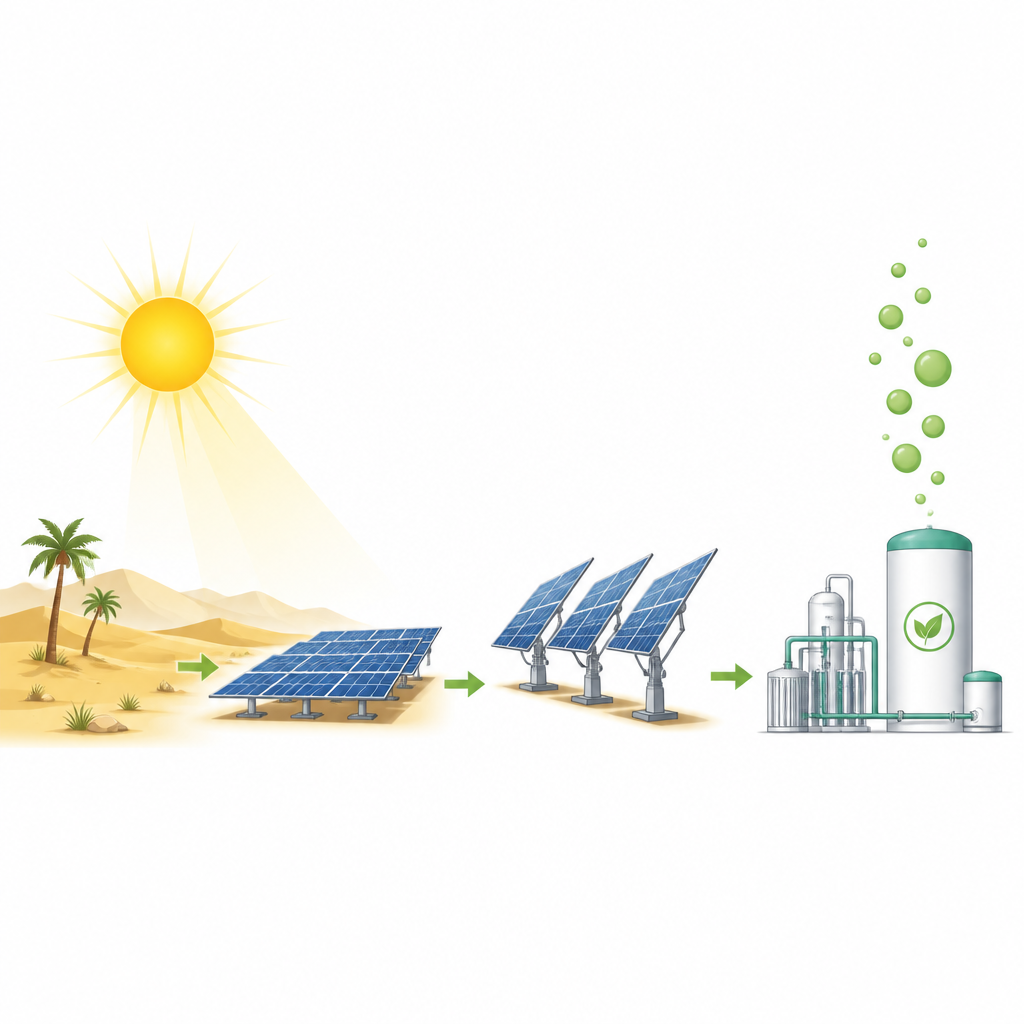
Two Ways to Catch the Sun
The heart of the work is a side-by-side comparison of two solar power systems feeding an industrial device called an electrolyzer, which splits water into hydrogen and oxygen. In one system, solar panels are fixed at a set tilt. In the other, the panels move on a dual-axis tracking structure so they can face the sun throughout the day. Both systems have the same peak size, 10 kilowatts, and both send their electricity directly to a hydrogen unit that runs only when the sun is shining strongly enough. This makes the comparison fair and realistic for remote, stand-alone green hydrogen projects that are not backed up by the electric grid.
Digital Twin of a Solar Hydrogen Plant
To understand performance in detail, the authors build a digital twin of the entire chain from sunlight to hydrogen. They use a specialist solar design tool to calculate how much electricity each solar setup would produce in Kandahar, hour by hour across a full year, taking into account local sunlight levels, temperatures, and system losses. Those electricity profiles are then passed into a second model built in MATLAB, which turns the power into hydrogen output and adds up costs over the lifetime of the equipment. This combined approach lets them track how design choices on the solar side ripple through to fuel production, overall efficiency, and money spent per unit of energy.
More Moving Parts, Much More Energy
The simulations show that, in a bright climate, solar tracking pays off strongly. While the fixed panels produce about 11,253 kilowatt-hours of electricity per year, the tracking system reaches roughly 15,300 kilowatt-hours, a 36% increase from the same rated size. The moving panels capture useful sunlight for more hours each day in both winter and summer, so they keep the electrolyzer running longer and more steadily. As a result, yearly hydrogen production rises from around 240 kilograms with fixed panels to about 320 kilograms with trackers, even though the mechanical system is slightly more complex and suffers marginally higher internal losses. 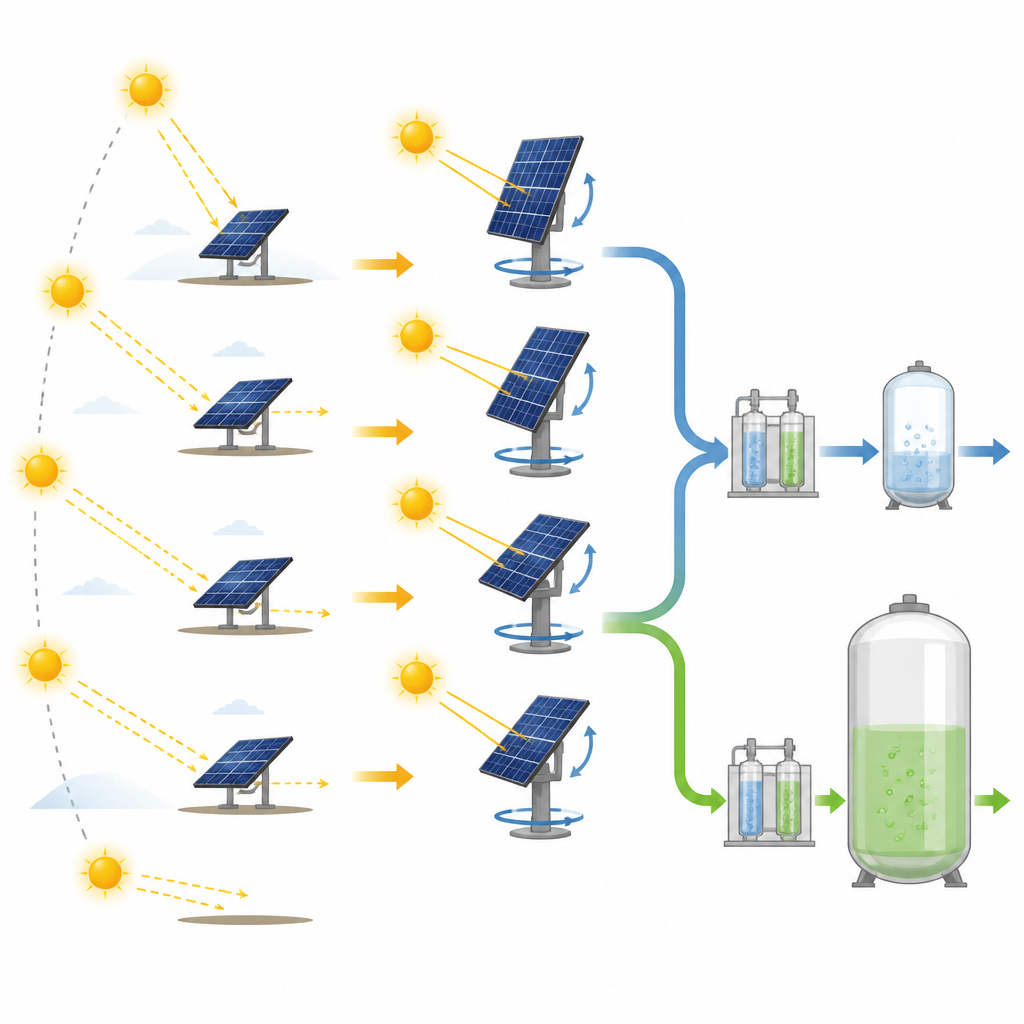
Costs and Carbon Footprints Compared
Extra machinery makes the tracking system more expensive to build and maintain, but the added energy it delivers more than compensates over time. When all investment, upkeep, and replacement expenses are spread across the full lifetime output, the cost of electricity from fixed panels works out to about 4.8 cents per kilowatt-hour, while tracking brings this down to about 3.6 cents. On the fuel side, the cost of green hydrogen falls from about $5.82 per kilogram with fixed panels to about $4.37 per kilogram with tracking. Because the tracking system generates more clean electricity, it also avoids more carbon emissions each year, preventing nearly 5 metric tons of carbon dioxide compared with about 3.6 metric tons for the fixed layout.
What This Means for Sunny Regions
For readers wondering how we can store sunshine and move it where it is needed, this study offers a clear message. In places with strong and steady solar resources, using tracking solar panels to make hydrogen from water can deliver more fuel at lower long-term cost, while cutting more carbon pollution, than simpler fixed-panel systems of the same size. Although trackers require higher upfront spending and more careful design, their ability to follow the sun makes better use of each square meter of land and each dollar invested. For policymakers and planners in sunny developing regions, the findings suggest that smart, moving solar fields paired with hydrogen units could become a practical backbone of future clean energy systems.
Citation: Irshad, A.S., Hilali, A., Ahmadullah, A.B. et al. Techno-economic benchmarking of green hydrogen production using fixed and tracking PV systems: a PVsyst–MATLAB integrated analysis. Sci Rep 16, 15620 (2026). https://doi.org/10.1038/s41598-026-46077-w
Keywords: green hydrogen, solar tracking, photovoltaic systems, energy economics, CO2 mitigation