Clear Sky Science · en
Basketball participation improves sleep quality through psychological flexibility in adolescents
Why This Matters for Teens and Parents
Many families worry when teenagers stay up too late, struggle to fall asleep, or drag through the school day exhausted. This study looks at a surprisingly simple aid for better sleep: playing basketball. By following more than 800 middle-school students in China, the researchers explored not only whether basketball is linked to better sleep, but also how it might work through changes in how young people handle stress and emotions.
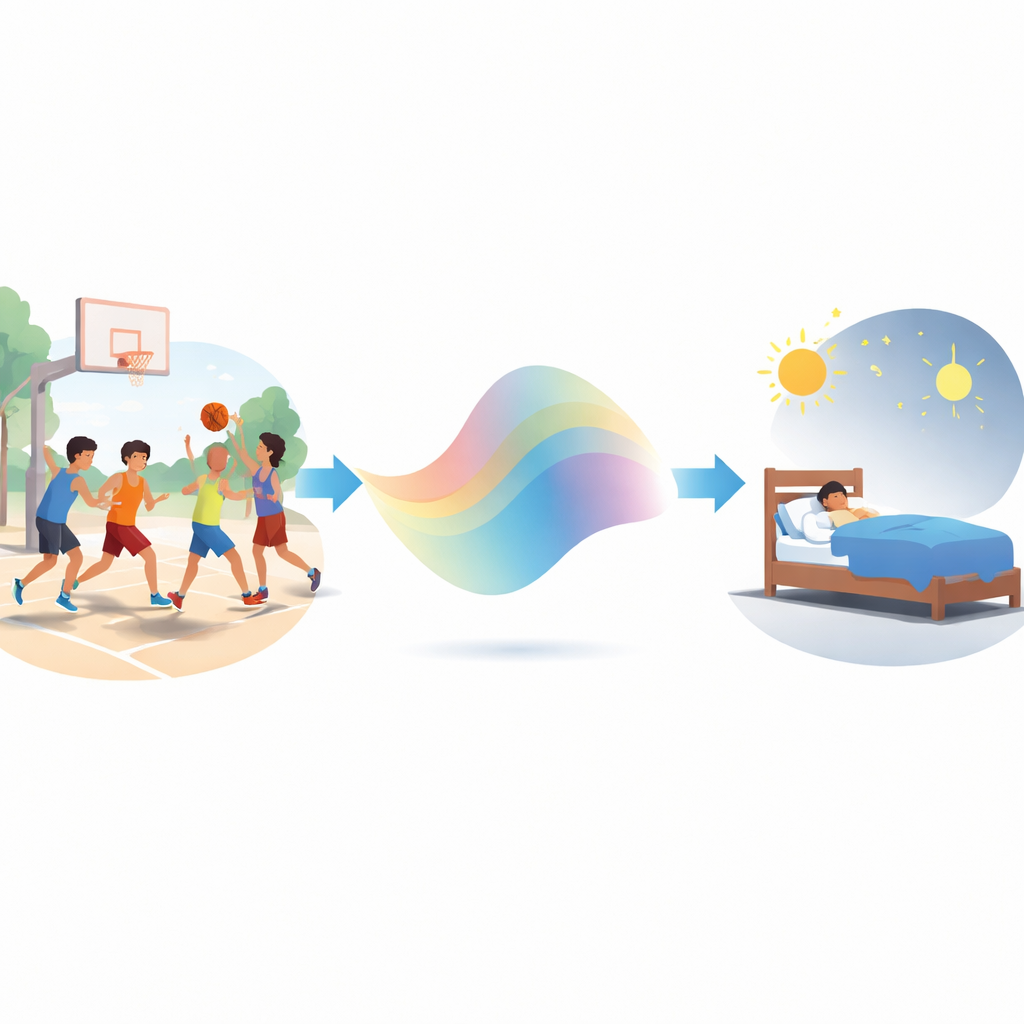
Playing Ball and Feeling More at Ease
The researchers focused on students aged 11 to 15 who had played basketball in the past three months, whether in class, on school teams, or in pick-up games. These students filled out detailed questionnaires about how often and how deeply they took part in basketball, how flexible they were in dealing with thoughts and feelings, and how well they slept. Sleep was assessed in two ways: how troubled they felt during the day (tiredness, irritability, trouble focusing) and whether they had nighttime problems such as difficulty falling or staying asleep. The team found that the more actively teens engaged with basketball, the fewer sleep-related complaints they reported, both during the night and the following day.
A Mind That Can Bend, Not Break
A key idea in this study is “psychological flexibility,” which means being able to face uncomfortable thoughts and feelings without getting stuck in them, and still acting in line with what matters most. For adolescents, this could look like accepting a bad game without spiraling into self-criticism, or handling school stress without losing sleep over it. The study showed that teens who were more involved in basketball tended to report higher psychological flexibility. In turn, those with greater flexibility had fewer signs of insomnia and daytime distress. In other words, basketball was not just tiring out the body; it seemed to be helping teens build a more adaptable, resilient mindset.
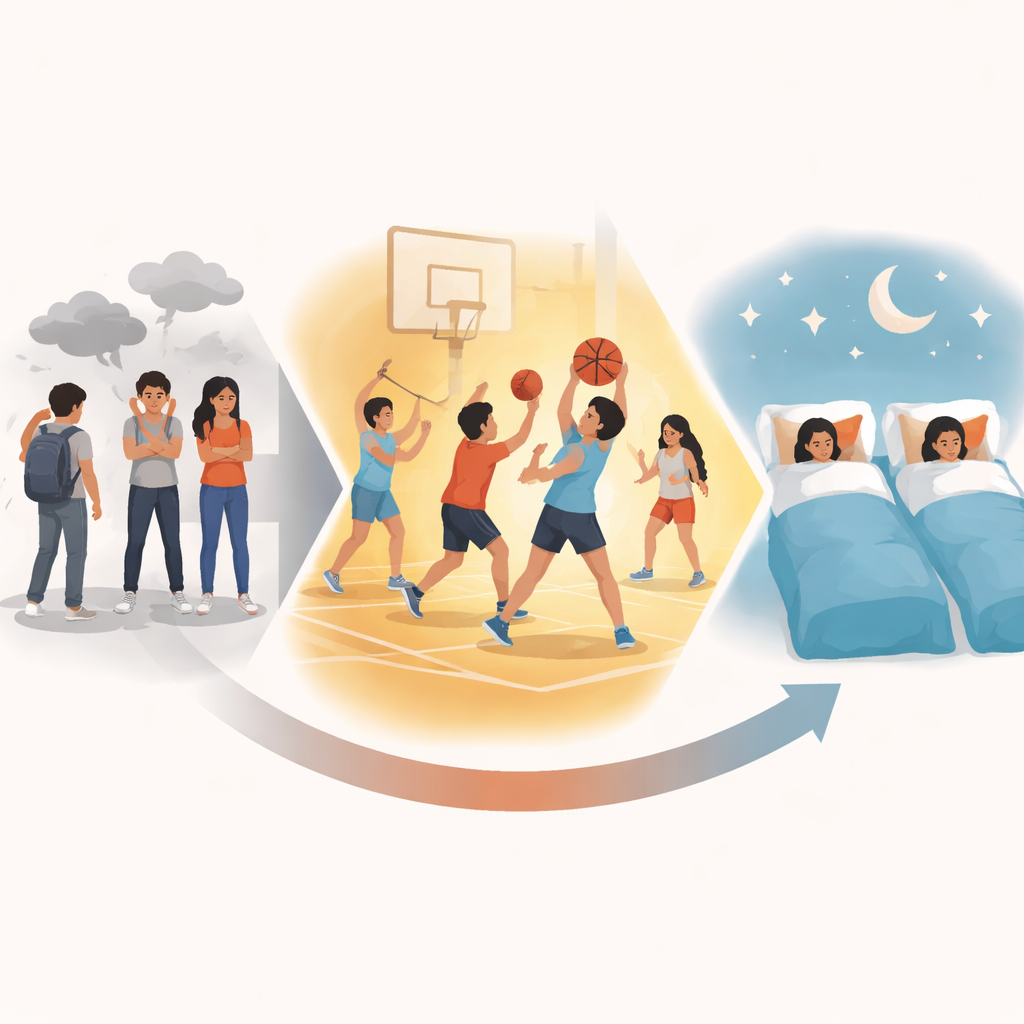
How the Chain of Effects Works
Using statistical models, the researchers tested how these pieces fit together. They confirmed that basketball participation was directly linked to fewer sleep problems. But they also found an important indirect pathway: part of basketball’s benefit ran through psychological flexibility. Roughly two-fifths of basketball’s impact on daytime distress and insomnia could be explained by higher flexibility. This suggests a chain of effects: regular basketball play supports better coping with stress and emotions, and this healthier coping, in turn, supports deeper, more restorative sleep and better functioning the next day.
What This Means for Schools and Families
The findings add to a growing picture that team sports can be powerful tools for teen well-being. Basketball combines physical exertion with constant decision-making, cooperation, and brief moments of pressure—conditions that can train young people to stay present, recover from mistakes, and manage stress socially rather than alone. The authors argue that schools and communities could use basketball not only as exercise but as a structured setting to teach skills related to psychological flexibility, such as acceptance of discomfort, focusing on the moment, and acting according to personal values.
Takeaway: A Simple Path to Better Sleep
For a general reader, the core message is straightforward: when adolescents regularly play basketball, they tend to sleep better and feel less worn down during the day, in part because the game helps them become more mentally adaptable under stress. While this study cannot prove cause and effect and relies on self-reports, it suggests that combining physical activity with simple mental skills for handling thoughts and emotions could be a practical, low-cost way to improve teens’ sleep and emotional health. Rather than searching only for high-tech fixes, encouraging young people to pick up a ball, join a team, and learn to bend rather than break under pressure may be one of the most effective bedtime strategies we have.
Citation: Peng, B., Liu, T., Ren, Y. et al. Basketball participation improves sleep quality through psychological flexibility in adolescents. Sci Rep 16, 10733 (2026). https://doi.org/10.1038/s41598-026-46073-0
Keywords: adolescent sleep, basketball, team sports, stress coping, psychological flexibility