Clear Sky Science · en
Erector spinae muscle characteristics predict 90-day survival in elderly pneumonia patients
Why back muscles matter in lung infections
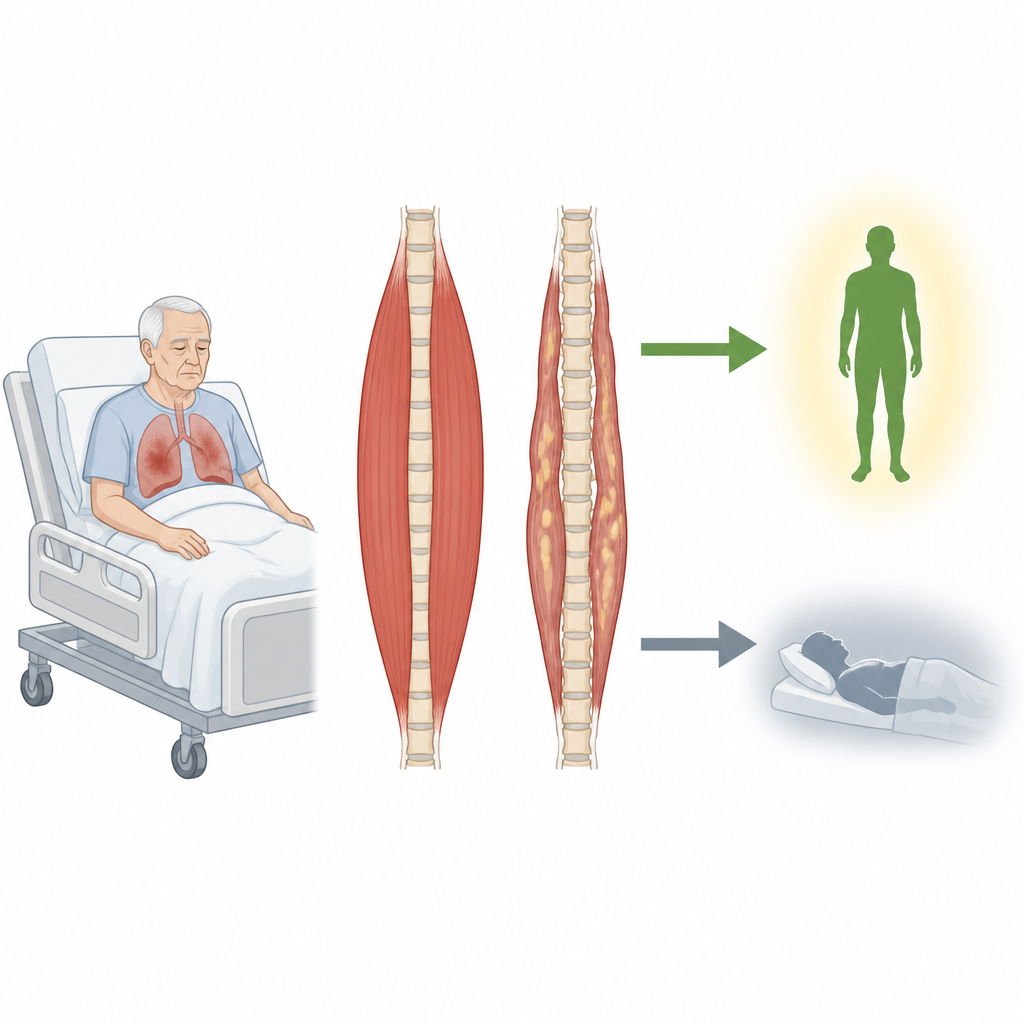
Pneumonia is often viewed as a disease of the lungs alone, yet in very old adults it can become a whole-body crisis. This study shows that the condition of the deep back muscles, which help support breathing, can quietly reveal who is more likely to survive the first three months after a serious lung infection. By turning routine chest scans into a window on muscle health, the researchers suggest a new way to spot frail patients who may need extra care.
A closer look at hidden support muscles
The work focuses on the erector spinae muscles, a group of long muscles that run along the spine. These muscles help keep us upright and assist the diaphragm when we breathe deeply or cough. In older people, muscle loss and fat creeping into muscle tissue are common changes. The team asked whether these hidden back muscles might be especially important during pneumonia, when breathing becomes hard work and the body is under intense stress.
How the study was done
Researchers followed 189 patients with pneumonia treated at a hospital in China, with an average age of about 85 years. All had chest CT scans soon after admission. From these images, two trained radiologists measured three key features of the back muscles at the level of the lower chest: how thick they were, how much area they covered, and how much of that area was taken up by fat. They adjusted some measurements for body size, and they also collected blood tests, vital signs, illness severity scores, and details on other diseases such as diabetes. The patients were then tracked for 90 days to see who survived.
What the images and numbers revealed
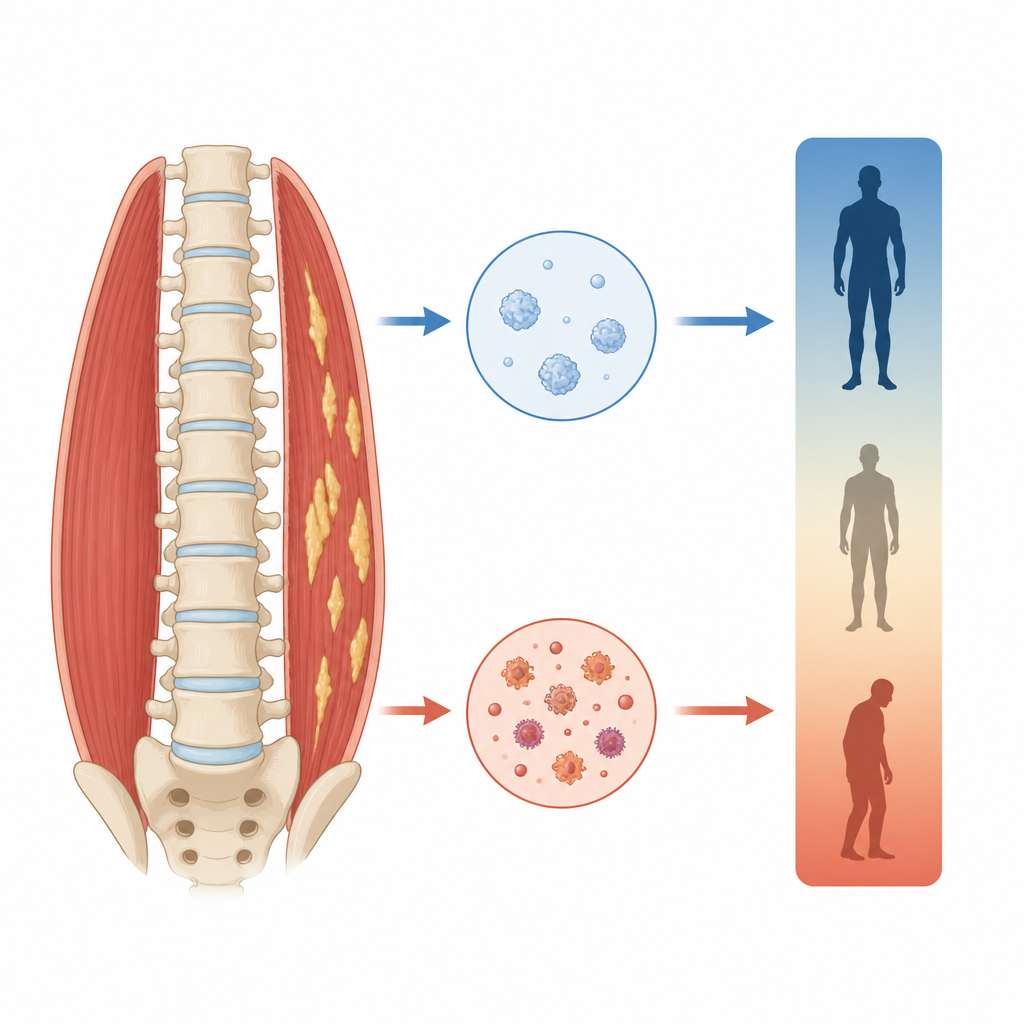
By the end of the follow up, about one in four patients had died. Compared with survivors, those who died had thinner erector spinae muscles, smaller muscle area, and a higher share of fat inside these muscles. Their blood also showed lower levels of albumin, a protein linked to nutrition and inflammation, and higher levels of C reactive protein, a marker of inflammation. When the researchers used statistical models that considered many factors at once, two muscle related features and two blood measures stood out. A greater thickness of the erector spinae muscle, after accounting for body surface area, and higher albumin levels were tied to lower risk of death. In contrast, more fat inside the muscle and higher C reactive protein were tied to higher risk.
Why thickness beat size
One surprising finding was that overall muscle area on the scan did not independently predict survival once other factors were included, even though it was lower in patients who died. The simple measurement of muscle thickness performed better. The authors suggest that thickness may more directly reflect the working muscle that can help with breathing, while area can be distorted by fat and technical quirks in how images are traced. They also found that scaling thickness to body surface area, which relates to overall energy needs, gave a clearer signal than using thickness alone. This points to the idea that survival depends not just on how much muscle a person has, but on whether that muscle reserve is sufficient for the stresses their body faces.
What this means for patient care
For very old adults with pneumonia, this study suggests that a quick look at the back muscles on a standard chest scan can add valuable information about short term survival risk. Thicker, leaner erector spinae muscles and better albumin levels appear to offer some protection, while heavier fat buildup in these muscles and stronger signs of inflammation are warning flags. Although the study cannot prove cause and effect, it supports the view that muscle quality, nutrition, and inflammation together shape how well elderly patients withstand severe lung infections.
Citation: Wu, X., Ma, J., Huang, J. et al. Erector spinae muscle characteristics predict 90-day survival in elderly pneumonia patients. Sci Rep 16, 15573 (2026). https://doi.org/10.1038/s41598-026-46065-0
Keywords: pneumonia, elderly patients, muscle wasting, erector spinae muscle, mortality risk