Clear Sky Science · en
Altitudinal influence on chemical composition, antioxidant potential and methyl ester profile of kapok seed oil: a sustainable biodiesel option
Why the height of the land matters for clean fuel
As the world looks for cleaner fuels, even small details like where a plant grows can shape how well it works as an energy source. This study explores how the height of the landscape, or altitude, changes the quality of oil from kapok seeds, a non-food crop grown in tropical regions. By comparing trees growing at low and higher hillsides in the same region of India, the researchers show that altitude can quietly tune both the fuel performance and the natural antioxidant strength of kapok seed oil, making it a more attractive candidate for sustainable biodiesel.
From tree fluff to engine fuel
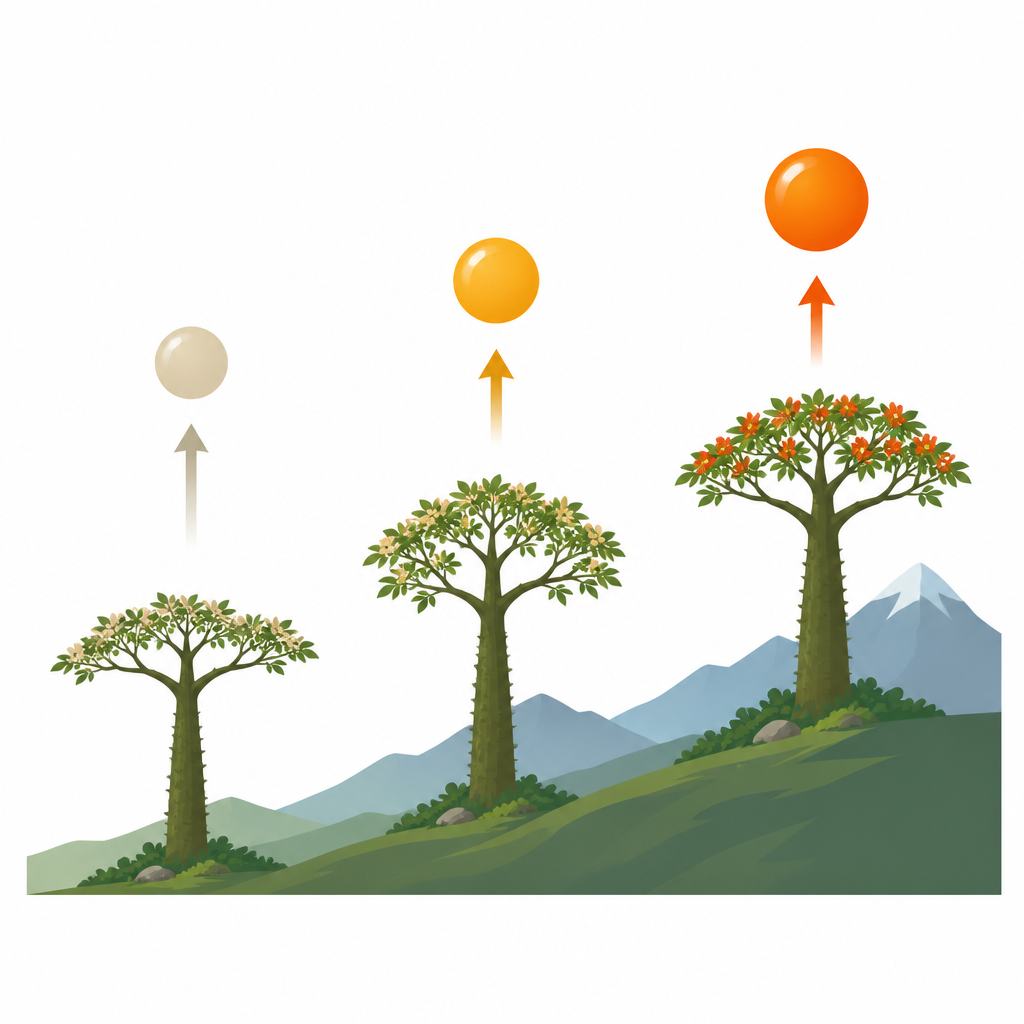
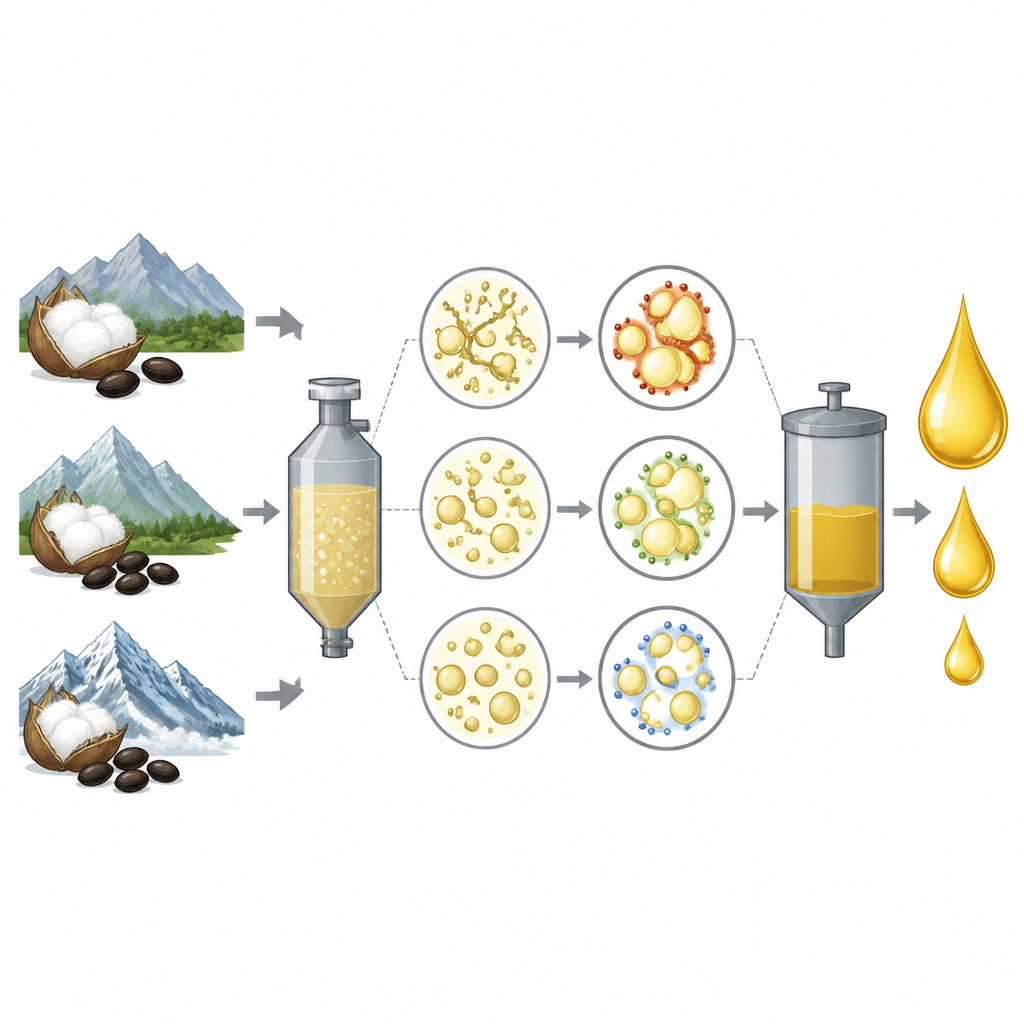
Kapok trees produce fluffy pods filled with seeds rich in oil. Because kapok is not a food crop, its oil is appealing as a biodiesel source that does not compete with cooking oils. In this work, seeds were collected from trees growing at three nearby locations that differed mainly in height above sea level, from about 200 to just over 400 meters. The oil was extracted and then turned into biodiesel using a two-step chemical process that first prepared the oil and then converted its fatty components into a fuel-ready form known as methyl esters. This treated oil, called kapok oil methyl ester, could then be tested for both its chemical makeup and how well it might behave inside a diesel engine.
How altitude reshapes the oil
Careful chemical analysis revealed that the mix of fatty components in the oil shifted with altitude. At higher sites, the oil contained more of certain stable molecules, especially those related to oleic and stearic acids, and less of highly reactive types such as linoleic acid. This meant that the oil from higher ground had a larger share of monounsaturated and saturated fats, which are known to give biodiesel better ignition quality, improved resistance to aging, and more reliable flow at cooler temperatures. The total amount of oil that could be extracted from the seeds also rose with altitude, so trees on the higher hillside not only produced a more stable fuel but did so more efficiently.
Built-in protection against damage
Beyond serving as fuel, the oil also carries natural antioxidant compounds that help protect it from damage by reactive molecules often called free radicals. The team measured antioxidant strength using two standard color-change tests, in which stronger scavenging shows up as a larger change in color at lower doses of the oil. Oil from higher altitudes needed less material to quench these radicals, meaning its antioxidant power was greater. Tiny amounts of additional plant chemicals, including certain oxygen-containing aroma molecules, also rose with altitude and likely worked together with the fatty components to strengthen this protection.
What this means for biodiesel users
When the researchers compared the fuel properties of pure kapok biodiesel and a half-and-half blend with regular diesel, both met international quality standards for ignition, thickness, energy content, and safety in storage. The version made from higher-altitude seeds offered especially good stability and antioxidant behavior, features that help fuel last longer and perform more consistently. Taken together, the findings suggest that where kapok is grown can be just as important as how it is processed. Selecting seed sources from slightly higher ground within the same climate zone could help farmers and fuel producers obtain more robust, cleaner-burning biodiesel from this non-food tree crop.
Choosing the right hillside for future fuel
For a lay reader, the key message is that modest changes in height on the landscape can noticeably improve plant-based fuel. Kapok trees growing a bit higher above sea level produced oil that was richer in fuel-friendly fats, more resistant to damage, and easier to extract. This means that smart choices about planting locations could turn an already sustainable, non-food crop into an even better source of biodiesel, helping to support cleaner energy without taking away from the food supply.
Citation: Selvam, C., Muralidharan, K., Manoj Kumar, P. et al. Altitudinal influence on chemical composition, antioxidant potential and methyl ester profile of kapok seed oil: a sustainable biodiesel option. Sci Rep 16, 16304 (2026). https://doi.org/10.1038/s41598-026-46056-1
Keywords: kapok biodiesel, altitude effects, seed oil, antioxidant activity, renewable fuel