Clear Sky Science · en
Impact of metal filings and acoustic waves on solar still performance
Turning Sunlight into Drinking Water
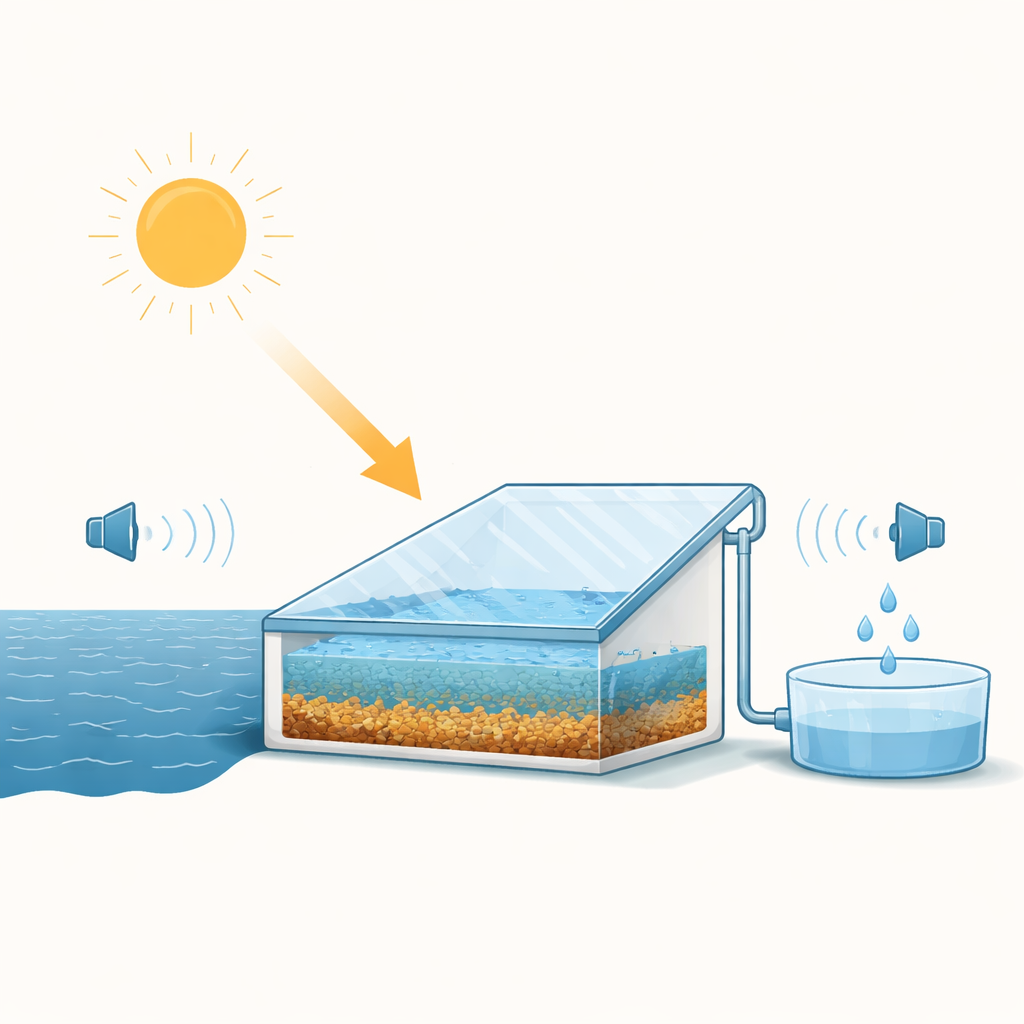
For many communities, especially in dry and remote regions, getting clean drinking water is a daily struggle. One simple tool that can help is the solar still, a box that uses sunshine to evaporate salty or dirty water and condense it as fresh water. This study explores two surprisingly everyday factors that can change how well a solar still works: tiny scraps of metal left over from workshops, and sound waves similar to those produced by loud music. Understanding how these simple additions help or hurt performance could make low-cost solar stills more practical for people who need them most.
Why Small Metal Pieces Can Help
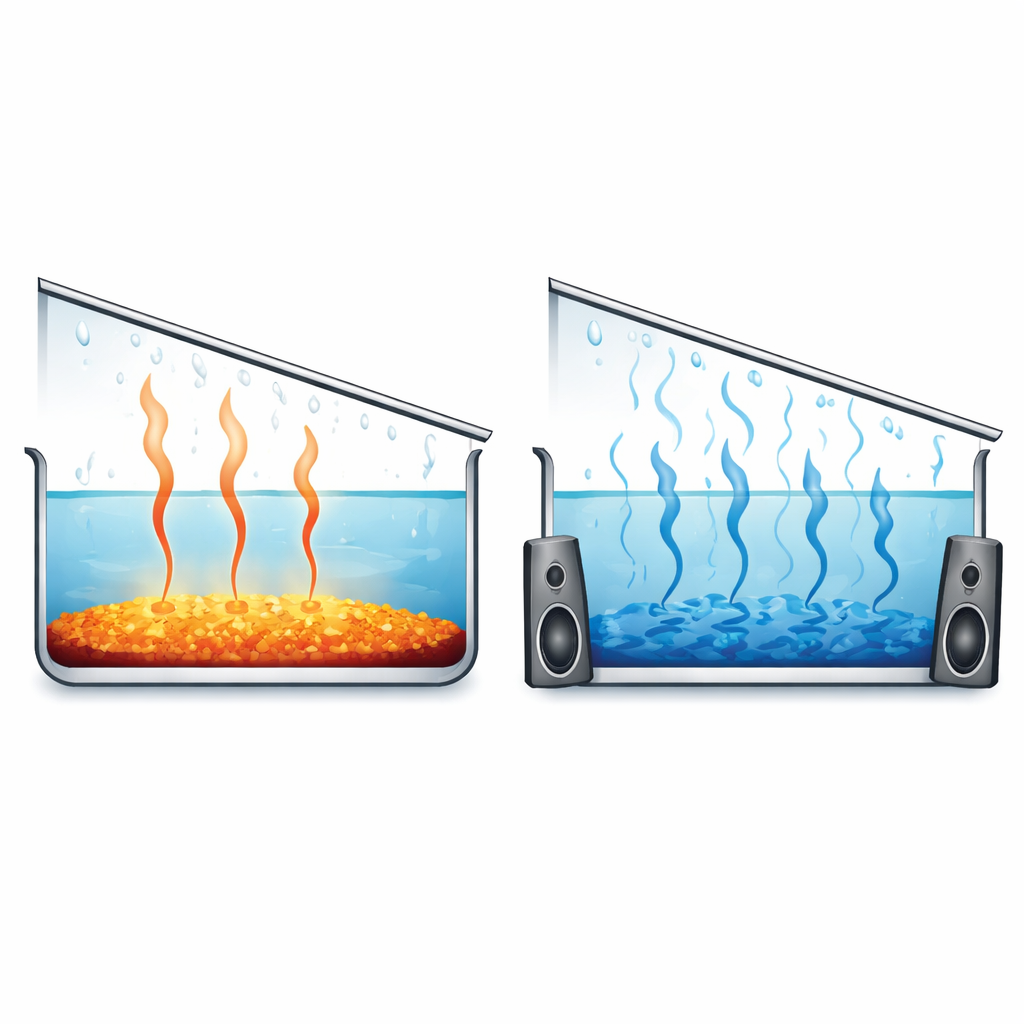
The researchers focused first on whether common metal shavings—copper, aluminum, iron, and stainless steel—could boost the amount of fresh water produced. These metal filings are usually waste from cutting and drilling operations. In the experiments, the team mixed controlled amounts of these filings into the shallow layer of salty water inside a traditional single-slope solar still. Because metals conduct heat better than water, the idea was that they might help the water warm up faster and evaporate more strongly under the sun.
Finding the Best Mix for More Water
Tests were carried out on a rooftop in Cairo over many days, with more than two hundred experimental runs. For each metal type, the team tried several amounts, from a modest sprinkle to a heavy loading. They found that adding filings almost always increased water production compared with plain saltwater, but only up to a point. Copper stood out clearly: at a concentration of 75 grams per liter, the still produced about 8.8% more fresh water than without any filings, achieving the highest daily yield and thermal efficiency of all cases studied. When too many filings were added, performance dropped again, likely because the thick layer of metal blocked smooth heat movement within the water. Stainless steel, which conducts heat poorly compared with copper, gave the weakest improvements.
When Sound Becomes the Enemy
The second part of the study asked an unusual question: what happens if the still is exposed to sound waves? The team mounted small speakers on the basin and played different wave shapes—sine, square, triangle, and sawtooth—at low audio frequencies. Instead of helping to stir or energize the water, sound consistently reduced the amount of fresh water produced, no matter which shape was used. At a frequency of 300 hertz, the best-performing sound (the triangle wave) still lowered the average output compared with quiet conditions. Higher frequencies made things worse, cutting daily production by nearly one fifth at the highest level tested. The researchers suggest that the rapid pressure changes from sound disturb how heat travels from the basin walls into the water, slightly cooling it and slowing evaporation.
Balancing Gains, Losses, and Cost
To see whether these changes matter in real life, the team compared energy efficiency and cost. With the best copper-filing setup, the still reached a thermal efficiency of about 43%, higher than many earlier designs that relied on more complex nanomaterials. Even though adding copper scraps raises the initial cost a little, the extra water they help produce means that each liter of distilled water ends up costing slightly less over the still’s lifetime. In contrast, exposing the still to sound waves not only reduces water output but also drags efficiency down to around 28%, with no compensating economic benefit.
What This Means for Real-World Use
Overall, the study shows that simple, low-tech tweaks can make a meaningful difference to solar water desalination. Reusing copper shavings—a common industrial waste—at modest concentrations can noticeably increase the amount of clean water a basic still produces, while keeping the cost per liter very low. At the same time, the work highlights a practical design rule: solar stills work best in quiet places. Strong or persistent sound can subtly disrupt the heating and evaporation process and should be avoided. For communities seeking affordable, sustainable ways to convert salty or brackish water into safe drinking water, these findings offer a straightforward recipe: add a little copper, and keep the noise down.
Citation: Elwekeel, F.N.M., Mansour, S., Abdelmagied, M. et al. Impact of metal filings and acoustic waves on solar still performance. Sci Rep 16, 12705 (2026). https://doi.org/10.1038/s41598-026-46052-5
Keywords: solar desalination, solar still, copper filings, clean water, acoustic waves