Clear Sky Science · en
Threat prioritization and fear of pain dynamics are associated with engagement in postoperative activities after thoracoscopic lung surgery
Why facing pain after surgery matters
Anyone who has had surgery knows that the days afterward can be a tug of war between the urge to rest and the need to move. For people recovering from lung surgery, simple acts like coughing or walking can hurt, yet staying still can raise the risk of blood clots or lung infections. This study looks at how patients mentally weigh these two threats pain versus complications and how that inner balance shapes what they actually do in the first few days after surgery.
The choice between pain and safety
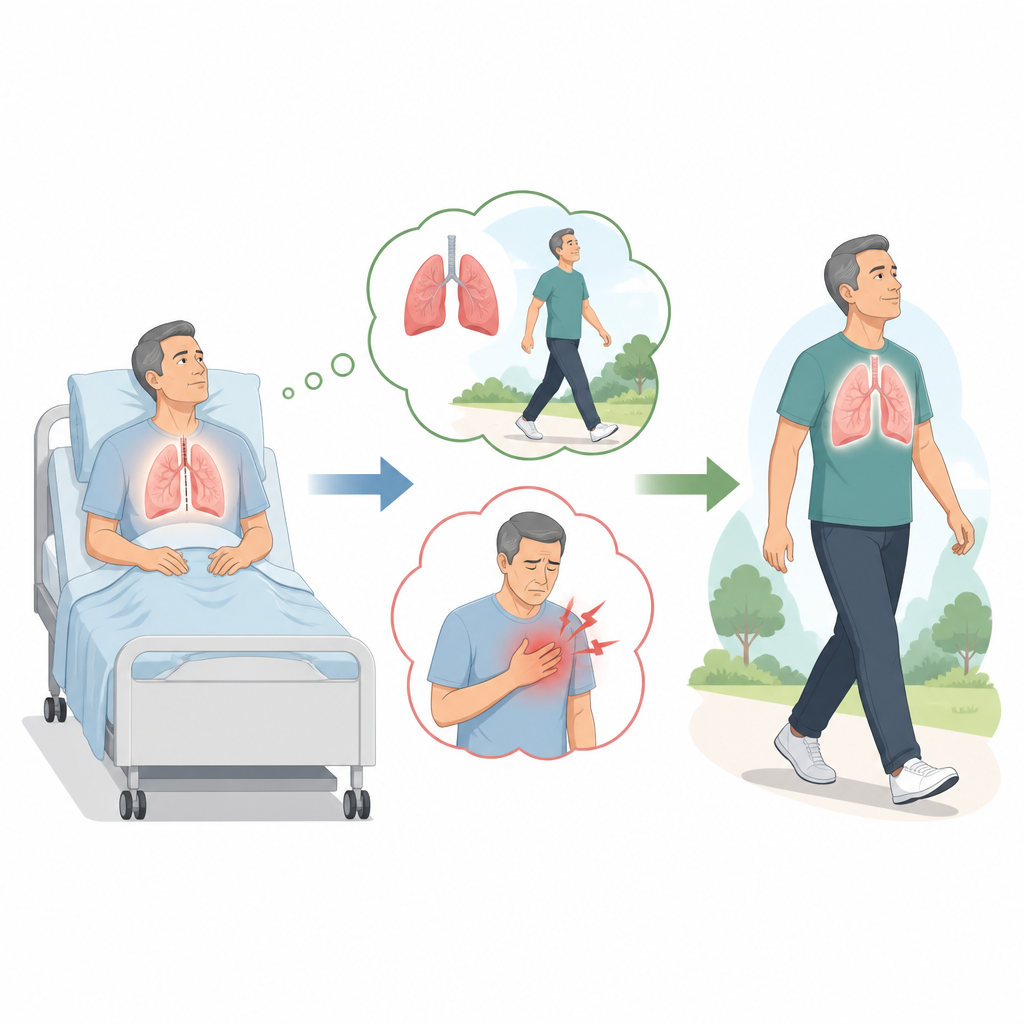
The researchers introduce a simple idea they call threat prioritization. After thoracoscopic lung surgery, patients face two competing worries: the immediate sting of pain when they cough or walk, and the quieter but serious risk of problems if they avoid these activities. The team asked whether patients who saw complications as the bigger danger would be more willing to move around, cough effectively, and in turn feel less afraid of pain over time. This focus on mindset offers a fresh lens on recovery, beyond how strong the pain signal is in the body.
How the study followed patients after lung surgery
The study tracked 121 adults who had minimally invasive lung surgery at a single hospital. All received standard pain control, teaching about the value of early movement, and instructions to walk several times a day and cough regularly. On the first and third day after surgery, the team measured how afraid patients were of pain using a short questionnaire, and rated how strong their coughs were. Nurses also counted how many times each patient completed a real walking session lasting at least 15 minutes. On day three, patients answered a key question: were they more worried about the discomfort of moving, or about the risk of complications if they did not move enough?
Different mindsets, different activity levels
Based on that question, patients were split into two groups. Those who were more concerned about complications were labeled complication focused, while those who were more concerned about pain were labeled pain focused. Both groups started out with similar pain levels and similar cough strength. By the third day, however, the complication focused patients had stronger coughs and slightly more walking sessions recorded than the pain focused group. Importantly, being more active did not lead to more air leaks from the lung or longer hospital stays, suggesting that this extra activity did not come at an obvious safety cost in this sample.
How movement shaped fear of pain
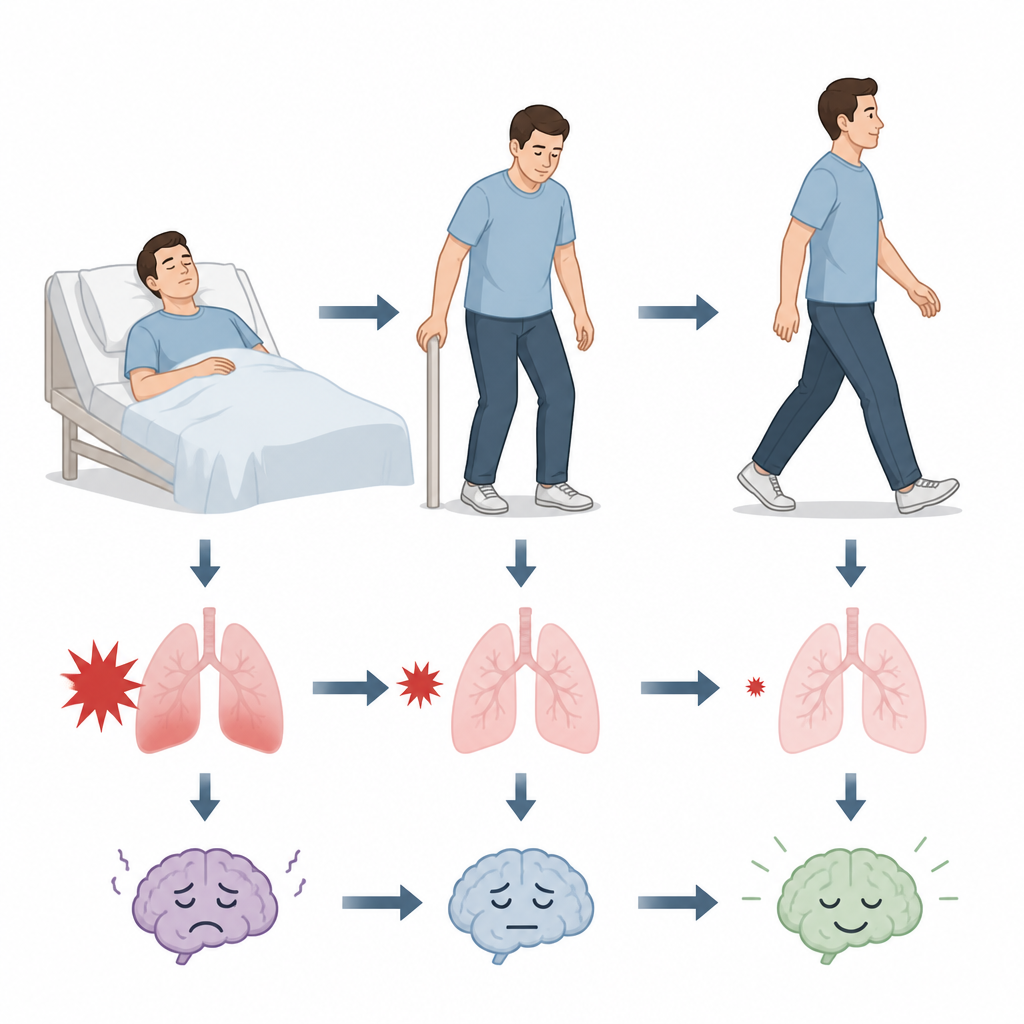
The researchers then looked at what predicted changes in fear of pain between day one and day three. They found that patients who walked more often tended to show a bigger drop in fear of pain. In contrast, patients who needed extra pain medicine specifically because moving or coughing hurt had less reduction in fear. The actual change in pain intensity did not explain changes in fear, and factors like age, sex, and how much of the lung was removed also did not stand out. These patterns point toward behavior and experience rather than raw pain level: facing movement with tolerable pain may gradually teach the body and mind that activity is safe.
What this means for patients and care teams
In plain terms, the study suggests that recovery after lung surgery is shaped not only by how much it hurts, but by what patients believe is more dangerous staying still or moving through some discomfort. When patients give more weight to the risk of complications, they tend to engage more in essential activities and their fear of pain falls more sharply, without obvious harm in the short term. While this research cannot prove cause and effect, it hints that helping patients reframe their worries and pairing movement with well timed pain relief could support a safer, more confident return to everyday activity.
Citation: Luo, Y., Peng, J., Feng, L. et al. Threat prioritization and fear of pain dynamics are associated with engagement in postoperative activities after thoracoscopic lung surgery. Sci Rep 16, 15799 (2026). https://doi.org/10.1038/s41598-026-46036-5
Keywords: fear of pain, lung surgery recovery, postoperative activity, patient mindset, early mobilization