Clear Sky Science · en
Comparative evaluation of antimicrobial activities and molecular docking of selected medicinal plants used in arab countries using zamzam water and conventional solvents
Why everyday readers should care
Antibiotics that once cured routine infections are becoming less effective as microbes evolve resistance. This study explores whether common medicinal plants, prepared with different types of liquids including the mineral rich Zamzam water, can slow or stop harmful bacteria and yeast in the lab, and uses computer modeling to glimpse how plant molecules might work inside these microbes. 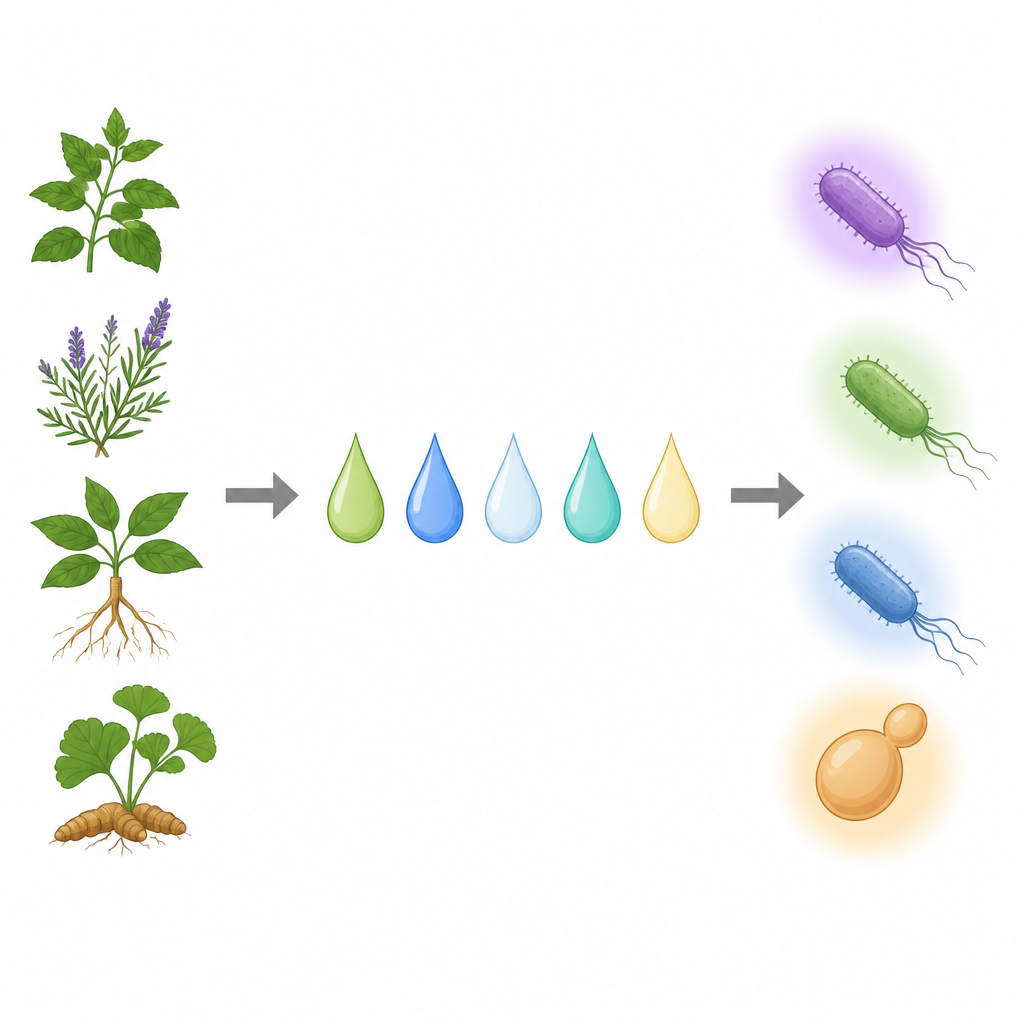
Plants as quiet helpers against germs
The researchers focused on four plants familiar in parts of the Middle East and beyond: sweet marjoram, costus, garden cress, and flax. Traditionally, these plants have been used to ease infections, skin problems, and other ailments. Modern science has shown that they contain families of small natural chemicals such as oils and pigments that can damage or disrupt microbes. The team asked two main questions: how well do extracts from these plants stop the growth of selected bacteria and a yeast, and which individual plant molecules seem able to latch onto vital microbial machinery?
Testing plant extracts in the lab
To make the extracts, dried plant material was soaked in several liquids: ethanol, methanol, petroleum ether, ordinary water, and Zamzam water. The extracts were then tested against four bacteria that can cause human disease and one yeast, using standard lab plates where clear circles show where growth has been halted. Overall, alcohol based extracts gave the strongest protection, often matching or even exceeding some standard antibiotics on these plates. Flax seed and costus extracts in particular showed broad and strong activity, especially against two troublesome gut bacteria, while some petroleum ether and plain water extracts did little or nothing.
A special role for Zamzam water
Zamzam water, rich in minerals such as calcium and magnesium, was included as an unusual extraction liquid. In many cases, plant extracts made with Zamzam water worked better than those made with ordinary water and in some plants came close to the alcohol based extracts. The study did not directly measure how the water’s mineral mix changed what was pulled out of the plant material, but the pattern suggests that solvent choice, including mineral content, can strongly shape how powerful a herbal preparation becomes.
Peeking inside with computer models
To explore how plant compounds might act inside microbes, the scientists used molecular docking, a computer method that predicts how snugly a small molecule might fit into a protein. They focused on two microbial enzymes that are already targets of several antibiotics: DNA gyrase, which helps coil and uncoil DNA, and dihydrofolate reductase, which is needed to build DNA building blocks. Molecules such as beta caryophyllene from marjoram and several colorful flavonoids from cress and flax were predicted to fit tightly into the active regions of these enzymes, in some cases more snugly than the reference drug molecules. 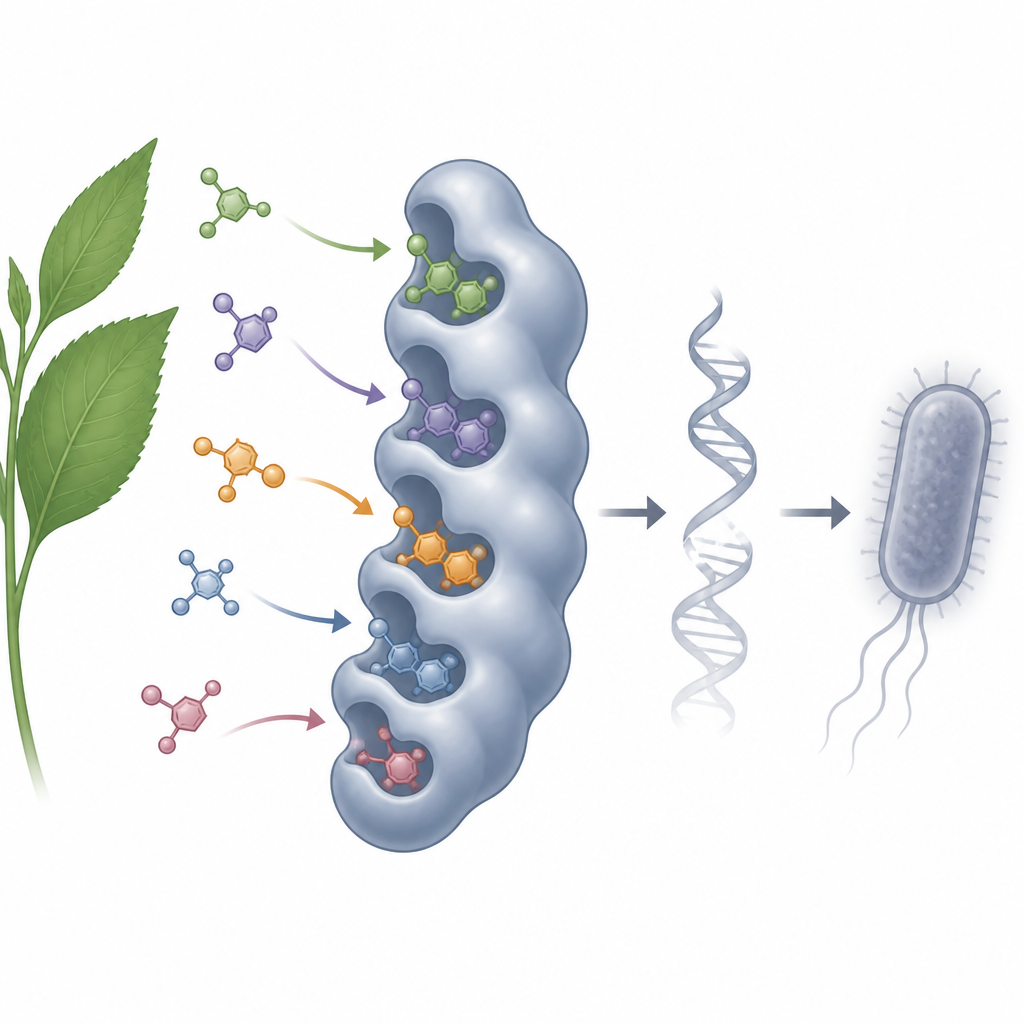
What the findings mean
For non specialists, the key message is that common medicinal plants, especially when prepared with alcohol or mineral rich Zamzam water, can strongly slow the growth of several disease causing microbes in lab tests. Computer simulations hint that some of their natural molecules may work by blocking microbial enzymes that handle DNA, although this remains a prediction rather than proof. The work does not show that these extracts are safe or effective medicines in people, but it strengthens the case for further careful study of specific plant compounds as starting points for new antibacterial drugs in an era of rising antibiotic resistance.
Citation: Dawod, M.F.M., Abdelwahab, S.I., Sidahmed, H. et al. Comparative evaluation of antimicrobial activities and molecular docking of selected medicinal plants used in arab countries using zamzam water and conventional solvents. Sci Rep 16, 15434 (2026). https://doi.org/10.1038/s41598-026-46023-w
Keywords: antimicrobial resistance, medicinal plants, Zamzam water, molecular docking, plant extracts