Clear Sky Science · en
Multi-platform profiling reveals host- and cell -type-specific pseudorabies virus gene expression
Why this pig virus matters beyond the barn
Pseudorabies virus is best known as a swine pathogen, but it also serves as a powerful tool to trace brain circuits and model herpes infections in people. This study asks a simple but important question: when the same virus infects different types of cells from different animals, does it follow one fixed script or adjust its genetic program to fit its host? The answer helps explain why the virus behaves mildly in pigs yet often proves fatal in rodents and offers broader clues to how herpes viruses adapt to new tissues and species.
A shared script with local accents
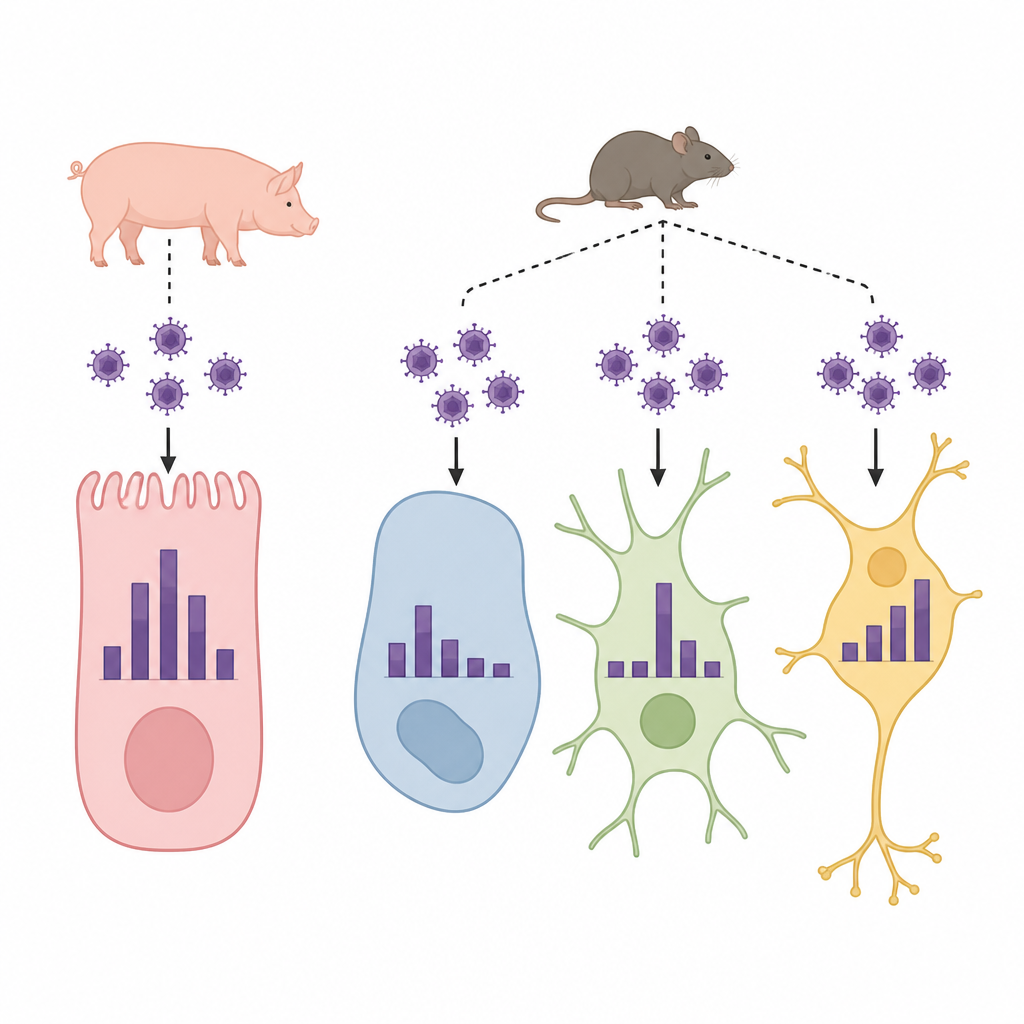
The researchers infected four cultured cell lines with the same pseudorabies virus strain: pig kidney cells and three rat cell types representing kidney, glial brain cells, and neuron-like cells. They then tracked which viral genes turned on, when, and in what forms across the first 12 hours of infection. Using several sequencing methods able to read entire RNA molecules, they built a detailed atlas of viral transcripts, including the precise start and end points and alternative versions of each RNA. They found that the virus keeps its classic three-stage program of early, middle, and late gene activity in every cell type, but the strength and balance of these stages shift depending on the host species and tissue.
Finding many new viral messages
By combining long-read sequencing with a method that pinpoints capped RNA beginnings, the team uncovered 94 previously unrecognized viral transcripts. These included messages with longer or shorter leader regions, RNAs that run across several neighboring genes in a row, and a handful of noncoding RNAs that do not make proteins. Longer readthrough molecules linked distant genes into single transcripts, especially in one region of the genome where unusually long RNAs spanned much of a gene cluster. At the same time, the overall mix of transcript types stayed surprisingly stable: standard protein-coding RNAs dominated from the start and became even more prevalent late in infection, while exotic forms such as polygenic and truncated transcripts declined over time.
Same timing, different volume
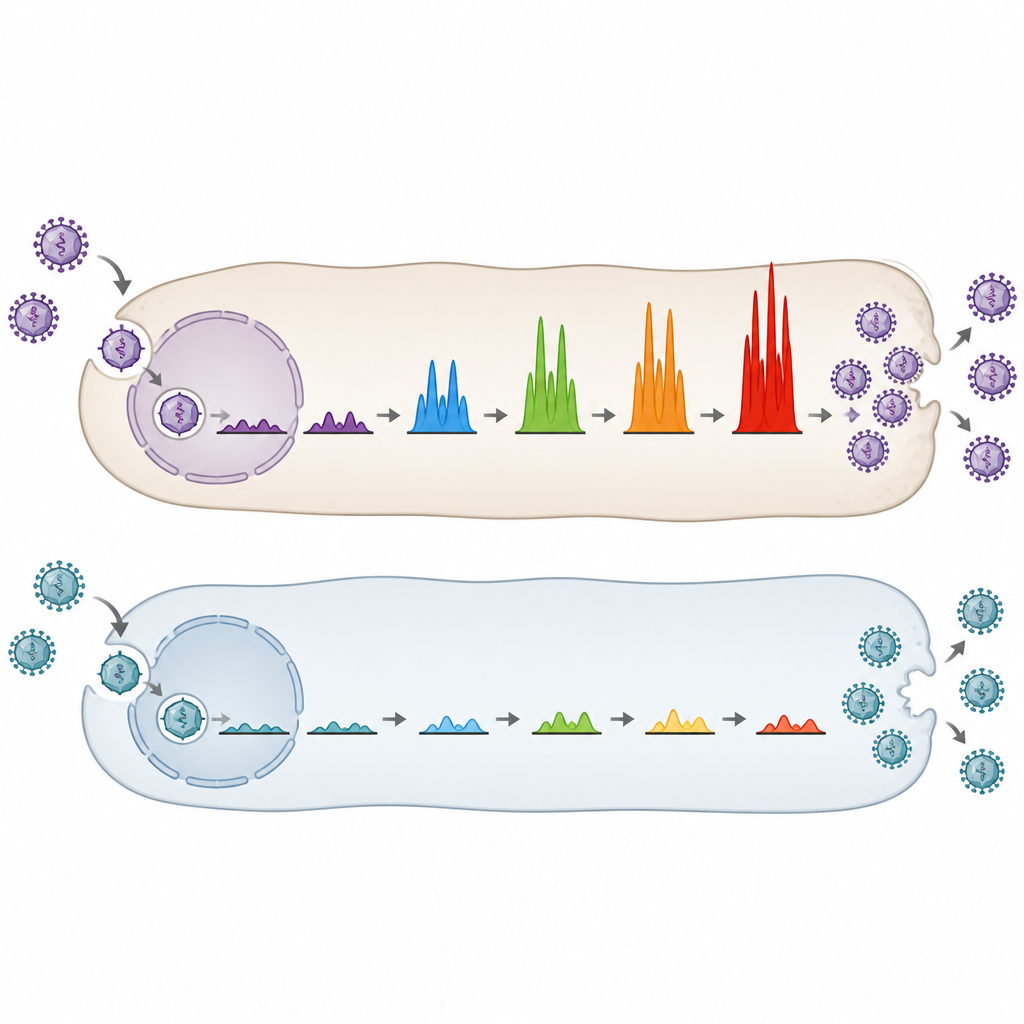
When the authors compared viral activity across the four cell lines, they saw that pig kidney cells produced the most viral RNA, converting over half of all cellular messages to viral ones by 12 hours. Rat neuron-like cells reached roughly one third, while rat kidney and glial cells produced about one fifth. Despite these large quantitative gaps, the order of events stayed the same: immediate-early regulators rose first, followed by early genes needed for DNA copying, and finally late genes encoding structural components of new virus particles. The main differences lay in how strongly specific promoters and termination points were used. Pig cells favored strong activation and completion of transcripts tied to viral replication and structural assembly, while rat cells devoted a larger share of their output to genes involved in the envelope and interactions with host defenses.
A finely tuned control trio
Particular attention was given to three key regulatory genes that steer the viral program. In pig cells, the master switch gene ie180 fired in a sharp early burst that dwarfed its output in all rat cell types, where its levels stayed low and brief. A second regulator, ep0, turned on early in every host but showed notable shifts in how its RNA was spliced, with pig cells favoring one splice form and rat cells favoring another. The third gene, us1, rose somewhat later and was especially active in rat neural and glial cells. Across the genome, many promoters and transcript endings echoed this pattern: pig cells tilted toward strong production of structural and replication-linked RNAs, whereas rat cells shifted the balance toward envelope and immune-related regions, all without disturbing the underlying early-to-late schedule.
How the virus adapts without changing its plan
To a lay observer, the central message is that pseudorabies virus follows the same overall timetable in different hosts but tweaks the volume and shape of its genetic messages to match the cell it inhabits. Rather than rewriting its script, the virus keeps the plot but changes the emphasis on key scenes, especially through how often promoters fire, where transcripts end, and which RNA versions are preferred. This quantitative tuning may help explain why pigs typically tolerate infection while rodents succumb quickly and offers a framework for understanding how related herpes viruses navigate different tissues and species.
Citation: Kakuk, B., Csabai, Z., Deim, Z. et al. Multi-platform profiling reveals host- and cell -type-specific pseudorabies virus gene expression. Sci Rep 16, 15297 (2026). https://doi.org/10.1038/s41598-026-45990-4
Keywords: pseudorabies virus, alphaherpesvirus, viral transcriptome, host cell types, long-read sequencing