Clear Sky Science · en
Automatic speech analysis can predict loneliness
Hearing Feelings in Everyday Conversation
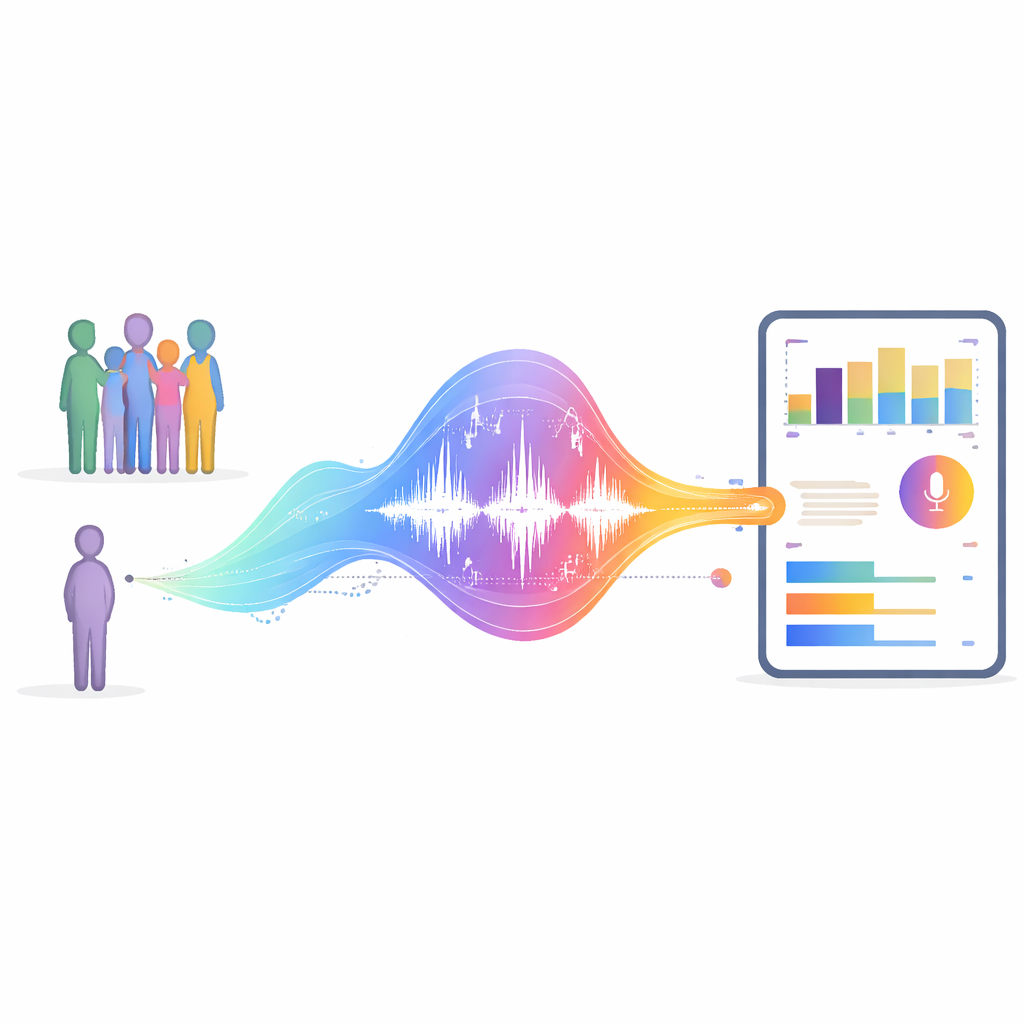
Most of us know what loneliness feels like, but we rarely think about how it might sound. This study asks a striking question: could subtle patterns in our voice reveal how lonely we are, even when we are just describing a simple picture? By using automatic speech analysis and machine learning, the researchers explore whether a computer can pick up on tiny vocal cues that people might miss, offering a fresh window into social disconnection and emotional health.
Why Loneliness Matters for Health
Loneliness is not just a passing mood; it is linked to a higher risk of depression, anxiety, psychosis, suicidal thoughts, and even early death. People who feel chronically alone often expect social encounters to go badly, pay more attention to potential rejection, and may behave in ways that unintentionally push others away. Earlier work has shown that lonely people can be recognized by strangers and experimenters and that their brains and hormone responses differ during social situations. All of this suggests that loneliness leaves traces in how we act and communicate, including in the way we speak.
Listening Closely to Simple Speech
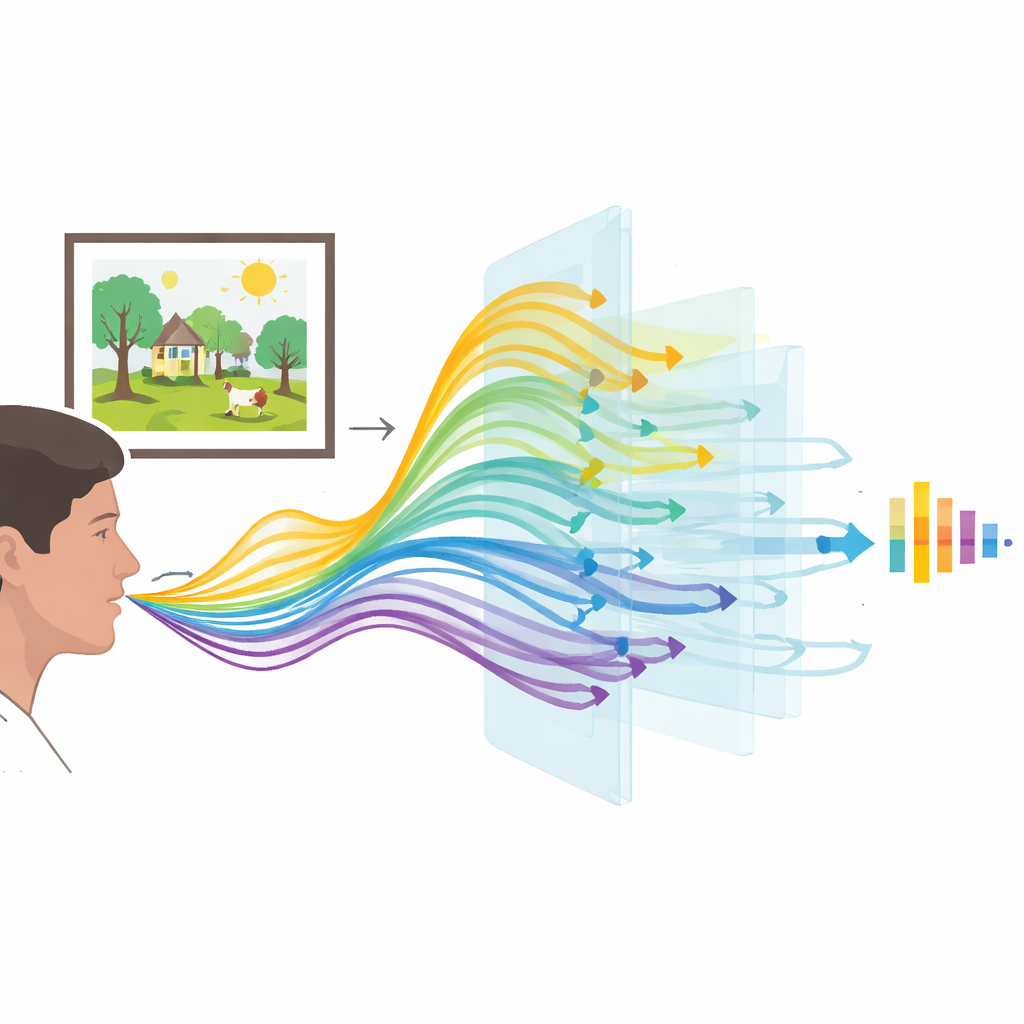
The research team recruited 96 healthy adults, roughly evenly split between women and men, with an average age of about 31 years. Participants completed standard questionnaires measuring loneliness, depression, and social anxiety. They then performed three brief speaking tasks while their voices were recorded on a tablet. In one, they described a well-known picture of a family kitchen scene, which gently nudges people to talk about what others are thinking and doing. In the other two tasks, they told short stories about a positive and a negative personal event, chosen to be emotionally meaningful but not traumatic.
Turning Voices into Data
Rather than analyzing the meaning of the words, the researchers focused on how the participants spoke. Using specialized software, they automatically extracted dozens of features from each recording. These covered timing (such as how much of the recording was filled with speech versus pauses), melody and rhythm (like pitch patterns), sound quality (such as how clear or noisy the voice was), and properties of the acoustic signal. Machine learning models, trained separately for women and men, tried to predict each person’s loneliness score from these features. The most promising results came from the structured picture description task, not from the more free-form emotional storytelling.
What the Computer Heard
Speech from the picture description allowed the models to predict loneliness better than chance in both women and men, explaining a modest but meaningful share of the differences between individuals. No single vocal trait carried the signal; instead, many small effects combined to form a detectable pattern. Among women, higher loneliness was linked to speaking less continuously (more silence relative to speech) and to more uneven loudness over time. Among men, higher loneliness was tied to fewer pauses between syllables, shorter overall speaking time, a rougher, noisier voice, and slightly higher pitch. When loneliness was predicted using both speech features and questionnaire scores for depression and social anxiety, the combined model worked better than questionnaires alone for women, but not for men, hinting that gender may shape how loneliness shows up in speech.
Context and Limits of the Findings
Interestingly, speech from the emotional storytelling tasks did not predict loneliness nearly as well. These open-ended stories varied widely in content and stirred stronger emotions, which likely added extra vocal changes that masked the more delicate loneliness-related patterns. The standardized picture description, by contrast, put everyone in a similar social-thinking situation, making subtle differences easier to detect. Still, the models captured only part of the picture; loneliness was also closely linked to depression and social anxiety, and the sample consisted of mostly young, healthy adults whose experiences may differ from those of older or clinically distressed populations.
What This Means for Everyday Life
In simple terms, the study shows that how we speak—our pauses, pitch, and voice quality—carries faint but real clues about how lonely we feel, even when we are just describing a scene. Computers can pick up these patterns by analyzing sound features that humans rarely notice consciously. While the current results are an early proof-of-concept rather than a ready-made test, they point to a future in which brief, everyday speech could help flag people at risk of chronic loneliness and related health problems, ideally guiding support before isolation becomes deeply entrenched.
Citation: Immel, D., Mallick, E., Linz, N. et al. Automatic speech analysis can predict loneliness. Sci Rep 16, 11604 (2026). https://doi.org/10.1038/s41598-026-45965-5
Keywords: loneliness, speech analysis, mental health, machine learning, social connection