Clear Sky Science · en
Non-O157 shiga toxin–producing Escherichia coli (STEC) in Africa: a one health systematic review and meta-analysis of prevalence, antimicrobial resistance, and clinical outcomes
Why this hidden germ problem matters
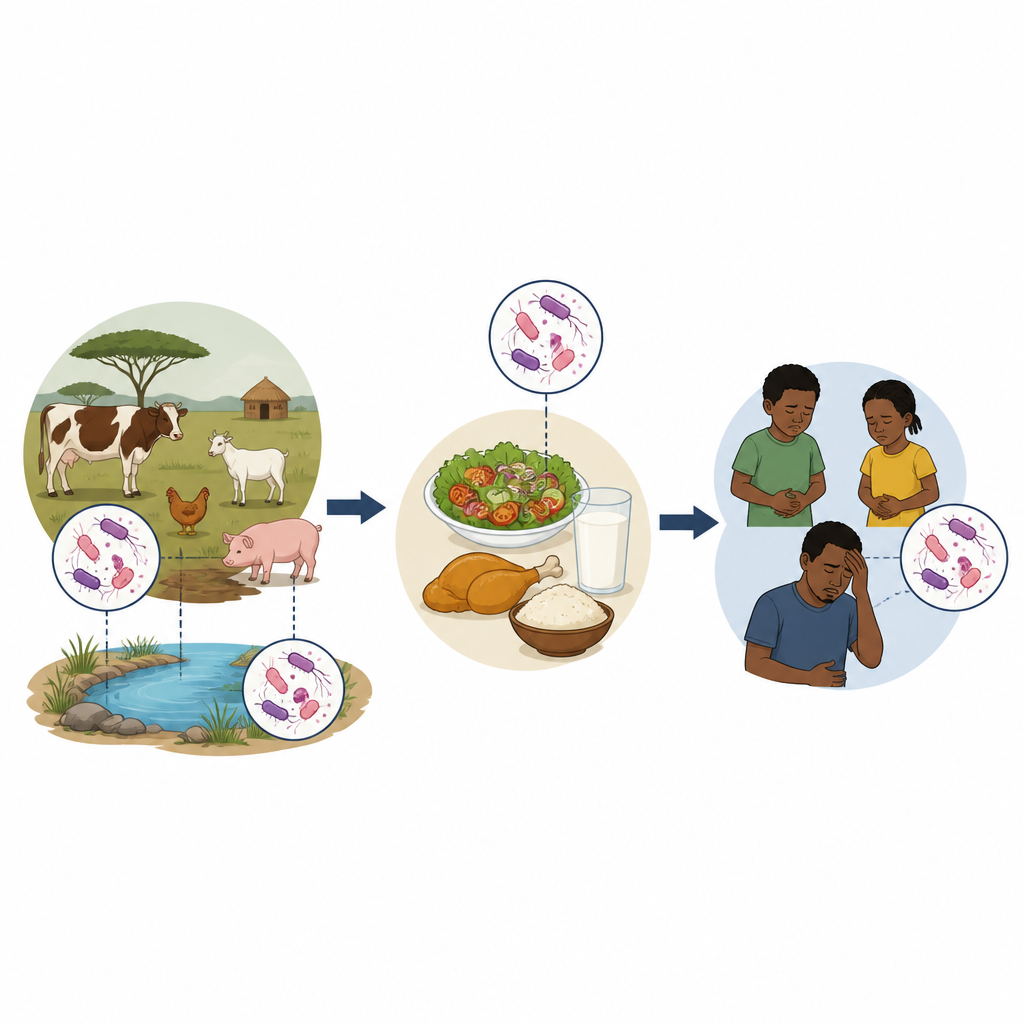
Most people have heard of E. coli food poisoning, but many do not realize that a whole group of lesser known E. coli strains can cause serious illness, especially in young children. This study looks across Africa to ask how common these “non-O157” E. coli are in people, animals, food, and water, how often they resist antibiotics, and what that means for everyday health. By viewing humans, animals, and the environment together, the researchers use a One Health lens to show how a problem on the farm or in a river can end up in a hospital ward.
Following the trail across Africa
The authors searched major scientific databases for all studies from African countries that reported non-O157 Shiga toxin–producing E. coli in humans, animals, food, or environmental samples. Out of 1,503 articles, only 22 met strict criteria, including clear sample sources, methods, and results. Most of these studies came from Egypt and South Africa, reflecting where laboratories and funding are more available, while Central Africa had no eligible reports. Even so, the combined evidence provided enough data to estimate how widespread these bacteria are and to compare patterns between regions and sample types.
How common the dangerous strains are
Across all included studies, about one in five samples carried non-O157 E. coli that make Shiga toxins, with a pooled prevalence of 20.7 percent. Rates were especially high in South Africa and Northern Africa. Certain strain types, sometimes called the “big six,” showed up again and again. Types named O26, O111, and O78 were frequent in people, farm animals, food, and water, suggesting many chances for the bacteria to jump between these settings. The germs taken from human patients often carried key toxin and attachment genes more often than those from animals or the environment, which fits with their role in causing disease.
Antibiotic resistance on the rise
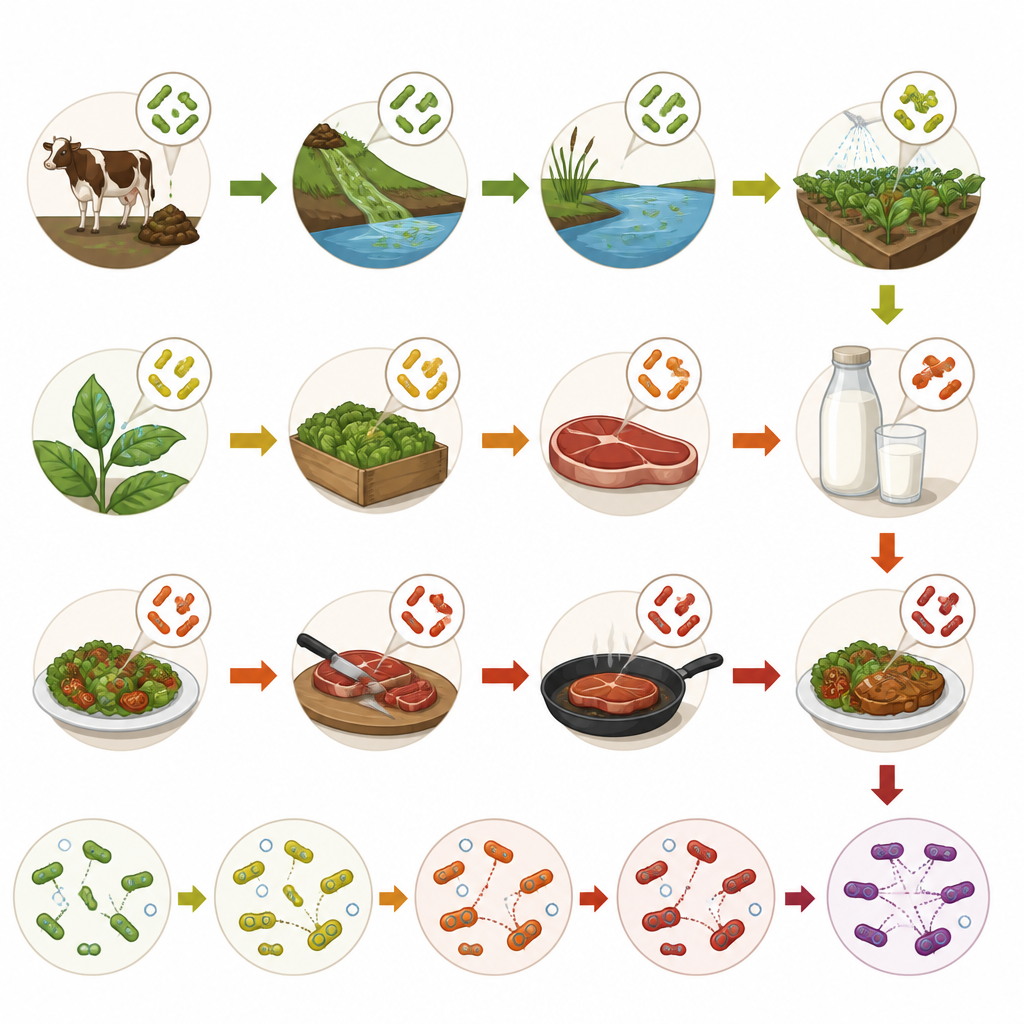
A major concern uncovered by the review is how often these strains withstand commonly used antibiotics. When the team combined data from studies that tested drug sensitivity, more than 10 percent of isolates resisted medicines such as tetracycline, ampicillin, streptomycin, and erythromycin. Genetic tests in a smaller group of studies found many resistance genes, including ones that help bacteria defeat important beta lactam drugs and others that protect against tetracyclines and sulfonamides. These genes turned up in samples from urine, stool, meat, milk, and even soil and water, showing how resistance can move along the food chain and through the environment.
What this means for illness in real people
Fourteen of the reviewed studies described actual patients infected with these non-O157 strains. Most were children and adults with diarrhea or gastroenteritis, and many were not in the hospital. In several Egyptian and South African hospitals, children under five presented with bloody or non bloody diarrhea, and some developed urinary tract infections. The authors note that these early symptoms can, if poorly managed, progress to severe problems such as kidney damage and life threatening complications. Often, infection was linked to eating or drinking products from animals, such as raw milk or contaminated meat, or to unsafe water.
What the study means for everyday life
For a lay reader, the takeaway is that dangerous E. coli in Africa are not limited to the well known O157 type, and they do not stay neatly separated between farms, food, and people. The review shows that non-O157 strains are widespread, increasingly resistant to antibiotics, and already causing diarrhea and other illnesses in children and adults. The authors call for better lab tools to detect these germs quickly, careful use of antibiotics in both humans and animals, and public education about safe food, clean water, and hygiene. In simple terms, keeping animals healthy, water clean, and medicines used wisely are all part of protecting families from these hidden but important bacteria.
Citation: Akinduti, P.A., Odoom, A., Darkwah, S. et al. Non-O157 shiga toxin–producing Escherichia coli (STEC) in Africa: a one health systematic review and meta-analysis of prevalence, antimicrobial resistance, and clinical outcomes. Sci Rep 16, 15307 (2026). https://doi.org/10.1038/s41598-026-45963-7
Keywords: E. coli, foodborne infection, antimicrobial resistance, One Health, Africa