Clear Sky Science · en
Unraveling aerotolerancy of campylobacter jejuni and campylobacter coli using a transcriptomic approach
Why air-shy germs matter to dinner
Campylobacter bacteria are a leading cause of food poisoning worldwide, often linked to undercooked poultry and other meats. Curiously, these microbes are supposed to dislike oxygen and thrive only in low-oxygen environments like animal intestines. Yet they routinely survive the very oxygen-rich steps of meat processing and still make people sick. This study asks how two major disease-causing species, Campylobacter jejuni and Campylobacter coli, manage this apparent paradox—and what that means for keeping our food safer. 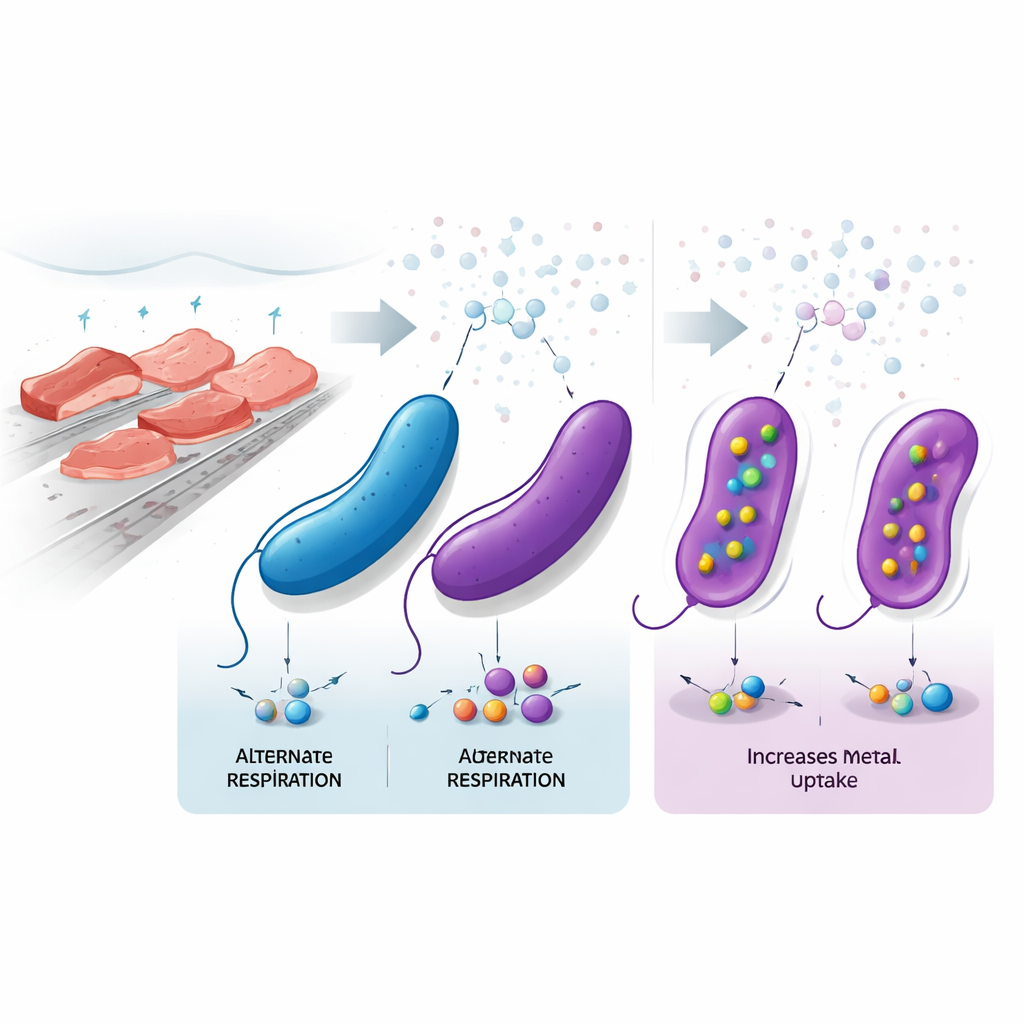
Peeking inside stressed bacteria
The researchers focused on “aerotolerant” strains of C. jejuni and C. coli—versions that can withstand hours of exposure to normal air. They grew each strain under its preferred low-oxygen conditions, then suddenly shifted the cultures into regular atmospheric oxygen, similar to what they would encounter on a slaughter line. Over 15 hours, they repeatedly sampled the bacteria and used RNA sequencing to measure which genes turned up or down. This approach offers a genome-wide snapshot of the internal response, revealing which cellular systems are dialed back to save energy and which are boosted to help the cells cope with stress.
Hitting the brakes on growth and power
Both species responded to oxygen stress by broadly slowing down. Large groups of genes involved in building ribosomes—the cell’s protein factories—were strongly turned down. Making ribosomes is expensive, so cutting back is a common way for cells to conserve resources under harsh conditions. At the same time, many genes tied to energy production, especially those for oxidative phosphorylation (the main oxygen-based power-generating chain), were also reduced. This suggests the bacteria are intentionally lowering their metabolic “engine speed,” which may limit the buildup of harmful oxygen by-products inside the cell. In essence, when confronted with too much oxygen, these germs hunker down instead of trying to grow quickly.
Different metal strategies for the same problem
Where the two species diverged sharply was in how they handled key metals. C. coli boosted a suite of genes involved in importing and storing iron, a metal that is both essential and potentially dangerous because it can help generate damaging reactive molecules. In contrast, C. jejuni turned many iron uptake genes down. Instead, C. jejuni strongly increased genes that import molybdate and tungstate, forms of molybdenum and tungsten that plug into enzymes able to use alternative electron acceptors like nitrate or certain sulfur compounds. These alternative pathways let the bacteria carry out forms of respiration that rely less directly on oxygen, hinting that C. jejuni may partially switch from typical oxygen-based breathing toward more anaerobic styles when air becomes overwhelming. 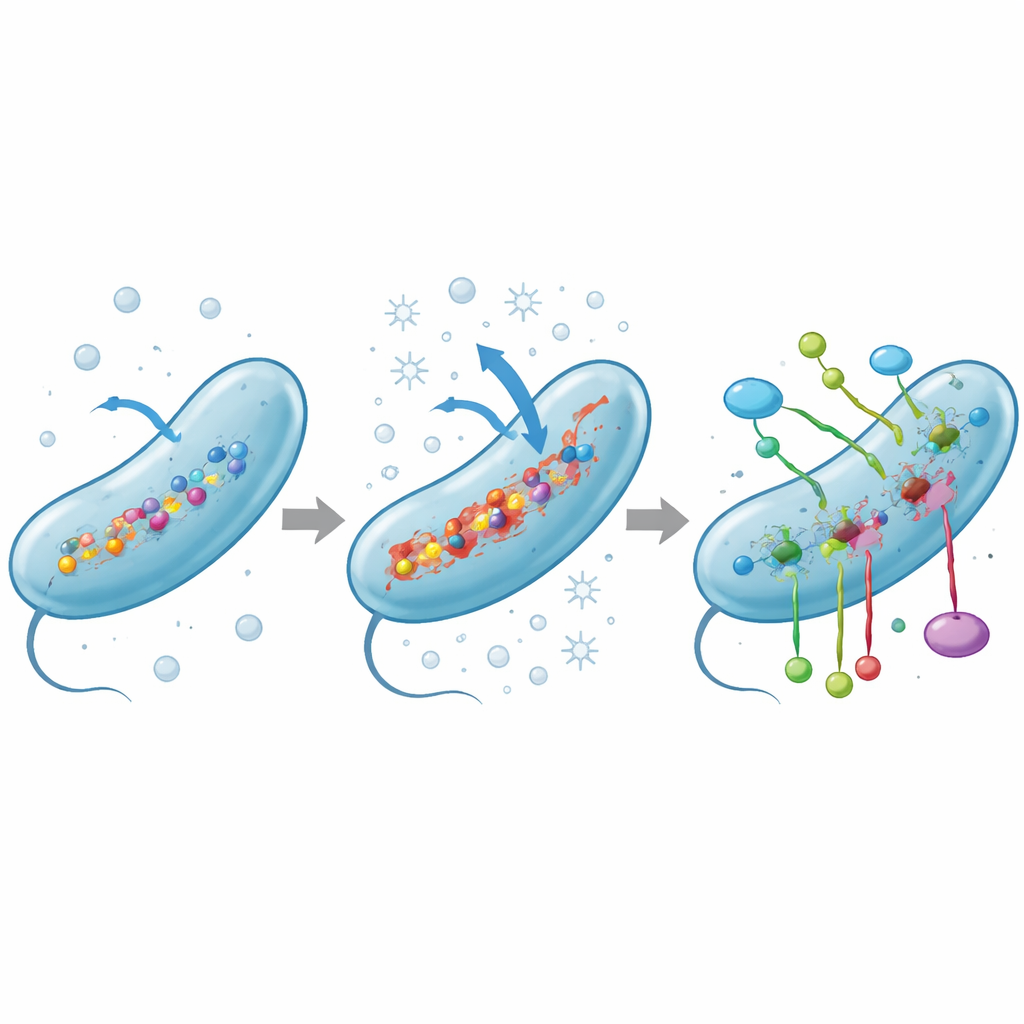
Strengthening shields and repairing damage
Beyond metals and energy, the bacteria also reinforced their outer defenses. Genes involved in building the capsule and maintaining the outer membrane—structures that help protect against environmental attack—were turned up in both species, especially early after oxygen exposure. Genes that help proteins fold correctly and recover from damage, including classic heat shock and chaperone genes, were first dialed down to save resources but later switched on, likely to repair stress-damaged proteins. Some genes linked to movement and sensing the environment were turned down, changes that other studies connect to increased biofilm formation, where bacteria cluster in protective communities that can better withstand oxygen and disinfectants.
What this means for food safety
Altogether, the findings suggest that these two Campylobacter species survive air exposure through a mix of shared and distinct tactics. Both slam the brakes on growth and energy use, and both shore up their outer barriers. But C. coli appears to lean on iron-related systems, while C. jejuni may escape some oxygen damage by shifting toward more oxygen-sparing respiration powered by molybdenum- and tungsten-dependent enzymes. For a layperson, the takeaway is that these germs are far more adaptable to air than their “oxygen-sensitive” label implies. Understanding these survival tricks could guide new strategies—such as targeting metal uptake, capsule formation, or specific respiration pathways—to prevent Campylobacter from enduring processing steps and reaching our plates.
Citation: Delaporte, E., Karki, A.B. & Fakhr, M.K. Unraveling aerotolerancy of campylobacter jejuni and campylobacter coli using a transcriptomic approach. Sci Rep 16, 10906 (2026). https://doi.org/10.1038/s41598-026-45944-w
Keywords: Campylobacter, foodborne illness, aerotolerance, oxidative stress, bacterial respiration