Clear Sky Science · en
Pomolic acid alleviates CCl4‑induced liver fibrosis in mice by suppressing β-arrestin 2-mediated pro-fibrotic macrophage polarization
Why this matters for liver health
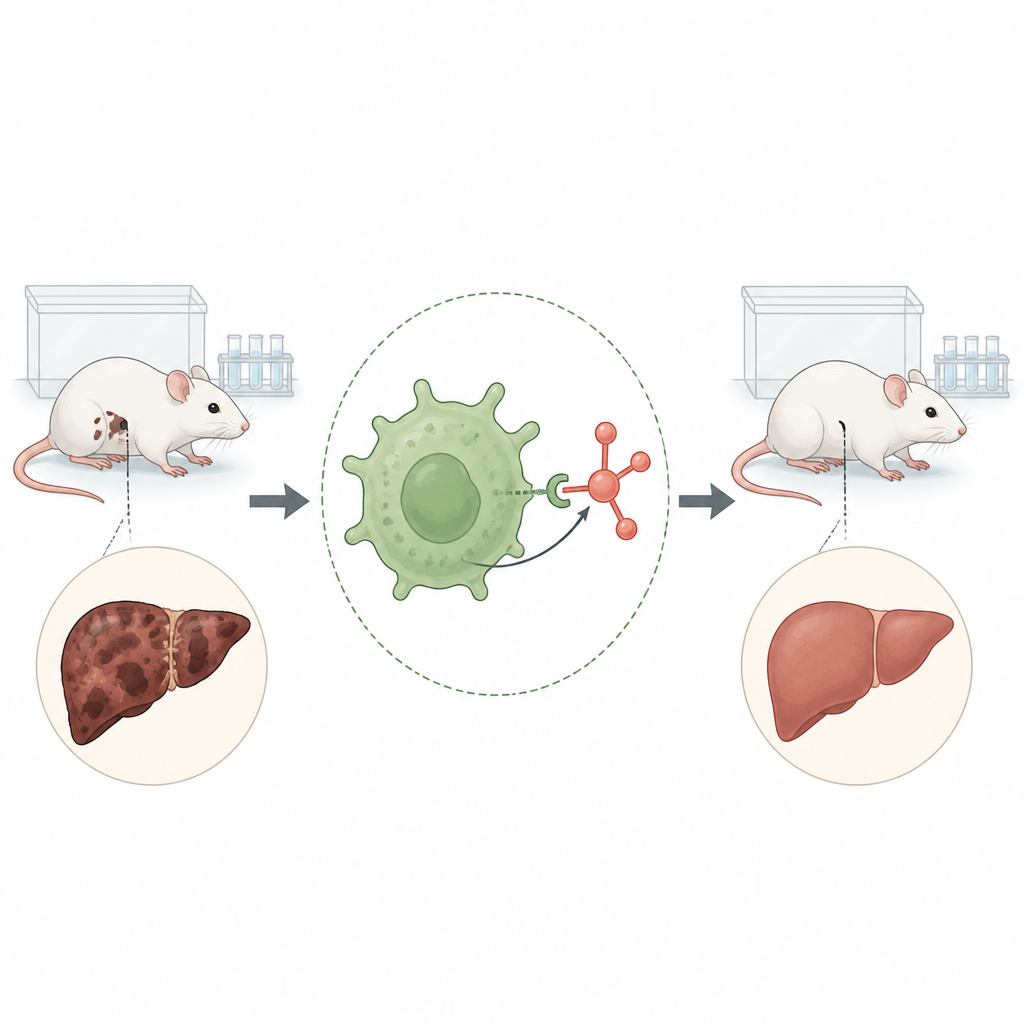
Liver scarring, or fibrosis, underlies many common liver diseases, yet there are still no widely used drugs that directly target this scarring process. This study explores a natural compound called pomolic acid, found in a traditional Chinese medicinal plant, and how it may protect the liver by calming a key group of immune cells that drive scar formation.
The body’s cleanup crew and unwanted scars
When the liver is injured over and over, the body tries to heal the damage by laying down support tissue, much like a scab on the skin. If this process does not turn off, the normal soft liver gradually fills with stiff fibers and loses its function. Immune cells called macrophages are central to this story. They are the body’s cleanup crew, clearing debris and helping repair tissue. Under certain signals, however, some macrophages switch into a pro-fibrotic state that encourages scar formation rather than true healing. These cells release powerful factors that activate liver stellate cells, which then pour out collagen and other matrix components that stiffen the organ.
A plant molecule that selectively calms scar-driving cells
The researchers focused on pomolic acid because related plant compounds were already known to have anti-fibrotic effects. In dishes of mouse, human, and primary bone marrow–derived macrophages, they compared three similar molecules and found that pomolic acid stood out. It had little effect on classic pro-inflammatory macrophages that fight infections, but it strongly blocked the pro-fibrotic version triggered by the signals interleukin-4 and interleukin-13. These scar-promoting macrophages normally ramp up markers such as Arg1, CD206, and the fibrotic messenger TGF-beta. Pomolic acid sharply reduced these markers and the release of TGF-beta, suggesting it can dial down the specific macrophage program that feeds liver scarring while leaving other defensive functions largely intact.
Rewiring macrophage fuel use to slow scarring
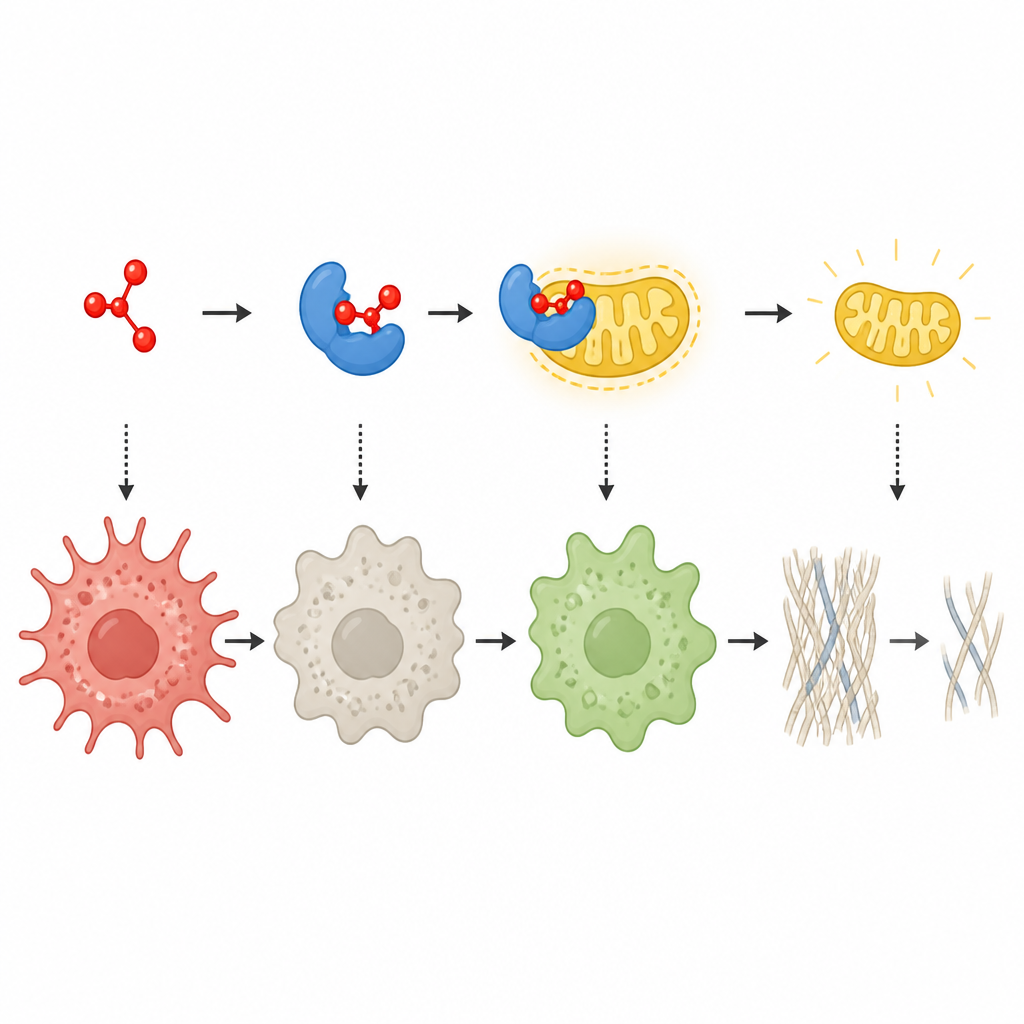
Pro-fibrotic macrophages depend on a particular way of generating energy: they rely on burning fats in their mitochondria rather than on the fast sugar-burning route used by inflammatory cells. The team showed that pomolic acid interferes with this fat-burning pathway, known as fatty acid oxidation. It lowered levels of proteins that import and process fats, including PPAR gamma, CD36, and CPT1. When the scientists added a drug that boosts fatty acid oxidation, it reversed the calming effect of pomolic acid on these macrophages. They also discovered that pomolic acid boosted a protective enzyme called IRG1, which makes an immune metabolite that can restrain the pro-fibrotic program. Blocking IRG1 erased the benefits of pomolic acid, while adding an IRG1 product restored them, highlighting a metabolic brake that this plant compound helps press.
Breaking a harmful molecular partnership
Digging deeper, the researchers asked why IRG1 levels rose under pomolic acid. Rather than increasing the gene’s activity, pomolic acid slowed the breakdown of IRG1 protein. Normally, another protein called beta-arrestin 2 helps tag IRG1 for disposal through the cell’s protein recycling machinery. Using pull-down assays and protein stability tests, the team showed that pomolic acid binds directly to beta-arrestin 2 and disrupts its physical contact with IRG1. As a result, IRG1 is less tagged for destruction and can accumulate, which in turn reduces fatty acid oxidation and weakens the pro-fibrotic macrophage state. When beta-arrestin 2 was removed from cells, pomolic acid no longer had its calming effect, confirming that this interaction is central to the compound’s action.
From cell dishes to diseased livers and mouths
The team then moved from cell culture to living animals. Mice were given carbon tetrachloride, a chemical that reliably causes chronic liver injury and fibrosis. Animals treated with pomolic acid had lower blood markers of liver damage, less inflammation, and strikingly less collagen buildup in their livers compared with untreated mice. Liver tissue from treated animals contained fewer pro-fibrotic macrophages and showed reduced fat-burning signatures, along with higher IRG1 levels and dampened STAT6 activity, a key driver of the scar-forming program. Remarkably, pomolic acid also eased fibrosis in a model of oral submucous fibrosis, a scarring disorder of the mouth linked to areca nut exposure, suggesting its effects extend beyond the liver.
What this could mean for future treatments
Overall, the study suggests that pomolic acid can lessen liver and oral scarring in mice by targeting a specific switch in macrophages. By binding to beta-arrestin 2, it protects IRG1 from being broken down, alters how these cells use fuel, and nudges them away from a scarring mode. While much more work is needed to test safety, dosing, and effectiveness in humans, the findings point to pomolic acid, or drugs that mimic its action on beta-arrestin 2 and IRG1, as promising leads for new anti-fibrotic therapies that work by reprogramming the body’s own repair cells.
Citation: Zhu, X., Zhou, Y., Ruan, M. et al. Pomolic acid alleviates CCl4‑induced liver fibrosis in mice by suppressing β-arrestin 2-mediated pro-fibrotic macrophage polarization. Sci Rep 16, 15245 (2026). https://doi.org/10.1038/s41598-026-45925-z
Keywords: liver fibrosis, macrophages, pomolic acid, beta-arrestin 2, itaconic acid