Clear Sky Science · en
The red cell distribution width to albumin ratio (RAR) for predicting prognosis in spontaneous intracerebral hemorrhage: a retrospective cohort study using the MIMIC-IV database
Why a simple blood test matters in brain bleeding
When a blood vessel bursts deep inside the brain, doctors must quickly judge who is most at risk and who might recover. This study explored whether a simple number, calculated from two routine blood tests, can help predict survival in people with spontaneous brain bleeds. Because these tests are already done in most hospitals, such a measure could guide treatment choices without extra cost or complex equipment.
A closer look at brain bleeds
Spontaneous intracerebral hemorrhage is a type of stroke where blood suddenly leaks into brain tissue. It often strikes older adults and people with high blood pressure. Around a third of patients die within the first days to weeks, and many survivors are left with serious disability. Existing scoring tools help estimate risk, but they rely on scans and many clinical details, and they do not fully capture how the whole body reacts to such a severe event. Researchers have been searching for easy blood-based markers that reflect both inflammation and nutrition, two key processes that influence recovery.
Turning two common tests into one warning sign
The team focused on the ratio between red cell distribution width and albumin, called RAR. Red cell distribution width describes how varied red blood cells are in size, which tends to rise when the body faces stress, poor nutrition, or ongoing inflammation. Albumin is a major blood protein that drops when a person is sick, inflamed, or malnourished. By dividing one by the other, RAR combines signals of strain and weakness into a single number that can be calculated from standard lab results taken on the first day in intensive care.
What the hospital data revealed
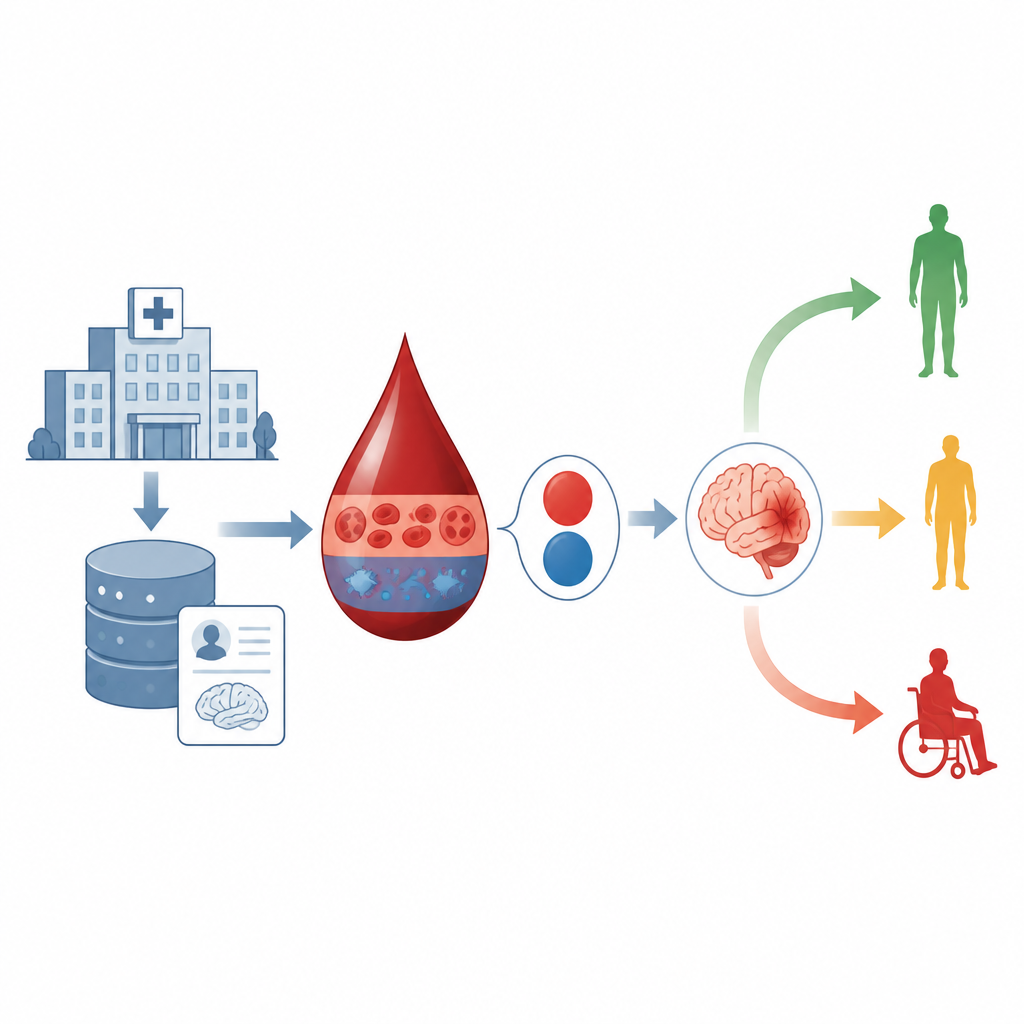
Using the large MIMIC-IV intensive care database, the researchers identified 817 adults admitted with spontaneous brain bleeds. They calculated each patient’s RAR at admission and then tracked who died within 30, 90, and 365 days. A statistical curve was used to find a cutoff value of 3.90 that best separated higher and lower 90-day death rates. Patients were divided into a low-RAR and a high-RAR group. Even after carefully matching people with similar ages, illnesses, and illness severity scores, those in the high-RAR group died more often at every time point. Survival curves showed that the gap between the two groups opened early and persisted through one year.
How strongly the ratio tracked risk
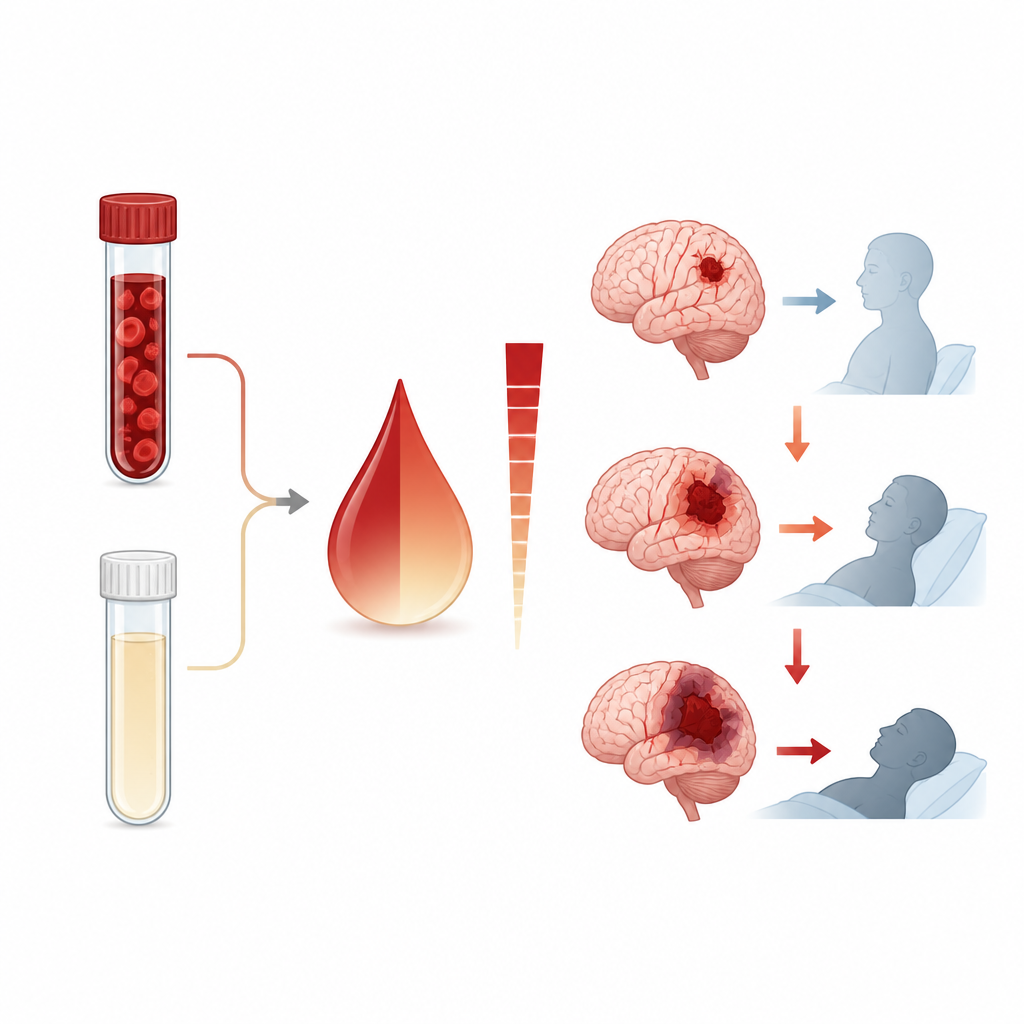
When the researchers adjusted for many other factors, including blood pressure, organ function, and standard intensive care scores, a high RAR still signaled higher risk. Compared with those below the cutoff, patients with a higher ratio had about three-quarters higher odds of death at one month, three months, and one year. A flexible dose–response analysis suggested that as RAR increased, the chance of dying also rose in a fairly steady way. The link was especially strong for short-term death in older patients and in those with high blood pressure, but the pattern for 90-day and one-year outcomes held across all subgroups tested.
What this could mean for patients and doctors
Because both red cell distribution width and albumin are inexpensive and routinely measured, their ratio could become a simple bedside aid for estimating risk after a brain bleed. The study suggests that a higher RAR on admission marks patients whose bodies are under greater stress and poorer nutritional balance, and who are more likely to die within the first year. While the research is observational and cannot prove cause and effect, it points to RAR as an accessible tool that may help doctors quickly spot vulnerable patients, talk more clearly with families about expected outcomes, and tailor care more closely to individual risk.
Citation: Zhang, L., Yang, D., Wang, Y. et al. The red cell distribution width to albumin ratio (RAR) for predicting prognosis in spontaneous intracerebral hemorrhage: a retrospective cohort study using the MIMIC-IV database. Sci Rep 16, 15430 (2026). https://doi.org/10.1038/s41598-026-45905-3
Keywords: intracerebral hemorrhage, blood biomarkers, red cell distribution width, albumin, stroke prognosis