Clear Sky Science · en
Serological detection and epidemiological analysis of HBV among butchers in Khartoum State
Why this matters to everyday life
Hepatitis B is a virus that quietly injures the liver and can lead to lifelong illness and cancer. In countries like Sudan, where many people work in jobs that involve sharp tools and blood, certain workers face a higher risk of infection without even knowing it. This study zooms in on one such group—butchers in Khartoum State—to find out how common hepatitis B infection is among them and what can be done to keep these workers, their families, and their communities safer.
A closer look at butchers and liver infection
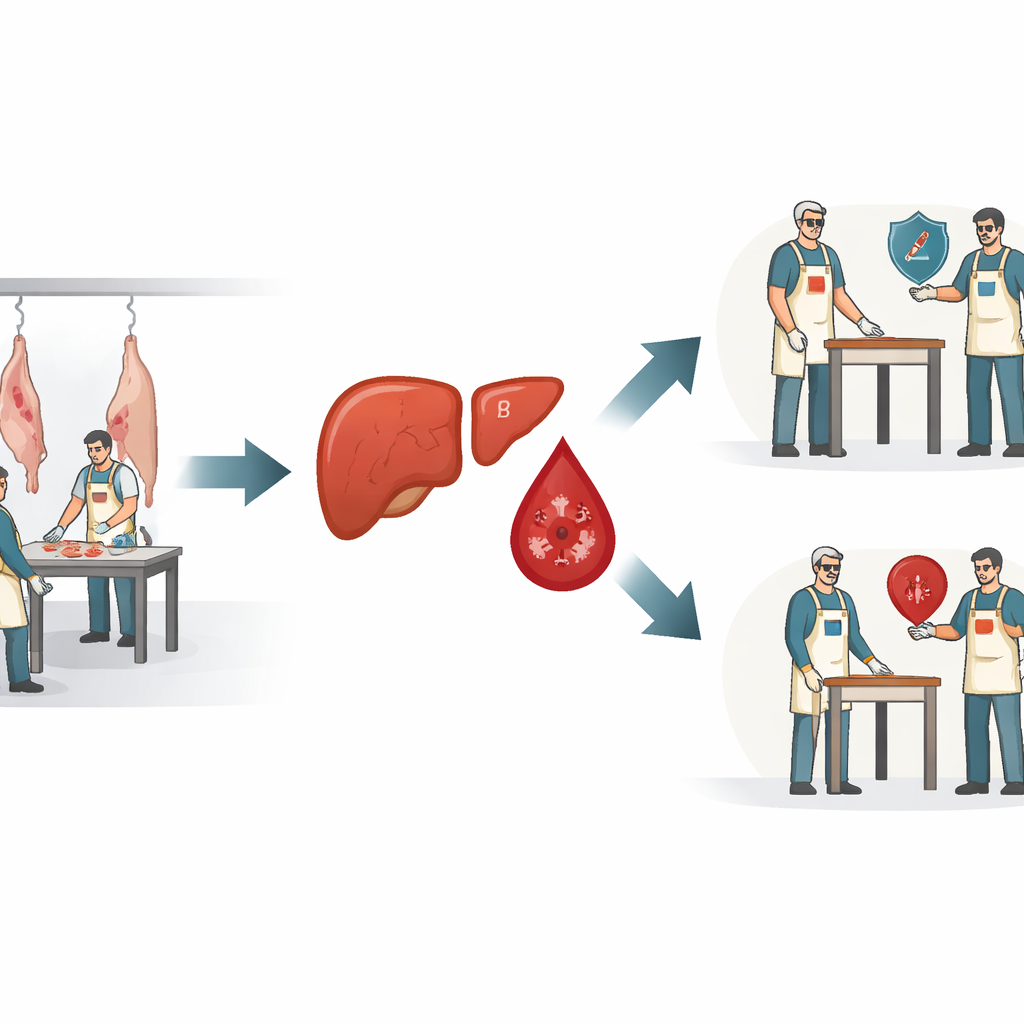
The researchers focused on 385 active butchers working in several areas of Khartoum State between early 2022 and early 2023. None of these workers had been previously diagnosed with hepatitis B. Through in‑person interviews, the team collected information on age, marital status, education level, work history, years of experience, vaccination status, and past health events such as surgery or jaundice (yellowing of the eyes and skin). They also drew blood from each participant to look for a specific marker on the virus’s outer coat, which shows that a person is currently infected.
How the team tested for hidden infections
To uncover silent infections, the scientists used a standard laboratory method that detects tiny amounts of virus in blood. After separating the clear part of the blood, they applied it to plates coated with antibodies that grab onto the virus’s surface. If virus was present, a chain of reactions produced a color change that could be measured by a machine. Careful quality checks were built into every step: known positive and negative samples were run alongside butcher samples, and extra control specimens were used to make sure results were stable and trustworthy over time.
What the study found in the slaughterhouse
The main finding was that about three in every hundred butchers—3.1 percent—had clear evidence of ongoing hepatitis B infection. When the researchers compared infected and non‑infected workers, they found no meaningful links with age, marriage, schooling, earlier jobs, past surgery, knife‑sharing, or a history of jaundice. One factor did stand out: new butchers with less than a year of experience had a much higher infection rate, nearly nine percent, while none of the more seasoned workers tested positive. This pattern suggests that the early months on the job may be a particularly dangerous window, when workers are still learning how to handle sharp tools and protect their wounds.
The missing shield of vaccination
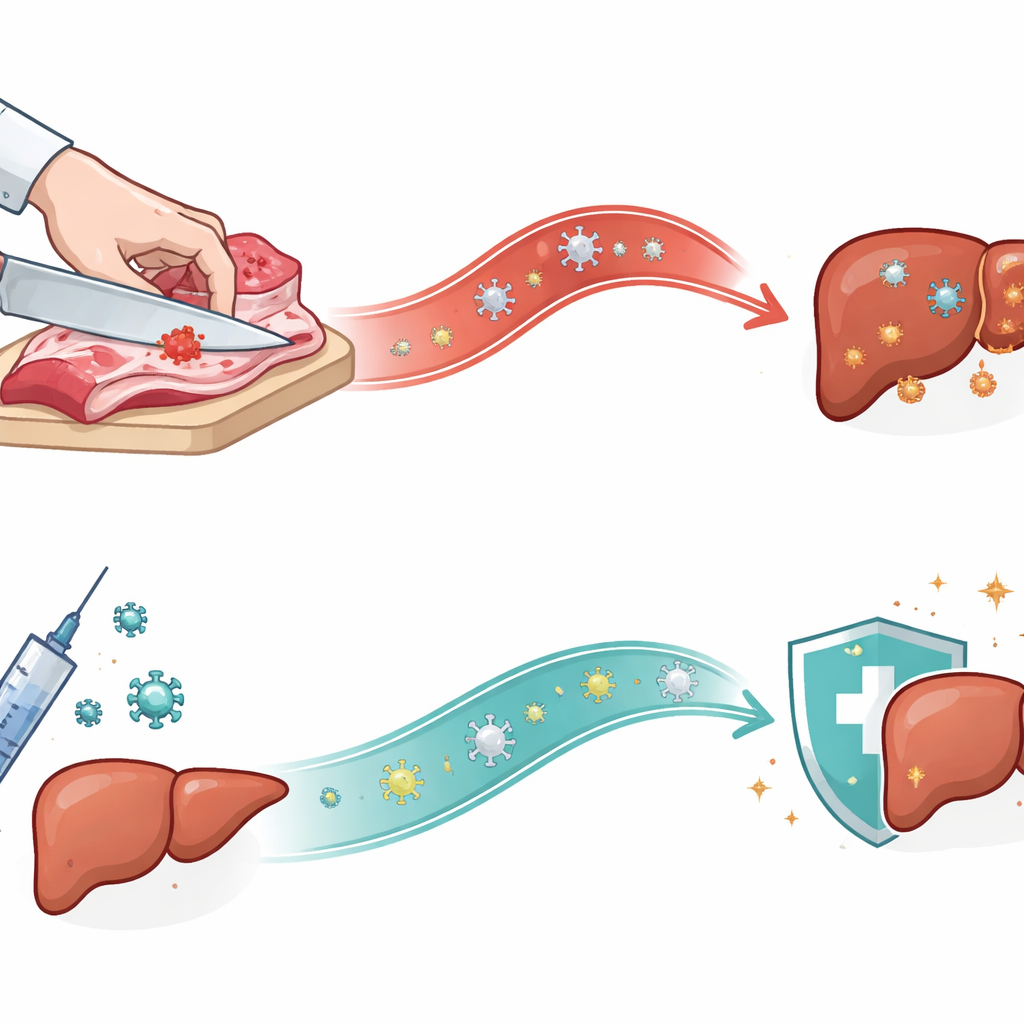
Vaccination emerged as a powerful dividing line. Almost a quarter of all participating butchers reported having received the hepatitis B vaccine, a simple series of shots that is known to provide strong, long‑lasting protection. Strikingly, every single person who tested positive for the virus was unvaccinated; none of the vaccinated workers showed signs of current infection. Even though the number of infected individuals was small, this pattern reinforces global evidence that most workplace hepatitis B infections occur in people who never received the full vaccine series.
What this means for workers and communities
To a non‑specialist, the takeaway is clear: in this slice of Sudan’s workforce, hepatitis B is an occupational hazard that concentrates in newcomers and the unvaccinated. The study shows that simple steps—making hepatitis B shots routine for all new butchers, teaching safe handling of knives and carcasses from day one, and offering regular checkups—could sharply cut the risk of infection. By protecting butchers, these measures would also help shield their families and customers from a virus that can stay in the body for decades. In the bigger picture, such targeted action moves Sudan closer to global goals to bring hepatitis B under control by 2030.
Citation: Sharif, A.A.O.M., Mohamedsharif, A.A., Mohammed, I.B.S. et al. Serological detection and epidemiological analysis of HBV among butchers in Khartoum State. Sci Rep 16, 10897 (2026). https://doi.org/10.1038/s41598-026-45904-4
Keywords: hepatitis B, occupational health, butchers, vaccination, Sudan