Clear Sky Science · en
Metabolite correlation-based network analysis combined with machine learning techniques highlights LOX biosynthesis in Vanilla planifolia and Vanilla pompona source leaves
Why the Story Behind Vanilla Leaves Matters
Most of us know vanilla as a beloved flavor in ice cream and desserts, but behind that familiar taste lies a surprisingly complex chemistry. This study peeks not at the famous vanilla pods, but at the leaves of two key vanilla species to see how they manage the raw ingredients that ultimately shape flavor and scent. By mapping hundreds of chemical compounds and the connections between them, the researchers show that these species run their inner chemistry in strikingly different ways—differences that may even influence how they attract pollinators and interact with their environment.
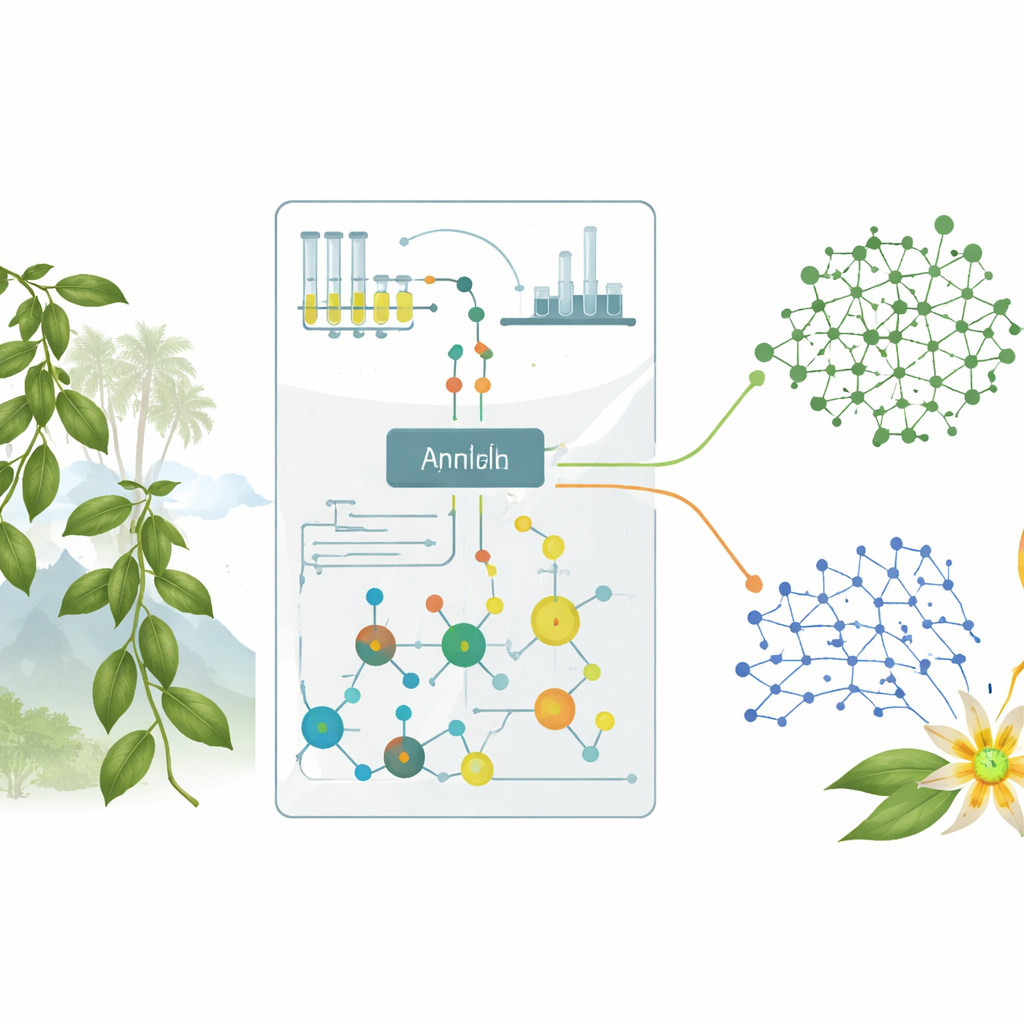
Two Kinds of Vanilla, Two Growing Worlds
The team focused on Vanilla planifolia, the main source of commercial vanilla, and Vanilla pompona, another important species with its own aroma profile. Plants of both species were grown in two distant locations—Lima in Peru and Homestead in Florida—so the scientists could separate the effects of climate and geography from the plants’ built‑in biology. From each plant they collected “source leaves,” the leaves that produce sugars and many building blocks needed by the developing pods. These leaves are rarely studied, even though they supply the ingredients that later become the complex bouquet of natural vanilla.
Reading the Chemical Fingerprints
Using a high‑throughput form of gas chromatography–mass spectrometry, the researchers detected 544 different small molecules in the leaves. They then used statistical tools that look at patterns across many compounds at once. These analyses clearly separated the two species based on their overall chemical signatures, while differences between the two growing locations were minor. In other words, a leaf’s “chemical fingerprint” said far more about which species it belonged to than where it was grown. Several individual compounds stood out, including the fatty acid linoleic acid, which was found at higher levels in V. pompona leaves.
Networks Instead of Isolated Ingredients
Rather than treating each compound separately, the scientists built correlation networks, where each molecule is a node and strong co‑changes between pairs of molecules form links. These networks revealed how groups of compounds rise and fall together, hinting at coordinated biochemical routes. The V. pompona network turned out to be much more densely connected than the V. planifolia network, suggesting more tightly coordinated chemistry. To see which broader metabolic routes were most active, the team combined these networks with machine‑learning methods trained on known plant pathways. This allowed them to infer which pathways showed strong, well‑organized activity in each species, even when many individual steps were only partly identified.
A Fatty Acid Pathway with Ecological Implications
Among the many pathways, one family stood out: the lipoxygenase (LOX) route, which converts fatty acids such as linoleic acid into a variety of signaling and scent molecules. Network‑based scores showed that LOX‑related activity was higher and more coherently organized in V. pompona leaves than in V. planifolia, echoing the higher linoleic acid levels seen earlier. In orchids and other plants, products of this pathway can become volatile compounds that serve as fragrances, defending the plant or helping it communicate with insects. Earlier work has shown that V. pompona flowers release specific scents that attract male orchid bees, and some of those fragrances can trace their origins back to fatty acid chemistry similar to that uncovered here.
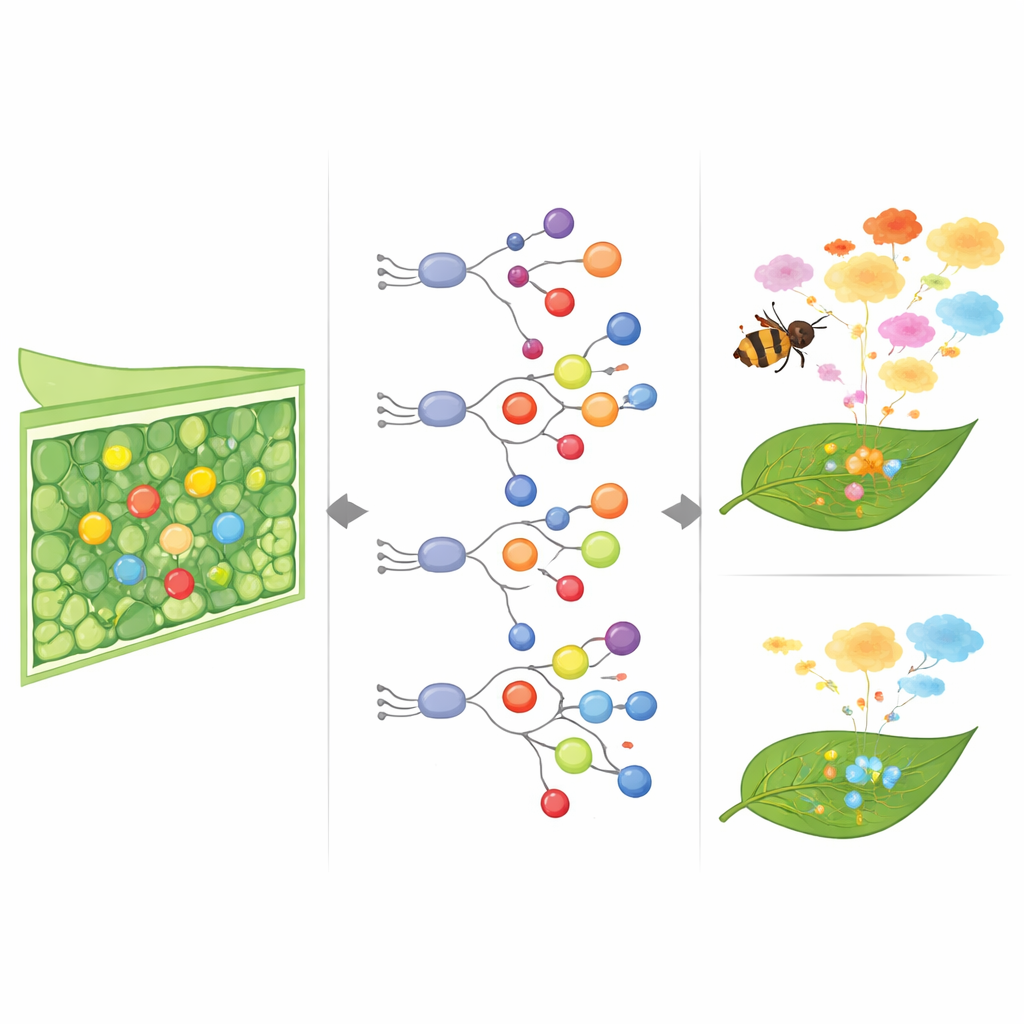
What This Means for Vanilla and Beyond
Taken together, the results show that the two vanilla species differ not just in the mix of leaf chemicals they contain, but in how those chemicals are wired together into active pathways. V. pompona appears to run a more interconnected and vigorous network for certain central processes, including the LOX pathway that feeds into scent production. While the study does not directly test pollinator behavior, it supports the idea that differences in leaf‑level chemistry may ripple outward to affect floral scents and ecological relationships. For growers, breeders, and flavor chemists, these findings highlight leaf metabolism as an underappreciated lever for shaping vanilla quality, resilience, and perhaps even how different vanilla species fit into their native ecosystems.
Citation: Toubiana, D., Moon, P., Bassil, E. et al. Metabolite correlation-based network analysis combined with machine learning techniques highlights LOX biosynthesis in Vanilla planifolia and Vanilla pompona source leaves. Sci Rep 16, 10765 (2026). https://doi.org/10.1038/s41598-026-45899-y
Keywords: vanilla metabolomics, leaf chemistry, lipoxygenase pathway, plant scent, pollinator interactions