Clear Sky Science · en
Model-based nitrogen optimization for bread wheat (Triticum aestivum L.) production in central Oromia, Ethiopia using CERES-wheat
Why smarter fertilizer use matters for wheat and people
Bread wheat is a cornerstone of food security in Ethiopia, yet many farmers receive one-size-fits-all fertilizer advice that ignores differences in soils and weather from place to place and year to year. This study asks a simple question with big consequences for farmers, consumers, and the environment: how much nitrogen fertilizer should be used on wheat, and when should it be applied, to get good harvests, fair profits, and less pollution today and under future climate change?
From blanket rules to tailored decisions
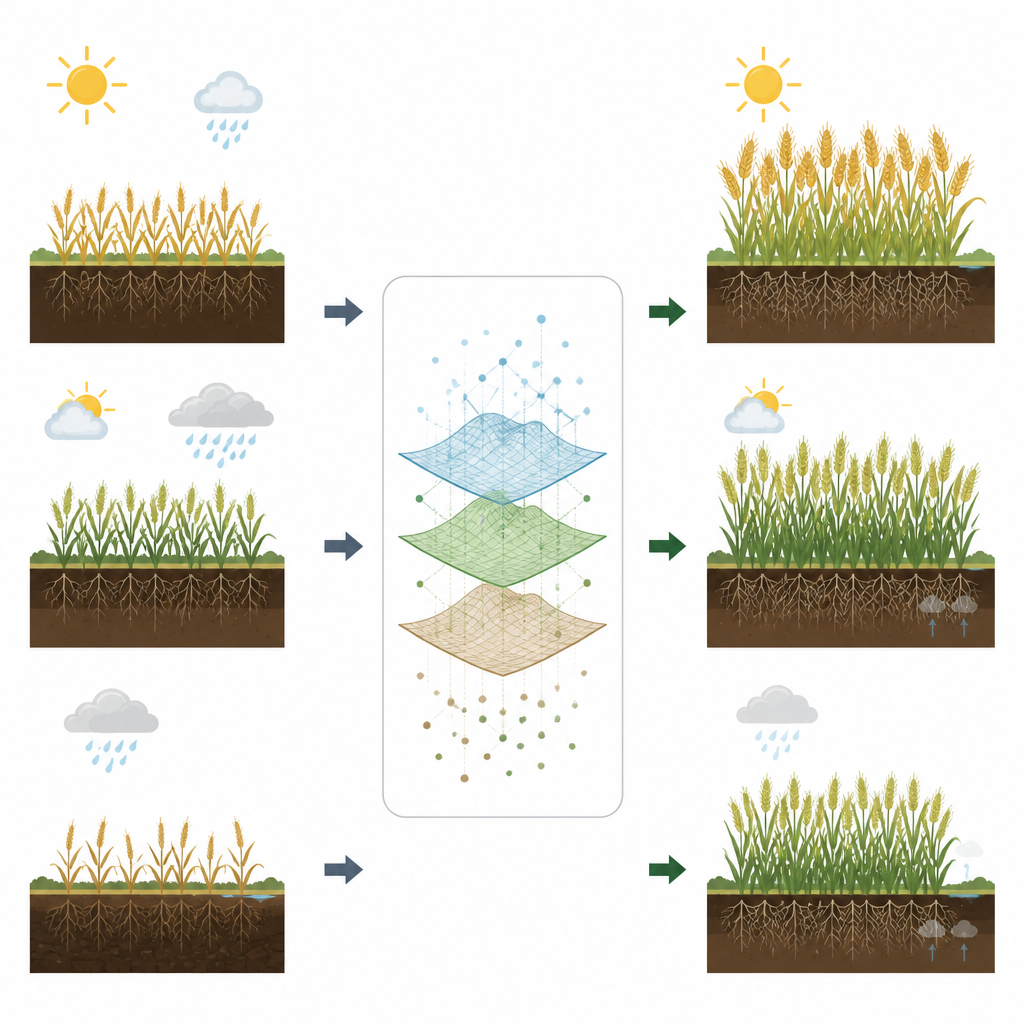
In Central Oromia, most wheat fields are managed with a uniform nitrogen rate, even though farms differ in altitude, rainfall, and soil quality. At the same time, climate variability brings frequent swings between dry and wet seasons, which can cause plants to miss out on fertilizer in dry years or lose it to the deeper soil and water in wet years. The researchers focused on three key wheat-growing areas, Degem, Fitche, and Bishoftu, and used a well-tested crop growth model called CERES-Wheat inside the DSSAT software to explore how wheat responds to different nitrogen amounts and split applications at these sites.
Using a virtual field to test many futures
Instead of relying only on short field trials, the team built a detailed virtual version of each site, including local weather records, soil properties, and management practices. They then ran computer experiments over many years, testing several nitrogen rates, from none to 115 kilograms per hectare, and different timings: all at sowing, split into two doses, or split into three doses at key growth stages. They repeated these experiments under current climate and under two future climate pathways for the 2050s and 2080s, representing medium and high greenhouse gas emissions. For every run they tracked grain yield, total plant growth, nitrogen taken up by the crop, nitrogen lost from the soil, and expected farm income.
More targeted nitrogen brings higher yields and income
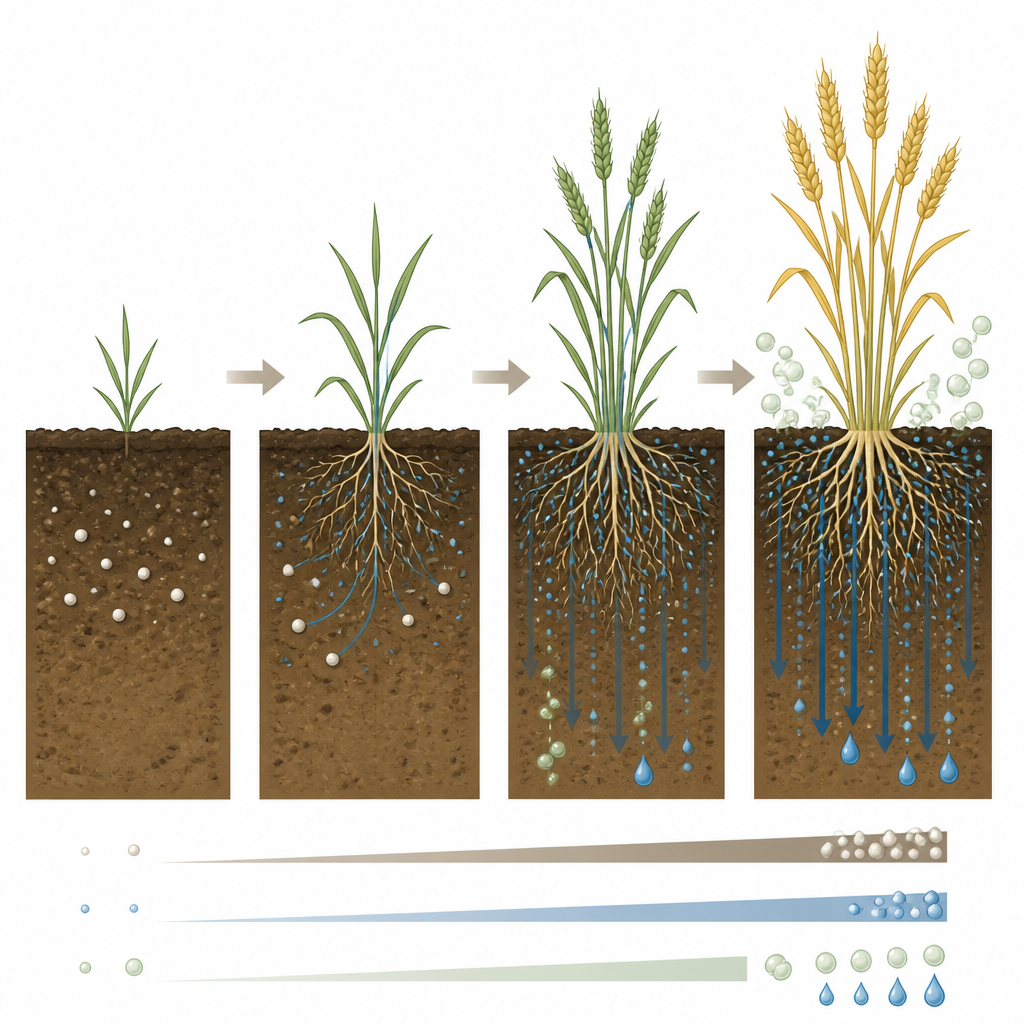
The simulations showed that wheat yield and total plant growth rose sharply as nitrogen rates increased, with the strongest performance generally at the highest tested rate of 115 kilograms per hectare when applied in two or three well-timed splits. At Degem and Bishoftu, three-way splitting of this rate gave the best biological and economic results, while at Fitche two splits were nearly as productive and more practical for farmers with limited labor. Compared with no fertilizer, these strategies more than doubled yields and delivered much larger net profits. The analysis also indicated that under future warmer and higher carbon dioxide conditions, wheat at these sites is likely to demand even more nitrogen to reach its economic sweet spot, with optimum rates projected to rise into the range of about 158 to 191 kilograms per hectare depending on location.
Environmental trade offs and climate pressures
Beyond yield and profit, the study examined how nitrogen management interacts with the environment. The model suggested that nitrous oxide, a powerful greenhouse gas released from soils, increases as nitrogen rates and the number of split applications rise, highlighting a trade off between maximizing production and limiting emissions. In contrast, nitrate leaching, which can pollute water, was not very sensitive to fertilizer rate or splitting in the simulations; instead, it was driven mainly by changing rainfall patterns and climate conditions. This means that even well-managed fertilizer can be washed below the root zone in very wet years, and future climate change could intensify that risk, especially under high emission scenarios.
What this means for farmers and policy
For non-specialists, the main message is clear: fixed, blanket fertilizer rules are unlikely to serve farmers or the environment well as climate changes. This study shows that computer models can be powerful tools to design site specific, climate aware fertilizer strategies that boost wheat harvests and farmer income while keeping an eye on pollution and greenhouse gases. However, the authors stress that their recommended rates are starting points based on simulations, not final prescriptions. They call for multi year, multi site field trials to confirm the model results before wide rollout, and for training programs that help extension agents and farmers move from rigid recipes toward flexible nitrogen management tuned to local soils, prices, and weather.
Citation: Kibebew, S., Dechassa, N., Alemayehu, Y. et al. Model-based nitrogen optimization for bread wheat (Triticum aestivum L.) production in central Oromia, Ethiopia using CERES-wheat. Sci Rep 16, 16336 (2026). https://doi.org/10.1038/s41598-026-45892-5
Keywords: wheat, nitrogen fertilizer, crop modeling, climate change, Ethiopia