Clear Sky Science · en
The impact of herbal medicine development on the population health in China
Why this matters for everyday health
Across China, more people are living longer lives while also facing rising rates of chronic and infectious diseases. This study asks a question with global relevance: when a country invests heavily in herbal medicine and weaves it into everyday medical care, does the health of ordinary people actually improve? Using ten years of data from every province in mainland China, the authors examine how the growth of the herbal medicine sector relates to life expectancy, disease rates, and the strength of the basic healthcare system that people rely on first when they get sick.
Herbs, history, and today’s health system
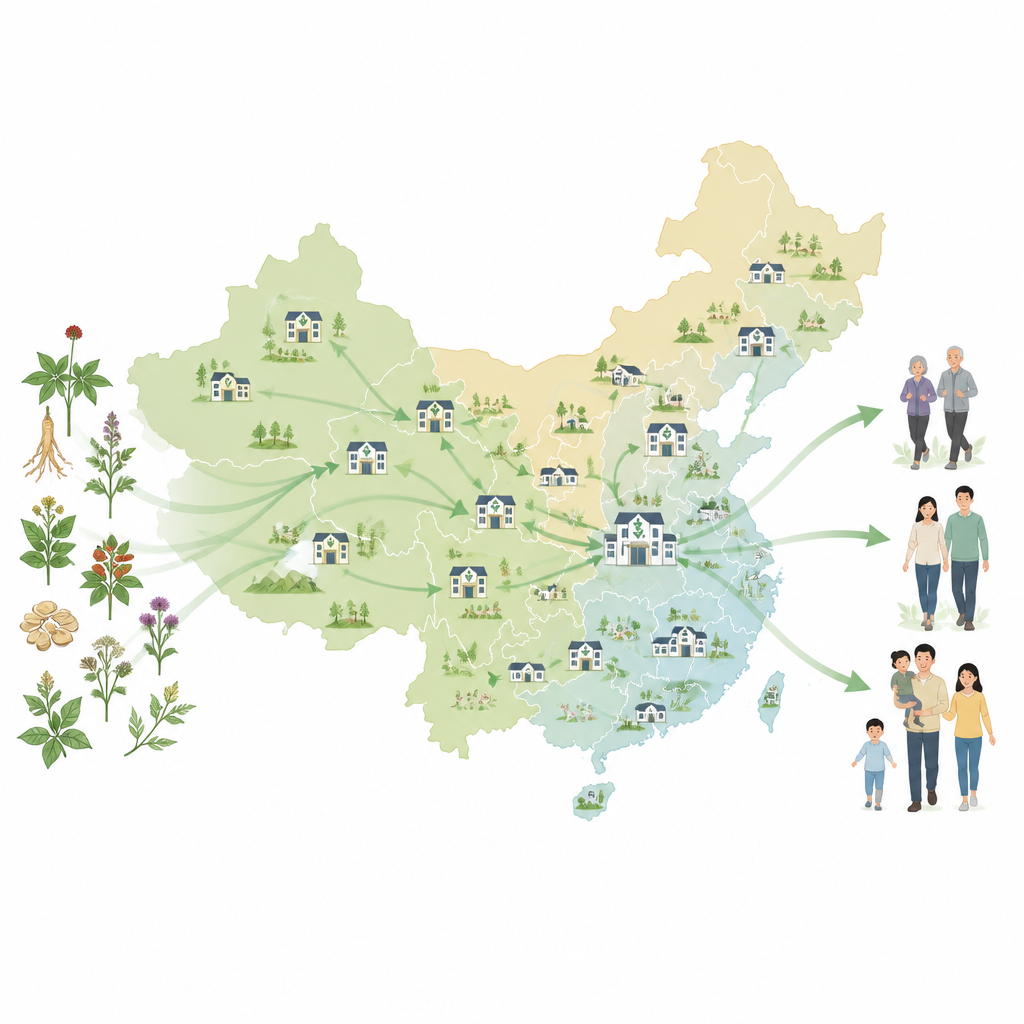
Herbal medicine has been part of medical practice in Asia for centuries, and in China it is a formal part of the national health system. In recent years, the government has poured resources into farms that grow medicinal plants, factories that process them, and clinics that prescribe them. This push is not only about tradition; it also responds to modern pressures such as an aging population, unequal access to doctors between cities and villages, and the high cost of long term care. The authors argue that the herbal medicine sector has become a visible sign of how well primary care is reaching people, especially in smaller towns and rural areas.
How the researchers tested the link
To move beyond individual case reports and small trials, the team assembled a large dataset covering 31 provinces from 2014 to 2024. They tracked several signs of population health, including how long people live, how often infectious diseases occur, and separate life expectancy figures for men and women. Against this, they measured herbal medicine development through planting area, growth in output, and total economic value. They also accounted for other forces that might shape health, such as how market driven each regional economy is, how efficiently investments are used, wage levels, city–village gaps, and pollution. Using a statistical method designed for cause and effect questions in time series data, they estimated how changes in herbal medicine development are associated with later changes in health outcomes.
What they found about life and disease
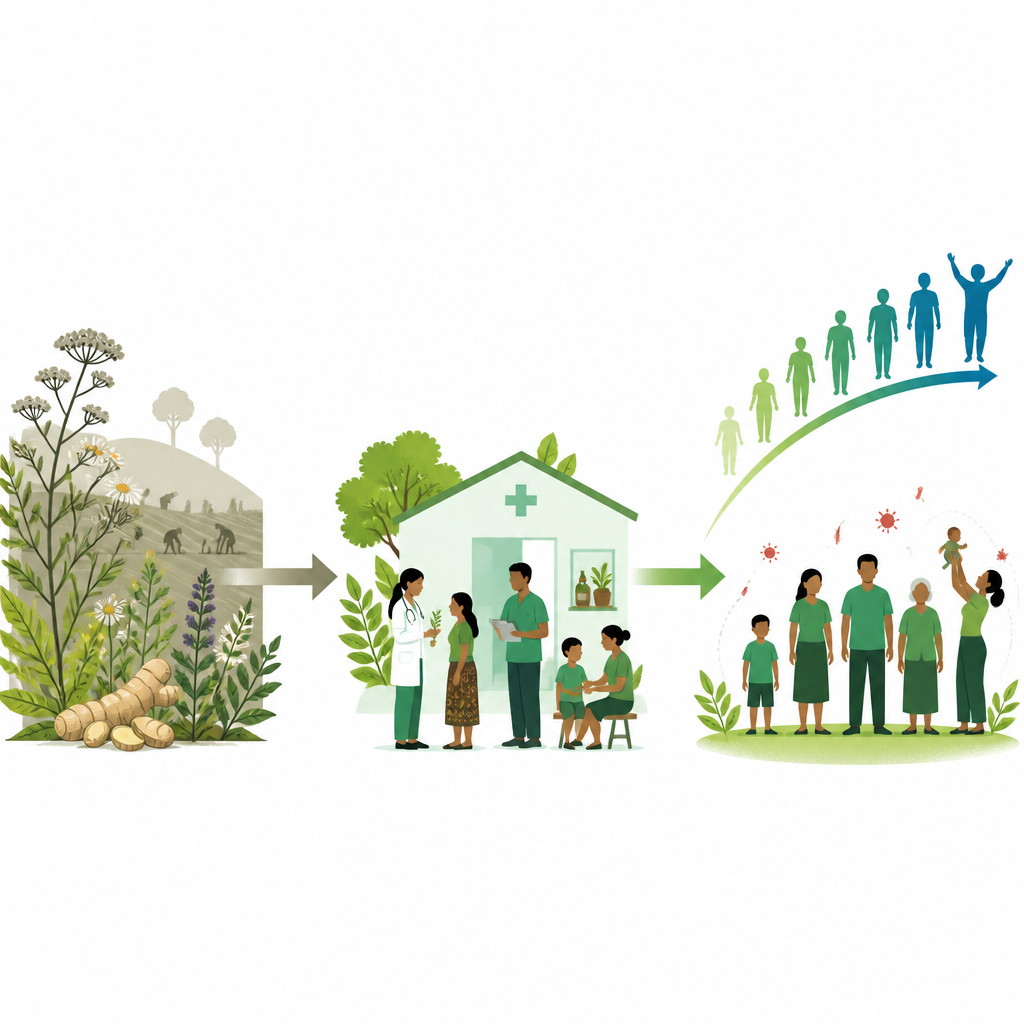
The analysis shows a clear pattern: provinces where herbal medicine production and use expanded tended to see higher life expectancy and lower rates of common infectious diseases. This was true for both men and women and for milder and more serious disease categories. The authors interpret these links less as magic bullets from individual plants and more as a sign that people can get care more easily and cheaply when herbal clinics and services are widely available. In many parts of China, especially rural regions, herbal providers are often the most reachable front line of care. Their growth appears to go hand in hand with earlier diagnosis, more frequent contact with the health system, and better management of both chronic conditions and infections.
Hidden costs of rapid expansion
The story is not uniformly positive. When the researchers looked more closely at different pieces of the herbal sector, they found that simply expanding the land used to grow medicinal crops was linked to lower life expectancy. They suggest that large scale farming may bring new health risks, such as heavier use of pesticides, environmental damage, and tough working conditions for farm laborers. By contrast, indicators that reflect better processing, higher quality, and more efficient production were tied to gains in longevity. The total commercial value of herbal products, meanwhile, did not clearly reduce disease spread and may reflect a shift toward export or high end markets that do less to help everyday patients.
What this means for health policy
Overall, the study concludes that building up herbal medicine as part of basic medical care can support longer lives and fewer infections, especially when it is tightly integrated with clinics and public health programs. For policymakers, the lesson is that herbs matter most when they strengthen an accessible, community based health network rather than when they are treated only as profitable crops or luxury products. The authors call for stricter rules on farming practices, better quality control, stronger training for practitioners, and targeted support for underserved regions. Done carefully, they argue, herbal medicine can be one pillar of a more resilient and fair health system that benefits ordinary people.
Citation: Wang, Y., Zheng, X. & Masron, T.A. The impact of herbal medicine development on the population health in China. Sci Rep 16, 14941 (2026). https://doi.org/10.1038/s41598-026-45889-0
Keywords: herbal medicine, population health, China healthcare, infectious diseases, life expectancy