Clear Sky Science · en
Uncovering the antiproliferative potential of Lobophytum pauciflorum metabolites through chemoinformatics and in vitro approaches
Soft corals and the search for new cancer fighters
Many of today’s cancer drugs began their lives in surprising places, from tree bark to soil bacteria. This study turns to an equally unexpected source: a soft coral from the Red Sea called Lobophytum pauciflorum. By probing the chemistry of this coral and testing its extracts on human cancer cells, the researchers ask a simple question with big implications: could these underwater organisms harbor the next generation of anticancer compounds? 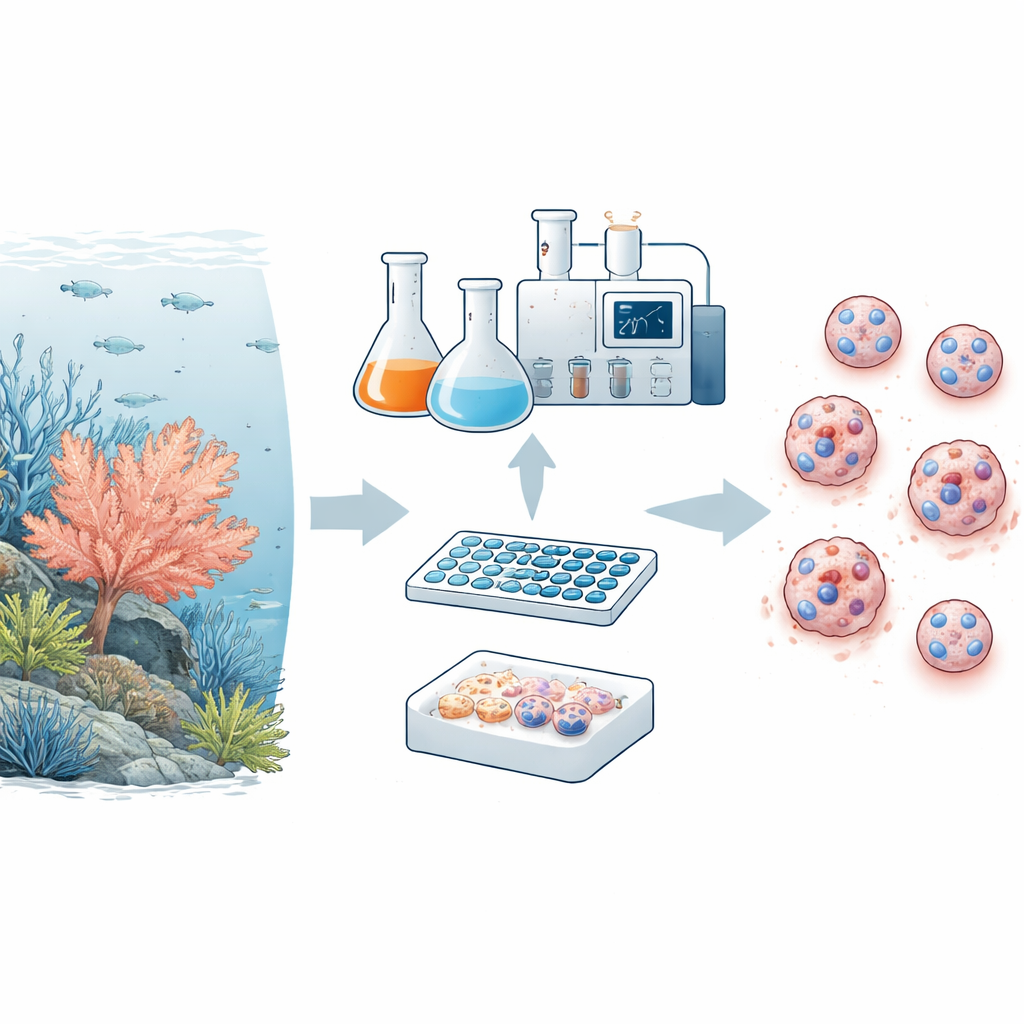
Hidden chemistry beneath the waves
Soft corals live in harsh, competitive environments where they cannot run or hide, so they rely on chemistry to defend themselves. Over the years, scientists have discovered that many soft corals produce unusual molecules with antibacterial, anti-inflammatory, or anticancer properties. Yet only a fraction of known species have been explored in detail. Lobophytum pauciflorum, common in warm reef waters, is one of these underexplored species. Its colorful tissue contains a rich mix of “secondary metabolites” – small molecules that help the coral survive but also may interact strongly with human cells.
From reef to research lab
To investigate this coral, the team collected specimens from the Red Sea and prepared a concentrated extract using organic solvents. They then mapped the extract’s chemical makeup using a high-resolution technique that separates and weighs thousands of molecules in a single run. This approach, known in the lab as UHPLC-QTOF-MS/MS, allowed them to pick out and tentatively identify 24 distinct compounds, including phenolic acids, fatty acids, terpenes, and alkaloids. By comparing the “fingerprints” of each molecule with open databases and previous reports, they could classify most compounds and see which chemical families were especially abundant in the coral.
Putting coral chemistry to the test
Finding interesting molecules is only the first step; the crucial question is whether they affect cancer cells. The scientists exposed eight different human tumor cell lines to the coral extract, including breast, liver, prostate, colorectal, and cervical cancers. Using a standard color-based assay that reflects how many cells remain alive, they measured how strongly the extract slowed cell growth at various doses, and compared the results with the widely used chemotherapy drug doxorubicin. While doxorubicin was more powerful overall, the coral extract showed notable, dose-dependent killing of certain cell types, especially two breast cancer lines (MDA-MB-231 and MCF-7) and a liver cancer line (HePG-2), where much lower doses were needed to halve cell survival.
Fishing for drug-like molecules with digital tools
Because a crude extract contains many ingredients mixed together, the researchers used computer-based chemistry to sort out which types of molecules might make promising drug leads. First, they compared the structures of the identified compounds using a similarity score, grouping molecules with shared building blocks and highlighting those that expanded the chemical “space” beyond what has been seen before. Next, they ran the molecules through SwissADME, a widely used online tool that estimates how well a compound might behave as a pill – whether it is likely to be absorbed, distributed in the body, and suitable for further development. Many coral molecules fit common guidelines for “drug-likeness,” and a handful met all the major rules with no warnings, marking them as especially attractive candidates for deeper study. 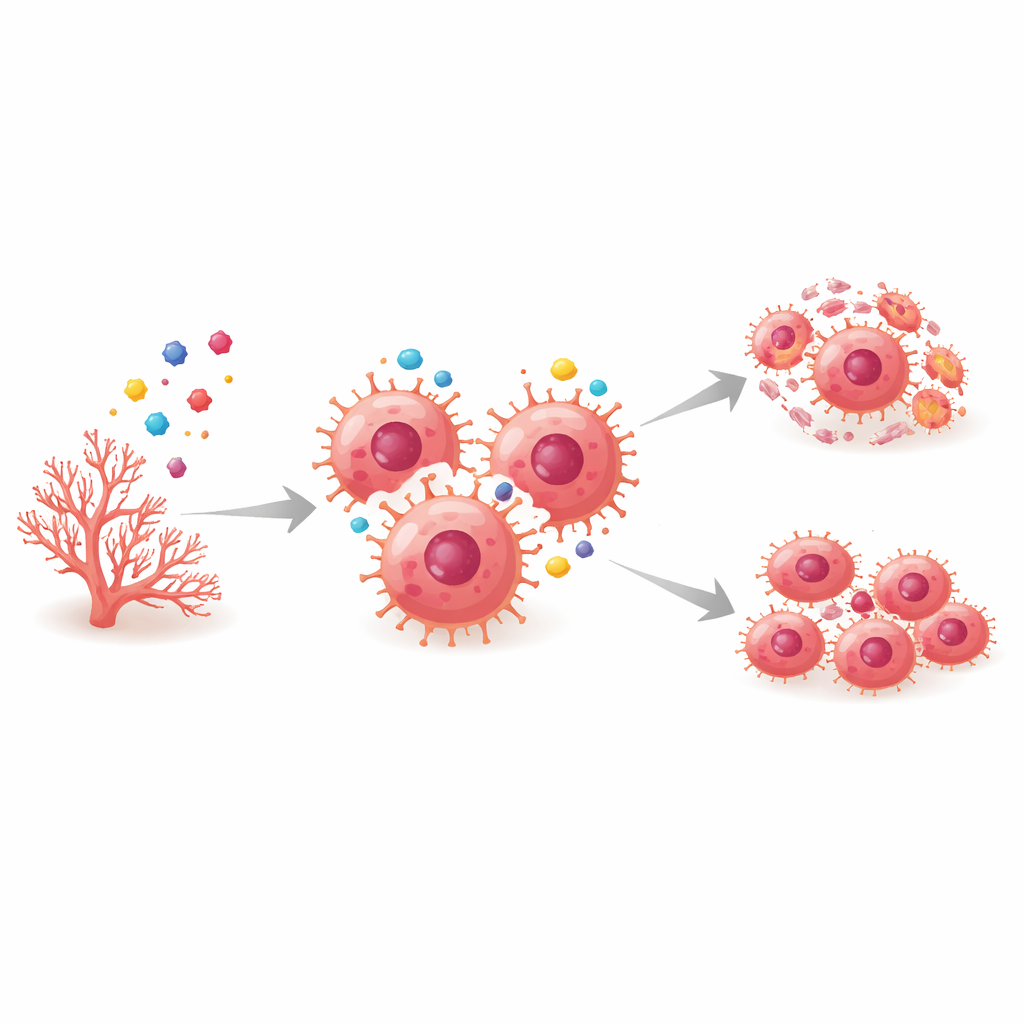
Why this matters for future treatments
Taken together, the study shows that Lobophytum pauciflorum is more than just a pretty reef inhabitant. Its chemical arsenal includes several small molecules that not only look promising on paper but also measurably slow the growth of certain human cancer cells in the lab. The coral extract is not ready to replace existing chemotherapy, but it provides a valuable starting point: a pool of diverse, partly drug-like compounds that can now be separated, tested individually, and possibly improved. For a lay reader, the key takeaway is that our oceans still hold a vast library of natural chemicals, some of which may be shaped into tomorrow’s cancer medicines if we can discover, understand, and responsibly use them.
Citation: Alassass, A.A., Abu Bakr, M.S., Mahmoud, A.A. et al. Uncovering the antiproliferative potential of Lobophytum pauciflorum metabolites through chemoinformatics and in vitro approaches. Sci Rep 16, 12882 (2026). https://doi.org/10.1038/s41598-026-45881-8
Keywords: marine natural products, soft coral, anticancer compounds, cancer cell lines, drug discovery