Clear Sky Science · en
Desidustat’s cardioprotective mechanisms in heart failure: a network pharmacology, molecular docking and dynamics approach
Why this heart drug story matters
Heart failure is rising worldwide, and even today’s best drug combinations leave many patients exhausted, breathless, and at high risk of hospitalization. Most current medicines act by adjusting hormones and blood pressure, but they do not fully tackle the damaged metabolism, chronic inflammation, and cell death inside the heart. This study explores whether Desidustat, a pill already used for anemia in kidney disease, might also quietly protect the heart itself by acting on many molecular switches at once.
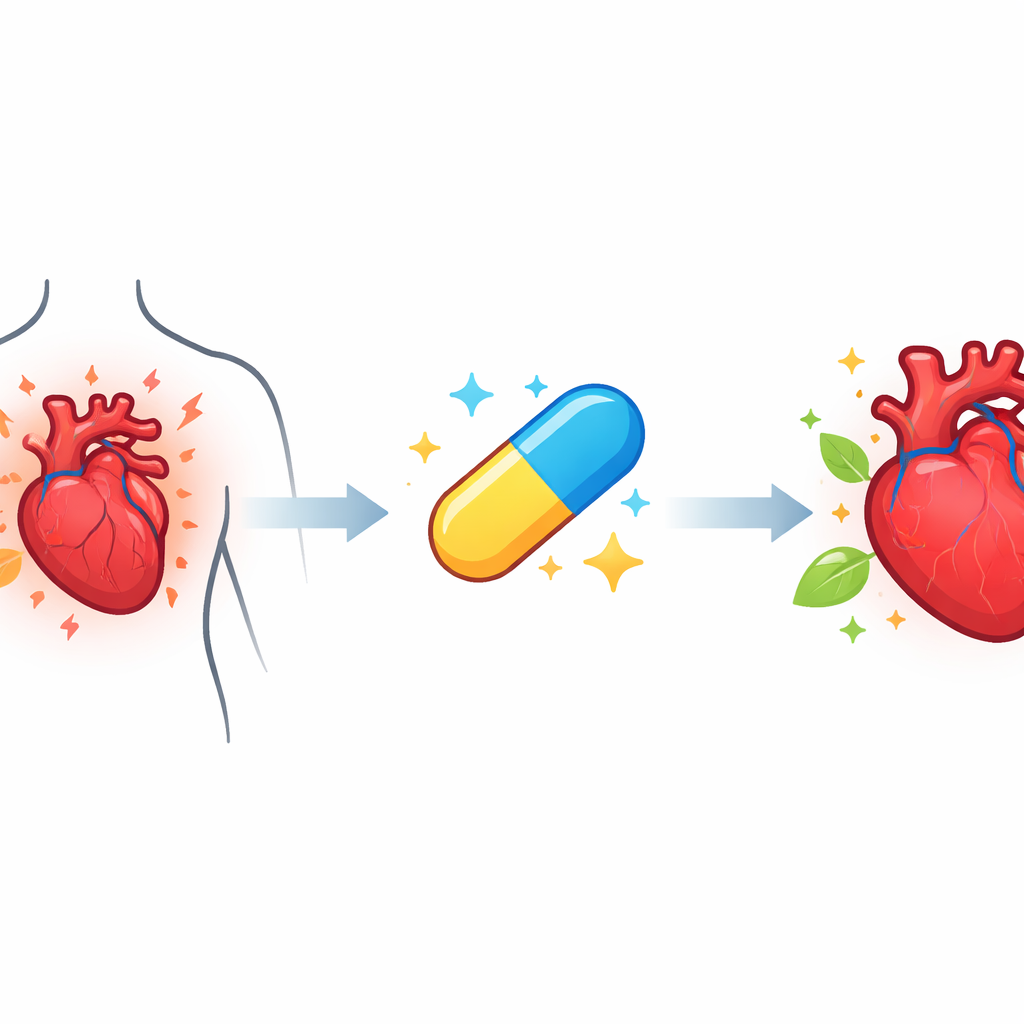
A new purpose for an anemia medicine
Desidustat belongs to a class of drugs that mimic low-oxygen conditions inside cells, turning on a master response known for helping the body make red blood cells. Animal experiments hinted that this same pathway might also spur new blood vessels, calm oxidative stress, and reduce harmful inflammation in the heart. Yet doctors lacked a clear picture of which molecules Desidustat touches in heart failure and how these actions might fit together into a coherent protective story. The authors set out to build that picture using powerful computer tools rather than immediate lab or clinical experiments.
Mapping the heart’s molecular traffic
The team first assembled two huge lists: one of proteins likely to interact with Desidustat, and another of genes and proteins known to be involved in heart failure. When they overlapped these lists, they found 348 shared targets—molecular “intersections” where the drug and the disease might meet. They then built a large interaction map showing how these proteins talk to each other, and used network mathematics to highlight central hubs that control many routes at once. Three stood out: HSP90AA1, STAT3, and ESR1. These hubs are already known to influence stress responses, inflammation, blood vessel growth, and cell survival in the heart.
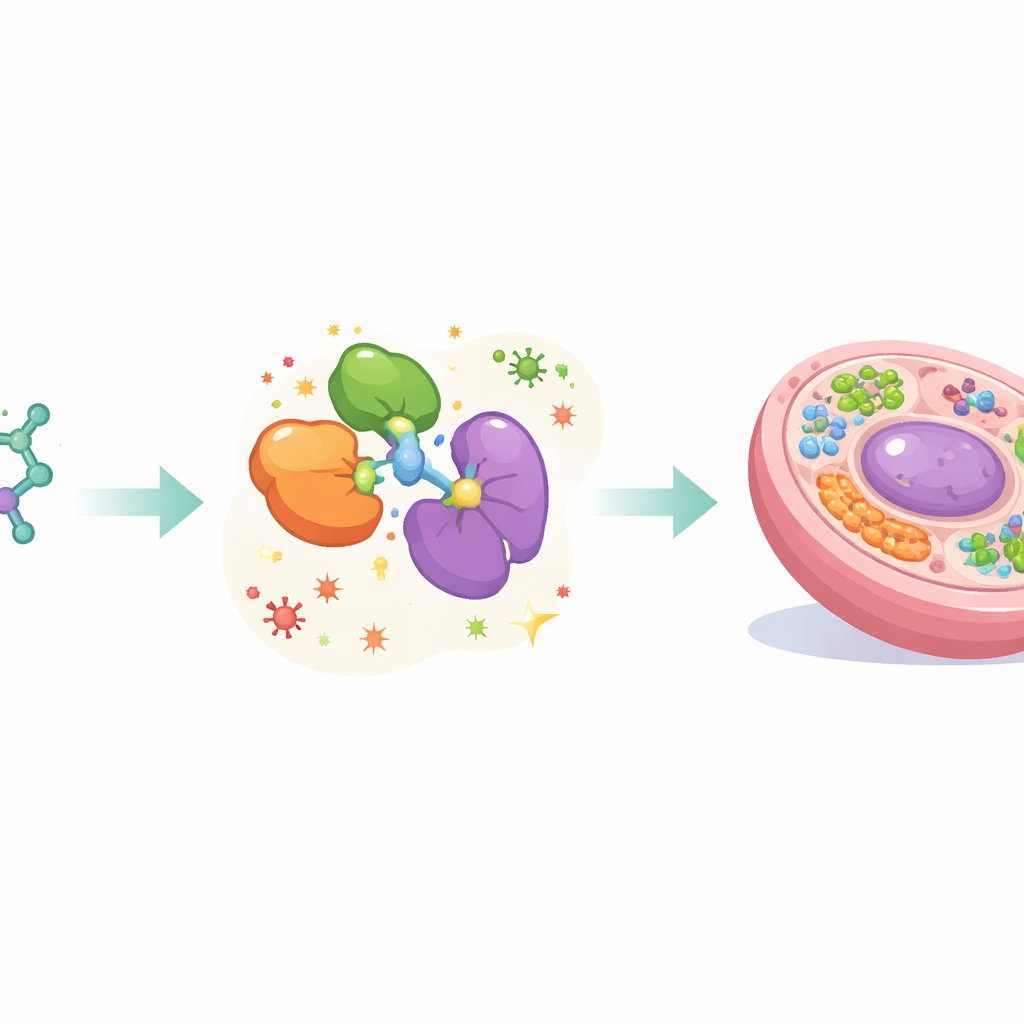
Zooming in on the key molecular handshake
Next, the researchers asked whether Desidustat could physically fit into these hub proteins in a meaningful way. Using molecular docking, they tested how snugly the drug could sit in each protein’s three-dimensional structure, like trying keys in a set of locks. HSP90AA1, a heat-shock protein that helps heart cells cope with stress, showed the strongest predicted binding. To go further, they ran long, detailed molecular dynamics simulations—virtual movies lasting up to 200 nanoseconds—to see whether the drug–protein complex stayed stable over time in a realistic watery environment with salts. The simulations showed that Desidustat remained firmly engaged with HSP90AA1, anchored by persistent hydrogen bonds and hydrophobic contacts, without drifting away from the binding pocket.
Reading the heart’s stressed signals
Beyond individual proteins, the authors examined what kinds of biological processes were most enriched among the 348 shared targets. They found strong links to oxidative stress responses, formation of new blood vessels, control of cell death pathways such as apoptosis and necroptosis, and regulation of inflammatory signaling. Pathway analyses tied these targets to networks that govern how heart muscle cells remodel under pressure, how blood vessels behave, and how the heart copes with toxic by-products of energy use. Together, these patterns suggest that Desidustat does not act as a one-trick pony but instead nudges an entire web of processes toward a more protective state.
What this could mean for people with weak hearts
Although this study relies entirely on computer-driven methods, its results build a plausible narrative: Desidustat may protect the failing heart by gripping key stress-handling proteins like HSP90AA1, while also influencing major regulators such as STAT3 and ESR1. In plain terms, the drug could help heart cells better manage oxidative damage, avoid unnecessary cell death, encourage healthier blood vessel growth, and fine‑tune inflammatory signals—benefits that go beyond simply raising hemoglobin levels. The work does not prove clinical benefit, but it offers a detailed roadmap for laboratory and animal studies, and hints that an anemia drug already in use might one day become part of a more holistic strategy to keep weakened hearts working longer and more efficiently.
Citation: Sadiqbasha, M.F., Gunasekaran, A., Thirulokachandar, J.C. et al. Desidustat’s cardioprotective mechanisms in heart failure: a network pharmacology, molecular docking and dynamics approach. Sci Rep 16, 11653 (2026). https://doi.org/10.1038/s41598-026-45870-x
Keywords: Desidustat, heart failure, cardioprotection, network pharmacology, HIF prolyl hydroxylase inhibitor