Clear Sky Science · en
Geochemical and machine learning approaches to groundwater fluoride prediction in Karaga District, Northern Ghana
Why This Matters for Everyday Drinking Water
In many rural communities, the clearest glass of well water can quietly carry enough fluoride to damage teeth, weaken bones, and harm long‑term health. This study focuses on Karaga District in northern Ghana, a place where children often rely on groundwater for every drink. The researchers set out to answer two urgent questions: where is fluoride in the groundwater most dangerous, and can we predict those hotspots using simple field measurements and modern data tools?
Hidden Chemistry Beneath a Dry Landscape
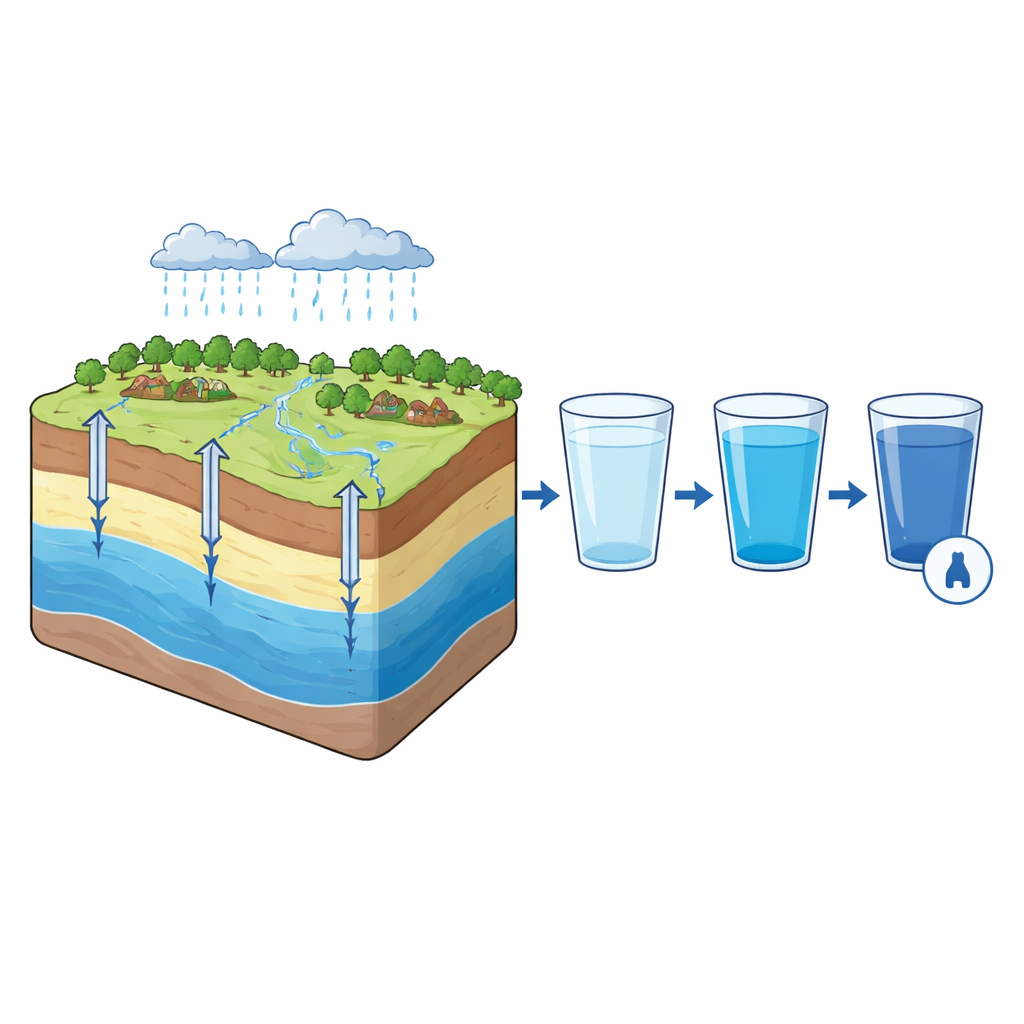
Karaga sits on thick layers of ancient sandstones and mudstones that act like giant sponges, storing rainwater underground. These rocks also contain fluoride‑bearing minerals. As water slowly seeps through, it dissolves parts of the rock, picking up fluoride along the way. The team collected 34 groundwater samples from community boreholes and combined them with 152 older samples from nearby districts. They found that fluoride levels ranged from very low to over four times the World Health Organization’s safe limit, with about one in six samples exceeding that guideline. Most of the water belonged to a “soft, salty” type rich in sodium and bicarbonate, but the worst fluoride levels appeared where the water was both salty and chloride‑rich, pointing to extra concentration from evaporating water and dissolving salty minerals.
How the Rock–Water Mix Boosts Fluoride
Using detailed chemical analysis and computer models, the researchers traced how different ingredients in the water work together to free fluoride from the rocks. High pH (more alkaline water), low calcium, and elevated total dissolved solids all favor fluoride staying in solution rather than locking up in minerals. All samples were chemically “eager” to dissolve the mineral fluorite, confirming that the underground environment is primed to release fluoride. Patterns in the data showed that sodium‑rich, salty waters—especially those influenced by evaporite layers—tend to strip calcium out and increase overall mineral content, creating ideal conditions for fluoride to build up along long underground flow paths.
Letting the Data Learn the Risky Conditions
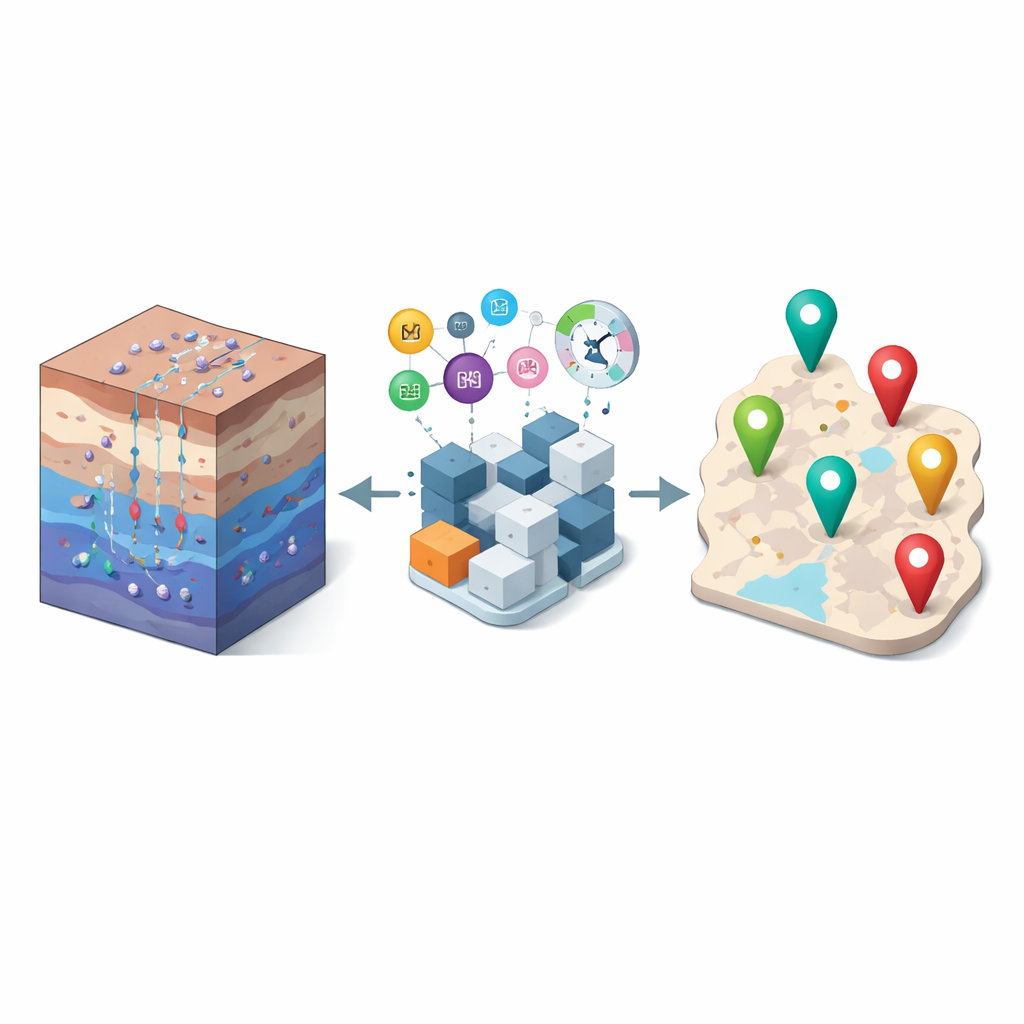
Because the chemistry is complex and non‑linear, the team turned to machine learning—computer methods that learn patterns from data—to predict fluoride levels without directly feeding them the fluoride measurements. Instead, they used only “fluoride‑blind” inputs such as pH, electrical conductivity, major ions, and selected outputs from geochemical models. After testing several algorithms, a neural‑network‑based model performed best, explaining a substantial share of the variation in fluoride. Across models, the same message emerged: overall salinity (total dissolved solids and ionic strength) and pH mattered more than any single ion. In other words, the general “strength” and alkalinity of the water are better clues to fluoride danger than the raw sodium or calcium numbers alone.
A Simple Score for Field Screening
From these insights, the researchers built a “Mobility Index” – a single score that estimates how prone a given water sample is to mobilizing fluoride, again without using any measured fluoride in its construction. The index combines four ingredients: a signal of rock weathering, how far the water is from forming fluorite, the pH, and how active fluoride would be if present. Each component is scaled and weighted so that high scores mean higher likelihood of unsafe fluoride. When tested against real fluoride data, this index did an excellent job at separating safe from unsafe wells. Crucially, it can be computed with standard field and routine lab measurements, making it realistic for district water officers and community groups.
What This Means for Communities and Policy
For residents of Karaga and similar regions, the study shows that dangerous fluoride levels are not random; they are linked to identifiable rock types, salty and alkaline water, and certain water‑chemistry patterns. By combining classic groundwater science with modern machine learning, the authors provide a practical early‑warning tool that can flag high‑risk wells before people get sick. Local authorities can prioritize testing and treatment in the communities whose water scores highest on the Mobility Index, blend safer sources where possible, and choose defluoridation methods that match the local chemistry. Beyond Ghana, the same framework can be adapted to other fluoride‑prone regions, helping turn invisible underground chemistry into actionable guidance for safe drinking water.
Citation: Sunkari, E.D., Abdul-Wahab, D., Gutiérrez, M. et al. Geochemical and machine learning approaches to groundwater fluoride prediction in Karaga District, Northern Ghana. Sci Rep 16, 10610 (2026). https://doi.org/10.1038/s41598-026-45867-6
Keywords: groundwater fluoride, Karaga District Ghana, machine learning, geochemical modelling, drinking water risk