Clear Sky Science · en
Radiological risk assessment and geochemical signatures of calc-alkaline bostonite dikes
Rocks That Quietly Glow
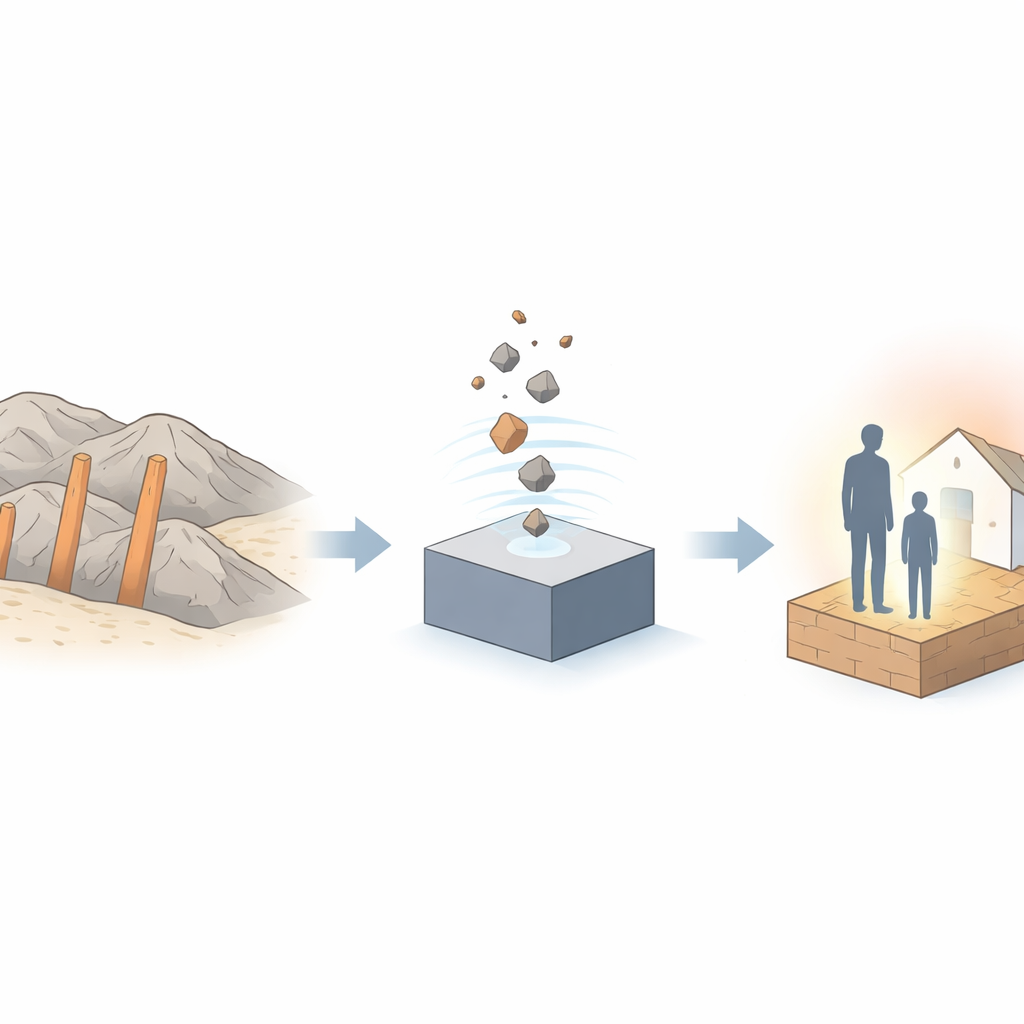
In Egypt’s Eastern Desert, some otherwise ordinary-looking rocks give off unusually high levels of natural radiation. These rocks, called bostonite dikes, are increasingly quarried and used as decorative and building stone. This study asks a simple but important question: if we cut these rocks from the desert and bring them into our homes and workplaces, could their natural radioactivity pose a health risk over a lifetime of exposure?
Where These Unusual Stones Come From
The bostonite dikes studied lie in the El Sela–Qash Amir region, part of the ancient Arabian–Nubian Shield along the Red Sea. Here, sheets of once-molten rock sliced up through older granites and volcanic rocks, later cooling into hard, fine-grained walls that now stand out in the landscape. These dikes are rich in minerals that tend to hoard heavy elements such as uranium, thorium, and potassium. Because these elements are naturally radioactive, the rocks themselves emit a steady trickle of invisible radiation into their surroundings.
Measuring the Glow Inside the Stone
To find out how radioactive these bostonite dikes really are, the researchers collected 50 rock samples and brought them to a specialized laboratory. There, they crushed part of each sample and analyzed its chemical makeup with X-ray fluorescence, which reveals how much of each element the rock contains. Another portion was sealed for several weeks and then placed in a gamma-ray detector, a shielded instrument that senses the faint flashes of light produced when radiation hits a crystal. From these measurements, the team calculated the activity of three key radionuclides: uranium-238, thorium-232, and potassium-40, which together account for most natural radioactivity in common rocks.
What Makes These Rocks So Different
The chemical results show that the bostonite dikes belong to a silica-rich, alkali-rich rock type similar to trachyte, with especially elevated sodium, potassium, and iron. Trace elements that usually track with rare metals, such as niobium, zirconium, and yttrium, are also strongly enriched. This is a geochemical fingerprint of magmas that concentrated rare, heavy elements as they cooled. In line with that signature, the measured radioactivity is far above worldwide average crustal values: uranium-238 averages 150 becquerels per kilogram, thorium-232 about 103, and potassium-40 about 1379. For comparison, global reference values are roughly 35, 45, and 412, respectively. Statistical tests show that uranium and potassium vary the most from sample to sample and are the main drivers of differences in radiological hazard measures, while thorium is more uniformly distributed.
From Natural Background to Human Exposure
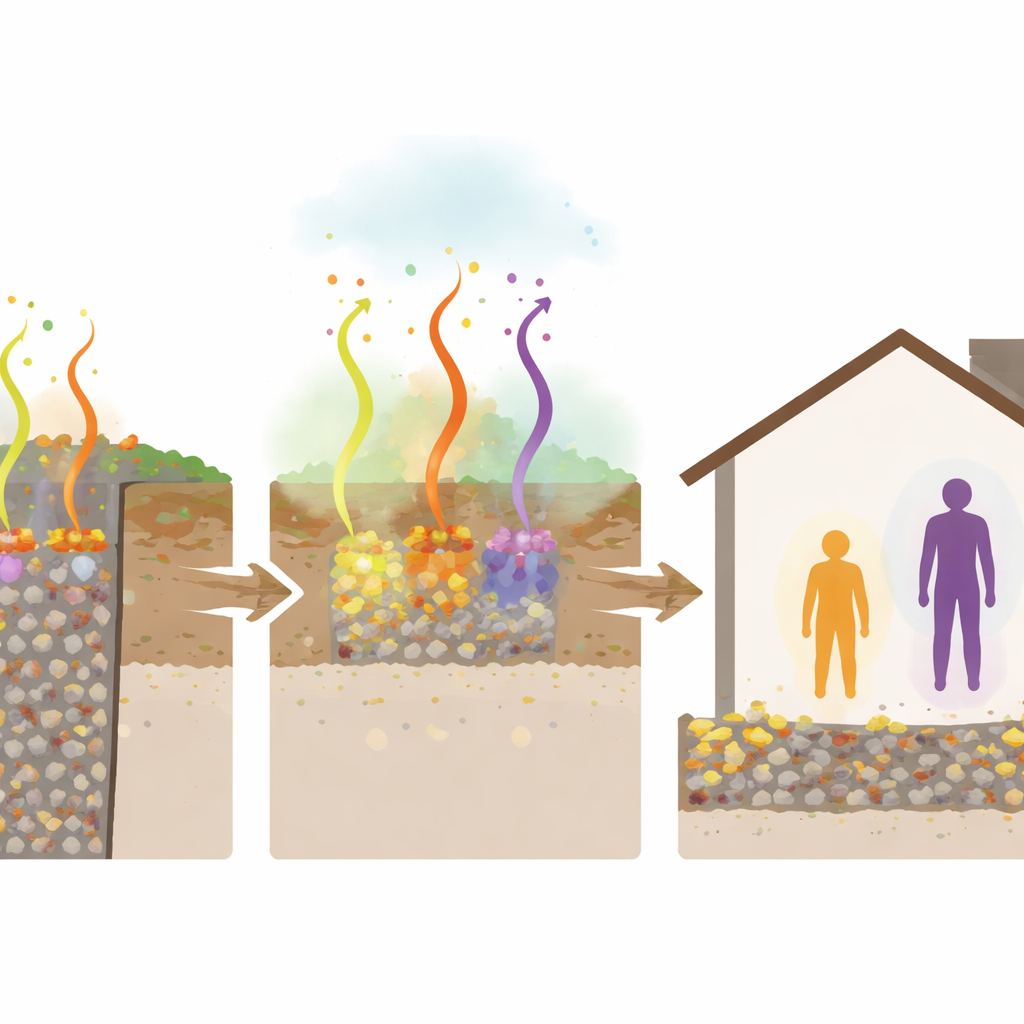
High radioelement content does not automatically translate into dangerous exposure; what matters is the resulting dose to people. The team therefore combined their measurements into standard risk indicators used by radiation-protection agencies. They computed a “radium equivalent” activity that rolls uranium, thorium, and potassium into a single hazard scale, along with indices that estimate external gamma dose, indoor and outdoor annual effective dose, and the added lifetime cancer risk from long-term exposure. Many bostonite samples exceeded the commonly recommended limit for building materials, with average absorbed dose rates in air roughly three times the global outdoor background. Calculated indoor doses in some cases approached or surpassed the 1 millisievert-per-year guideline for the public, and the excess lifetime cancer risk values fell into a low to moderate concern range compared with standard benchmarks.
What This Means for Everyday Use
In plain terms, the study shows that the El Sela–Qash Amir bostonite dikes are chemically attractive but radiologically problematic. Their mineral makeup concentrates uranium- and thorium-bearing grains that raise radiation levels beyond what is usually considered safe for unrestricted use in homes and other enclosed spaces. The authors conclude that these rocks should be monitored and regulated if used as construction or decorative stone. They recommend regular radiation checks at quarries, dust control and exposure assessments for workers, and mapping of local “hot spots.” With such precautions and selective use, society can benefit from the economic value of these stones while keeping the hidden glow of natural radioactivity within acceptable limits.
Citation: Gawad, A.E.A., El Rahman, R.M.A. & Hanfi, M.Y. Radiological risk assessment and geochemical signatures of calc-alkaline bostonite dikes. Sci Rep 16, 12748 (2026). https://doi.org/10.1038/s41598-026-45855-w
Keywords: natural radioactivity, building stone safety, uranium-bearing rocks, gamma-ray spectrometry, radiation health risk