Clear Sky Science · en
Study on the mechanism of action of HuaZhuoKeLi in modulating LCN2-mediated cellular pyroptosis to ameliorate ulcerative colitis
Why this gut story matters
Ulcerative colitis is a long‑lasting disease in which the large intestine becomes painfully inflamed, leading to diarrhea, bleeding, and a higher risk of colon cancer. Many modern drugs help some patients but can bring strong side effects and don’t work for everyone. This study explores how a Traditional Chinese Medicine blend called HuaZhuoKeLi might calm this gut inflammation and protect the intestinal lining, and it uncovers a specific molecule inside our cells that appears to be a key switch in this process.
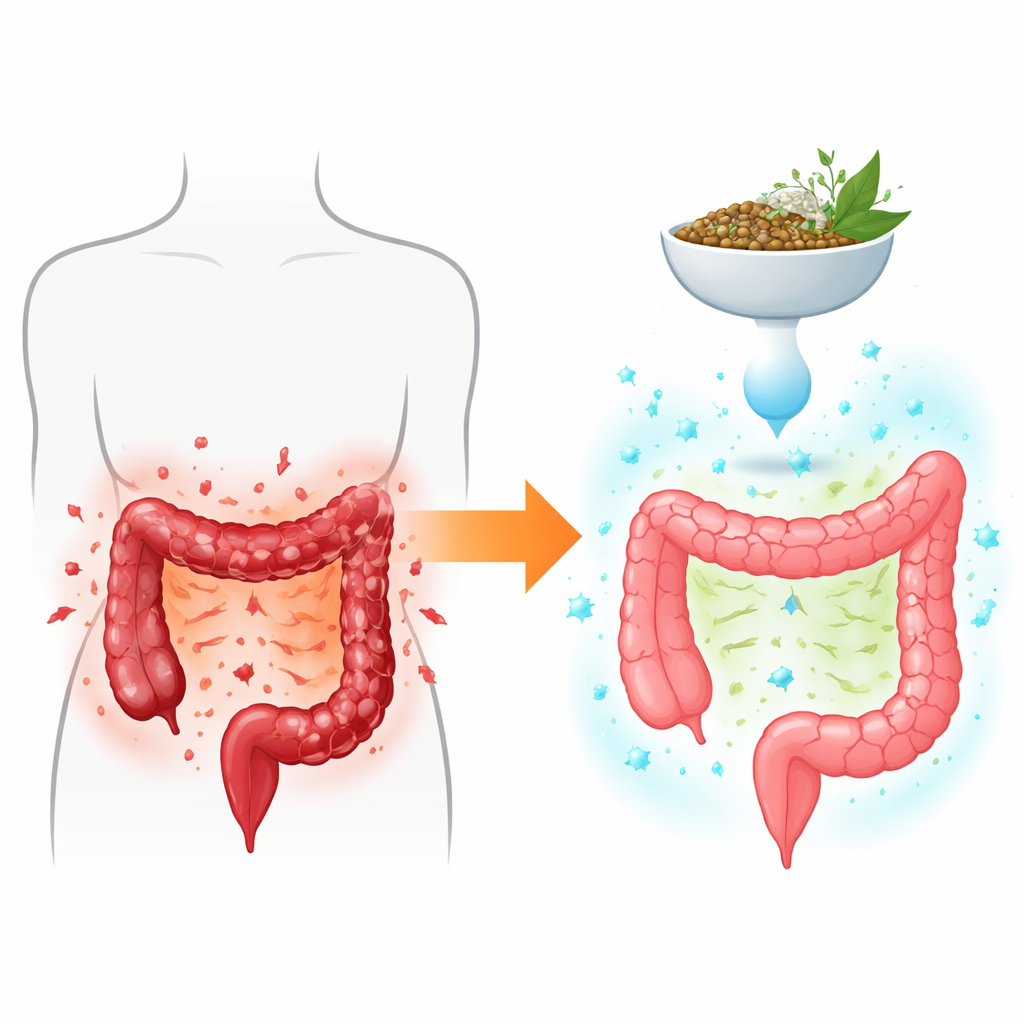
When the body’s alarm system turns destructive
In ulcerative colitis, the inner surface of the colon is constantly irritated. The cells that form the gut lining are supposed to act as a tight seal, keeping germs and toxins inside the intestinal tube. In this disease, that seal breaks down: the wall becomes leaky, immune cells flood in, and a cycle of inflammation is set in motion. The authors focused on a fiery type of cell death called “pyroptosis,” in which cells burst open like tiny balloons, punching holes in their own membranes and spilling inflammatory substances that worsen tissue damage. They suspected that dialing down this self‑destruct program could help the gut heal.
A protein messenger in the spotlight
Using large gene‑expression datasets from patients with ulcerative colitis, the team searched for genes linked both to the disease and to this explosive form of cell death. They identified several candidates, but one stood out: a protein called lipocalin‑2, which is involved in inflammation and iron handling and is produced by white blood cells and gut cells. In patient data and in diseased mice, lipocalin‑2 levels were sharply increased and closely tracked with disease activity. Importantly, only lipocalin‑2 fell consistently when animals were treated with drugs, including HuaZhuoKeLi, suggesting it acts as a sensitive “volume knob” for harmful inflammation, rather than just a bystander.
Testing an old remedy in modern models
The researchers then used mice given a chemical that reliably triggers colitis‑like damage. These animals developed shorter, inflamed colons, high disease scores, and classic symptoms such as weight loss and bleeding. Their gut tissue showed ragged architecture, heavy immune‑cell invasion, and weakened barrier proteins that normally knit neighboring cells together. When HuaZhuoKeLi was given by mouth, especially at higher doses, the animals fared much better: their colons were longer and healthier, inflammation markers in the blood dropped, and barrier‑forming proteins rebounded. Microscopy revealed that cells in untreated colitis were riddled with holes and swollen mitochondria, hallmarks of pyroptosis, whereas HuaZhuoKeLi sharply reduced these signs of catastrophic cell death.
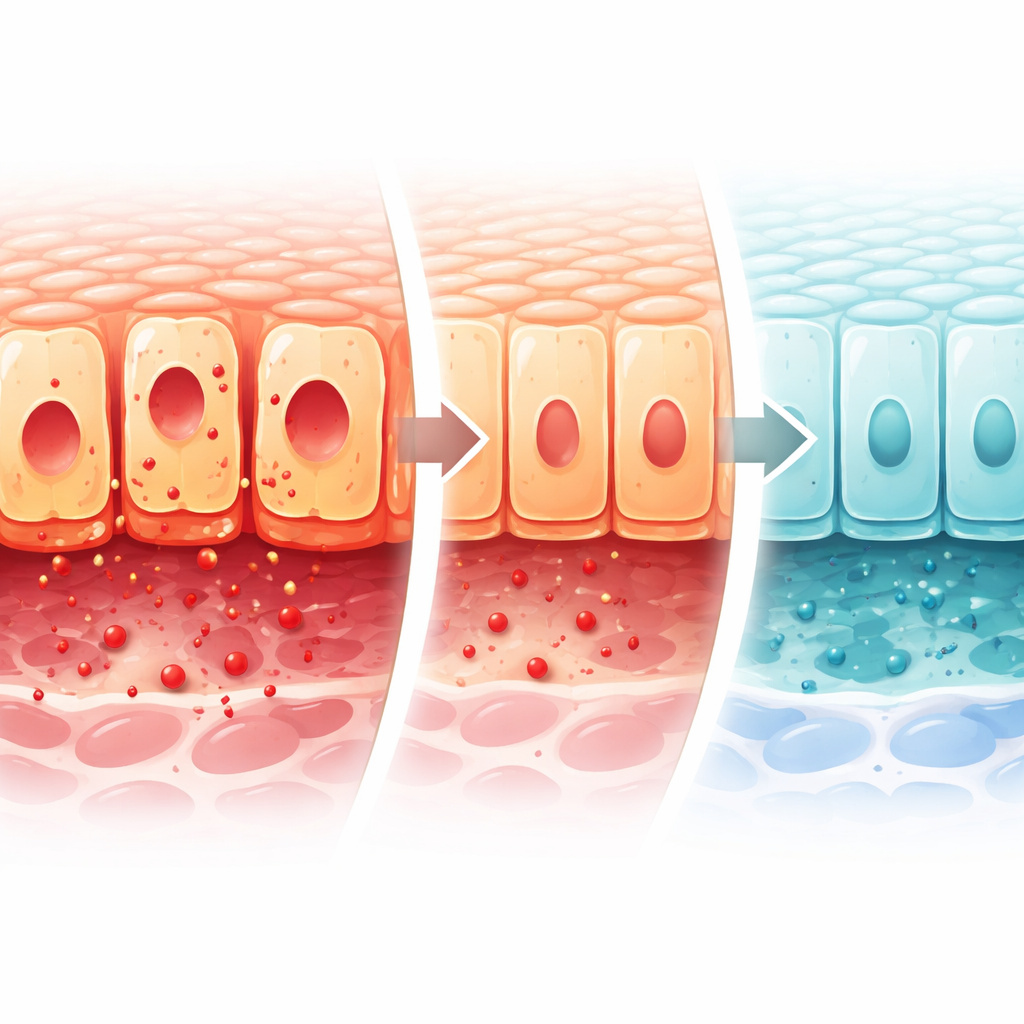
Zooming in on how the barrier is rescued
To understand the mechanism more deeply, the team turned to cultured human intestinal cells. They pushed these cells toward an ulcerative‑colitis‑like state using bacterial components and then artificially raised or lowered lipocalin‑2 levels. Extra lipocalin‑2 drove more pyroptosis‑like death, boosted key “executioner” proteins that punch holes in cell membranes, and worsened the leakiness picture. Blocking lipocalin‑2 had the opposite effect. Remarkably, serum containing HuaZhuoKeLi not only reduced lipocalin‑2 but also calmed the entire chain reaction: the inflammasome structures that set off pyroptosis became less active, fewer pores formed in cell membranes, and destructive inflammatory molecules were released at much lower levels. At the same time, growth and repair signals went up, and the cells’ ability to multiply and crawl into scratched‑open areas improved, hinting at faster healing of the gut lining.
What this could mean for people with colitis
Taken together, the work paints a picture in which HuaZhuoKeLi does more than simply dampen inflammation in a general way. By turning down lipocalin‑2 and the downstream machinery that causes cells to burst, it seems to protect the delicate sheet of cells that lines the intestine and helps restore its sealing function. While this research was done in animals and cell cultures and still needs confirmation in people, it offers a clear mechanistic explanation for how a traditional herbal mixture might ease ulcerative colitis and highlights lipocalin‑2 as a promising target for future therapies that aim to stop the gut from quite literally burning itself from within.
Citation: Yang, L., Wang, S., Ma, Y. et al. Study on the mechanism of action of HuaZhuoKeLi in modulating LCN2-mediated cellular pyroptosis to ameliorate ulcerative colitis. Sci Rep 16, 10754 (2026). https://doi.org/10.1038/s41598-026-45841-2
Keywords: ulcerative colitis, intestinal barrier, cell death, traditional Chinese medicine, lipocalin-2