Clear Sky Science · en
ADME/drug-likeness and functional properties of Punica granatum seeds supported with molecular docking, GC-MS and LC-MS/MS analysis
Why pomegranate seeds matter
Pomegranate seeds are usually a crunchy afterthought on salads or desserts, but inside them lies a cocktail of natural chemicals that can act on microbes, blood sugar, and even brain-related enzymes. This study takes a deep dive into pomegranate seed extract, asking two big questions: which molecules are actually there, and could they realistically become the basis of future medicines?
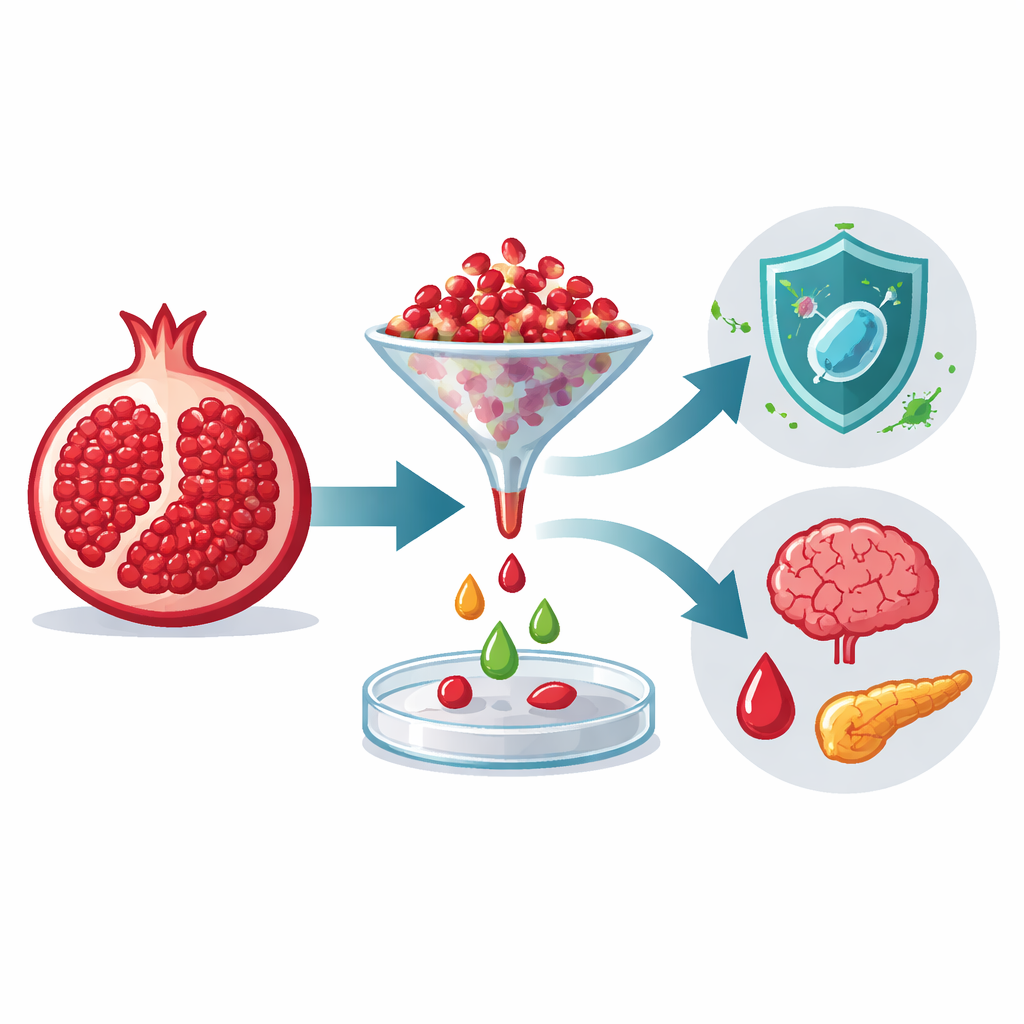
Looking inside the tiny seeds
The researchers began by making extracts from pomegranate seeds collected in northern Türkiye. Using two sensitive laboratory techniques that separate and weigh molecules, they mapped out the seed’s chemical “fingerprint.” They found a rich mix of aromatic oils and phenolic compounds, but two stood out: ellagic acid and gallic acid, both plant-derived antioxidants, together made up nearly 90% of all detected phenolics. Several volatile oil components, including a ring-shaped molecule called 2-oxatricyclodecane and the monoterpene pulegone, were also present in notable amounts. These mixtures are important because plant extracts usually act not through a single “magic bullet,” but through the combined push of many related molecules.
Fighting germs and guarding our DNA
Next, the team tested the extract against a panel of bacteria and fungi. The seed extract inhibited all tested microbes, with especially strong effects on common bacteria such as Escherichia coli and Staphylococcus aureus. The authors suggest that the aromatic oils help disrupt microbial membranes and efflux pumps—protein channels that bacteria use to spit out toxic compounds—making the microbes more vulnerable. In a separate plant-based assay that tracks damage to chromosomes, the extract did not itself cause genetic harm. Instead, it reduced chromosome defects induced by a known mutagen by more than half, suggesting a protective, anti-genotoxic effect likely tied to the strong antioxidant action of ellagic and gallic acids.
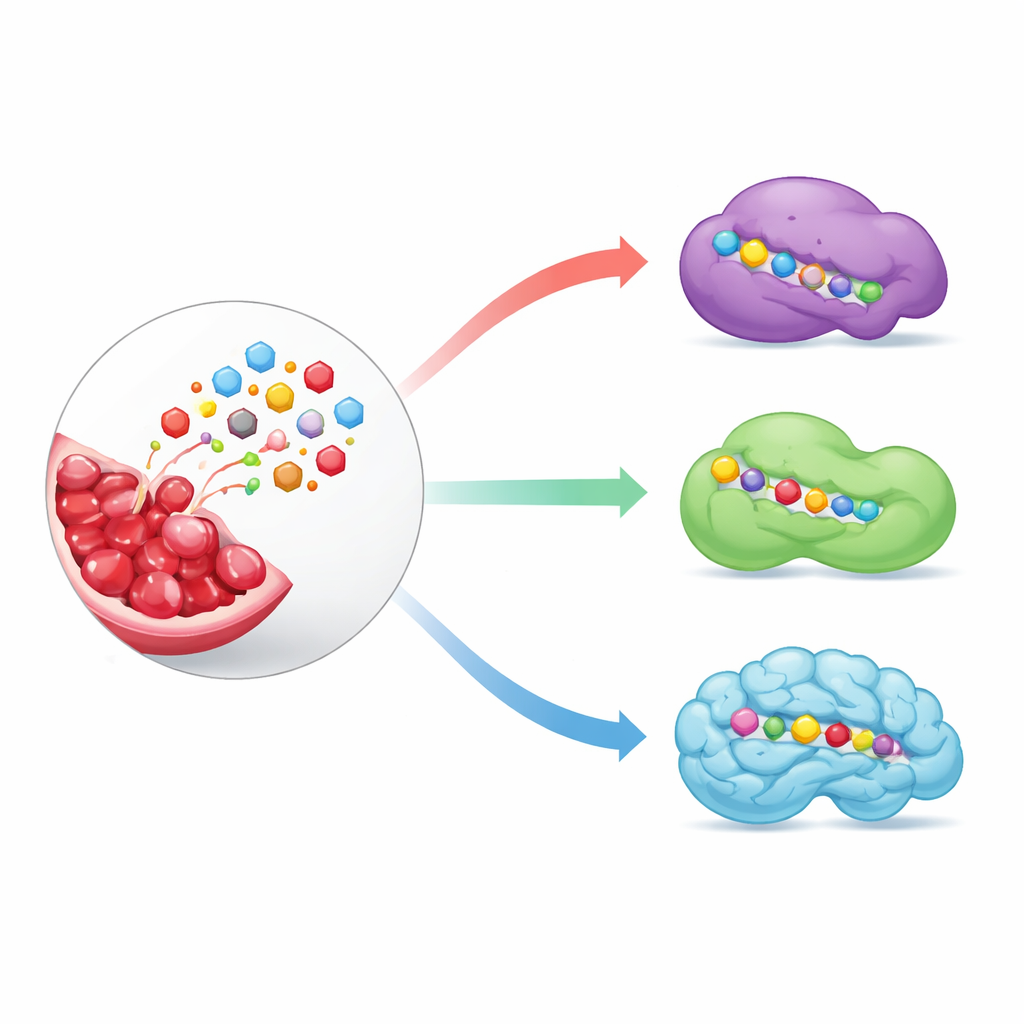
Influence on cell growth, blood sugar, and brain enzymes
The seed extract also modestly slowed cell division in onion root tips, pointing to anti-proliferative activity without strong toxicity. This is consistent with known effects of ellagic acid and certain terpenes, which can interfere with energy production and microtubule function in dividing cells. To explore possible benefits for diabetes, the researchers measured how well the extract could block two digestive enzymes that break down starch into sugar. At practical concentrations, the extract partially inhibited both α-amylase and α-glucosidase, approaching the performance of a standard anti-diabetic drug for one of the enzymes. Finally, because pomegranate products have been linked to neuroprotection, the team checked whether the extract could inhibit acetylcholinesterase and butyrylcholinesterase, enzymes that clear a key signaling molecule in the brain. The seeds showed substantial inhibition of both, especially the second enzyme, hinting at potential relevance to conditions such as Alzheimer’s disease.
Testing the fit as real drugs
Laboratory activity alone does not make a drug; molecules also have to be absorbed, distributed, and cleared in the body in predictable ways. To examine this, the authors used computer models to simulate how major seed components might behave if taken by mouth. The main candidates—2-oxatricyclodecane, ellagic acid, gallic acid, and pulegone—largely met widely used guidelines for “drug-likeness,” including reasonable size, balance between water- and fat-solubility, and surface properties linked to intestinal uptake. Additional docking simulations showed how these molecules could nestle into the three-dimensional structures of microbial pumps, digestive enzymes, and brain-related enzymes, supporting the idea that the measured effects arise from specific molecular contacts rather than vague, nonspecific toxicity.
What this means for everyday health
For non-specialists, the takeaway is not that pomegranate seeds are ready to replace prescription drugs, but that they contain a surprisingly sophisticated set of compounds that hit several biological targets at once: microbes, DNA protection, starch-digesting enzymes, and brain enzymes. The seed extract appears active at realistic doses, shows no direct genetic harm in the tested system, and its major molecules look, on paper, like plausible starting points for drug development. The study strengthens the case for pomegranate seeds as a functional food that may help lower the risk of chronic diseases, while also laying groundwork for future work that isolates and tests individual components in animals and, eventually, humans.
Citation: Yalçın, E., Çavuşoğlu, K. & Acar, A. ADME/drug-likeness and functional properties of Punica granatum seeds supported with molecular docking, GC-MS and LC-MS/MS analysis. Sci Rep 16, 10968 (2026). https://doi.org/10.1038/s41598-026-45832-3
Keywords: pomegranate seeds, plant bioactives, natural antimicrobials, antidiabetic plants, drug-like phytochemicals