Clear Sky Science · en
Dvalue of serum biomarkers for identifying computed tomography abnormalities in male miners
Why this study matters
Miners around the world work in dusty, confined spaces that can quietly damage their lungs for years before symptoms appear. Doctors already use low-dose CT scans to look for early signs of trouble, but reading these scans in miners is tricky because harmless scars, inflammation, and early cancers can look alike. This study asks a simple, practical question: can a few routine blood tests help flag which miners are most likely to have important lung changes on their CT scans, so that scarce medical resources can be focused where they are needed most?
Looking for warning signs in the blood
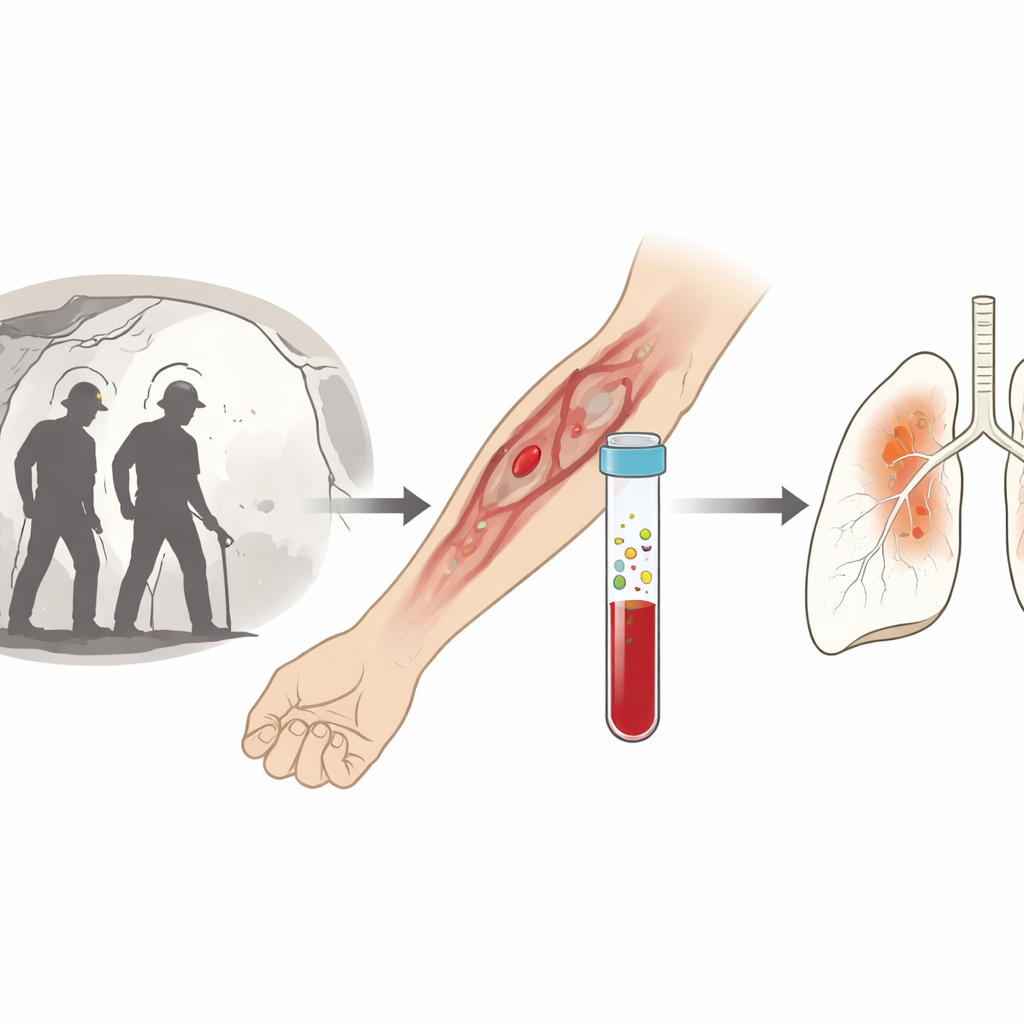
The researchers focused on four substances in the blood that are already used in hospitals when lung cancer is suspected. These markers—known by the abbreviations CEA, CYFRA21-1, NSE, and CA125—can rise when lung tissue is inflamed, damaged, or cancerous. Instead of studying patients who already had cancer, the team looked at 110 male miners in Chongqing, China, who were undergoing routine occupational health checks. Each miner had a low-dose CT scan of the chest and a blood sample taken at the same visit, allowing the team to see how well each marker matched up with actual scan findings.
What the scans revealed
About two-thirds of the miners showed at least one meaningful abnormality on their CT scans. These ranged from small nodules and hazy patches to areas of scarring or fibrosis—changes that might be caused by years of dust exposure, chronic inflammation, infections, or, less commonly, early cancer. Miners with abnormal scans tended to be older and more often regular smokers, and they had slightly lower platelet counts, a routine blood measure related to clotting and inflammation. When the researchers compared blood tests between miners with normal and abnormal scans, three markers stood out: CEA, CYFRA21-1, and NSE were all higher in the group with lung changes, while CA125 showed little difference.
Building a combined blood test
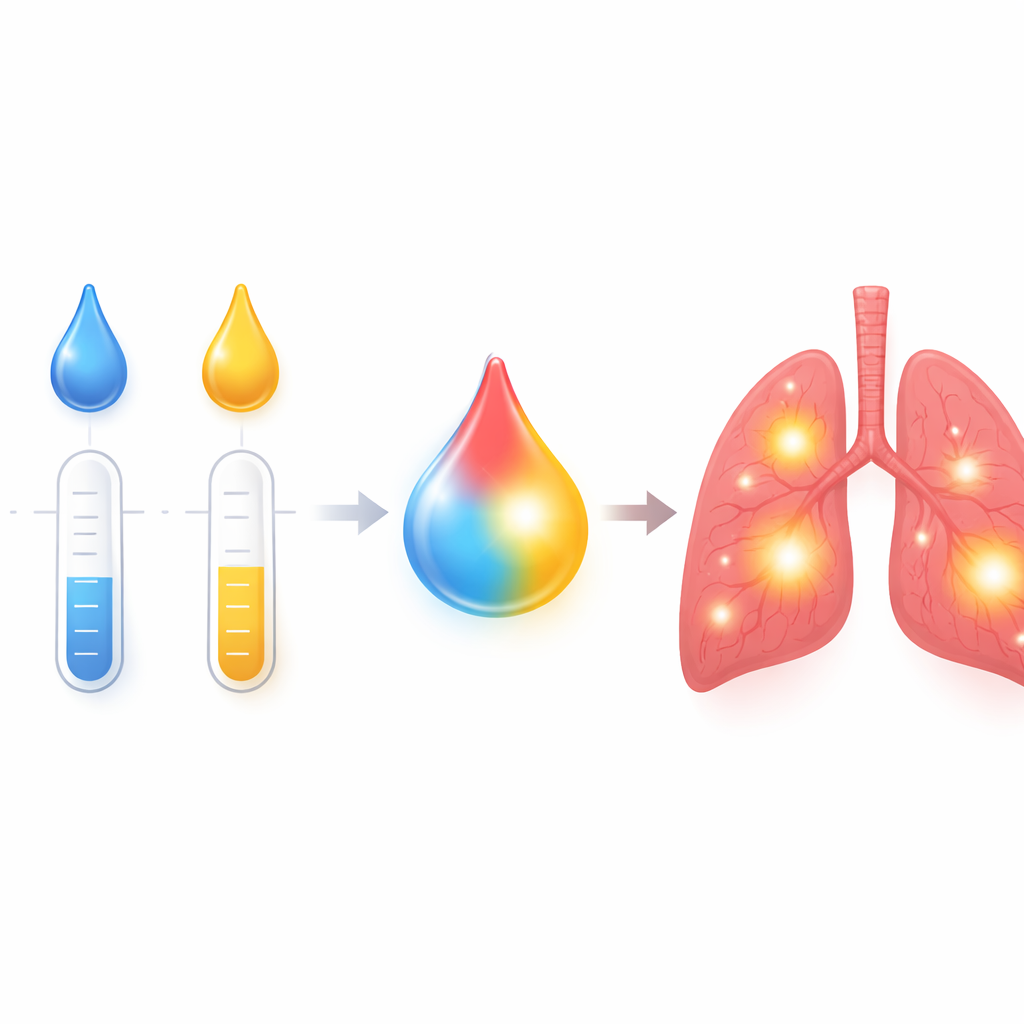
Next, the team asked how useful each marker would be as a simple test to predict who had an abnormal CT scan. On their own, the markers did only a modest job: each one could separate higher-risk from lower-risk miners better than chance, but not well enough to rely on alone. The key advance came when all four markers were combined in a single statistical model. Together, the markers produced a much sharper signal, correctly identifying most miners with lung abnormalities and, importantly, producing almost no false alarms in this dataset. In other words, if the combined blood test said a miner likely had an abnormal scan, that prediction was almost always right, although a reassuring blood result could not safely exclude problems.
Which markers matter most
To understand how each ingredient contributed to this combined signal, the researchers used a method that treats the four blood markers as a “mixture” and estimates their relative weight. This analysis showed a clear pecking order. CEA contributed the most to the overall prediction, followed closely by NSE and CYFRA21-1; CA125 added almost nothing. The pattern makes biological sense for miners: CEA and NSE can rise not only in cancers but also in long-standing inflammation and scarring, which are common in workers exposed to dust. CYFRA21-1 is more closely linked to specific types of lung cell injury and cancer, which may be less frequent but still part of the picture. Together, these three markers appear to capture a broad spectrum of lung damage rather than cancer alone.
What this means for miners’ health
For a lay reader, the takeaway is straightforward: a targeted panel of three routine blood tests—CEA, CYFRA21-1, and NSE—shows promise as an extra “filter” to help identify miners whose CT scans are most likely to reveal significant lung changes. The approach is not ready to replace imaging and cannot be used to give anyone a clean bill of health, but it could one day help occupational clinics decide who needs closer follow-up or more detailed scans. Because this work was done in a relatively small group of male miners and the results were checked only within the same group, larger and more diverse studies are needed before the test can be used in practice. Still, the study offers an important proof of concept: simple blood tests may become a valuable partner to CT scans in protecting the lungs of people who work underground.
Citation: Huang, Q., Lai, L., Diao, J. et al. Dvalue of serum biomarkers for identifying computed tomography abnormalities in male miners. Sci Rep 16, 10609 (2026). https://doi.org/10.1038/s41598-026-45831-4
Keywords: lung screening, occupational health, serum biomarkers, miners, CT abnormalities