Clear Sky Science · en
Genetic score associations with birthweight in preterm-born infants compared with term-born infants
Why tiny babies and their genes matter
Babies born too early often arrive with very low birthweights, which can raise their chances of short term health problems and long term difficulties. Doctors already know that a baby’s genes play a big role in how much they weigh at birth if they are born around their due date. What has been less clear is whether the same genetic influences matter as much for babies who are born weeks, or even months, too soon. This study set out to answer that question by comparing the genetic contribution to birthweight in preterm and term infants.
Looking at many babies and many genes
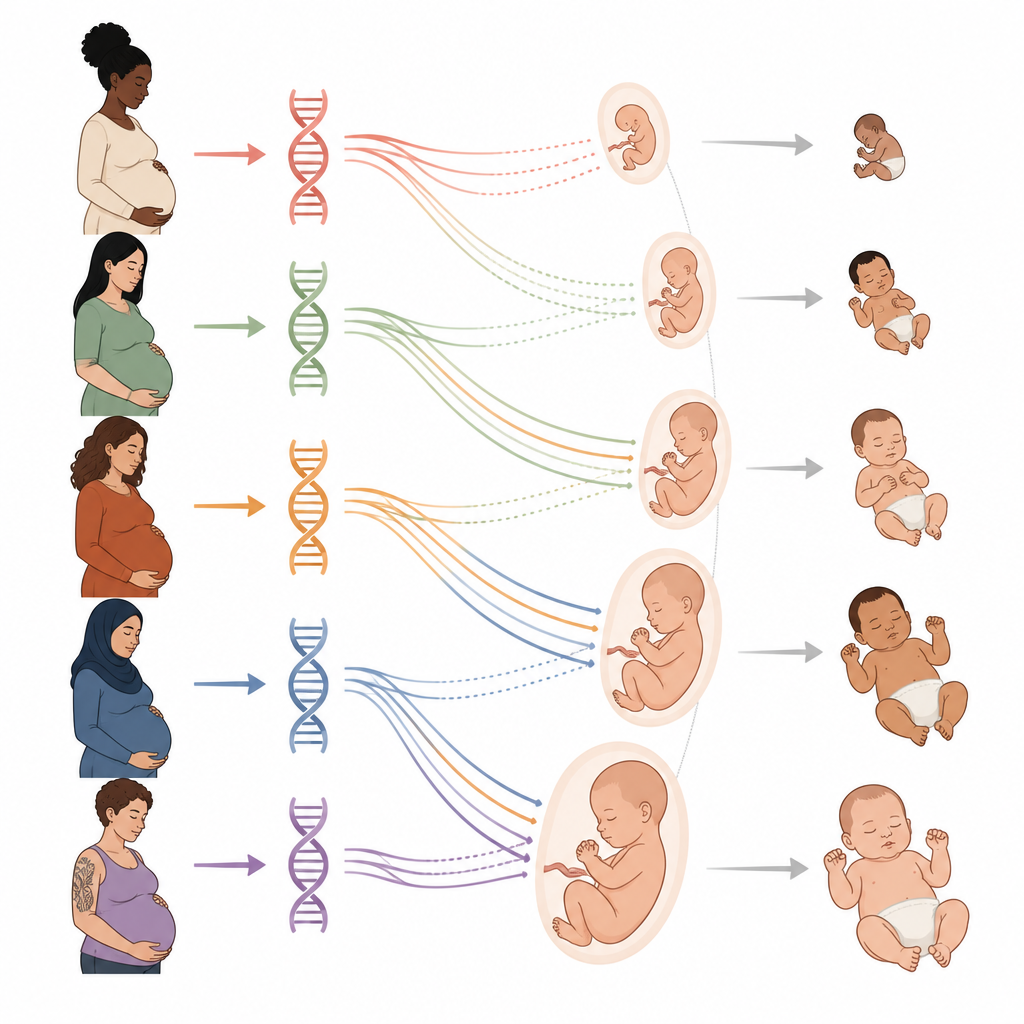
The researchers combined information from several large birth cohorts in the United Kingdom and Australia. In total they studied over 15,000 babies born at term and more than 1,400 babies born preterm. All of these children had both recorded birthweights and detailed genetic data. Instead of focusing on single genetic changes, the team built “genetic scores” that added up the tiny effects of many DNA variants previously linked to birthweight, birth length, or body fat at birth in mostly term born babies.
Comparing early and on time births
For each child, the scientists asked how strongly their genetic score was related to their actual birthweight. Among term babies, the link was very strong: babies with higher birthweight genetic scores tended to be heavier, in line with earlier work. Preterm babies also showed a clear genetic influence, but the effect was smaller. When the researchers divided preterm births into earlier and later groups, they found that the genetic effects grew stronger with longer time in the womb. Very early preterm babies showed little connection between their genetic score and how much they weighed at birth.
Clues from body length and body fat
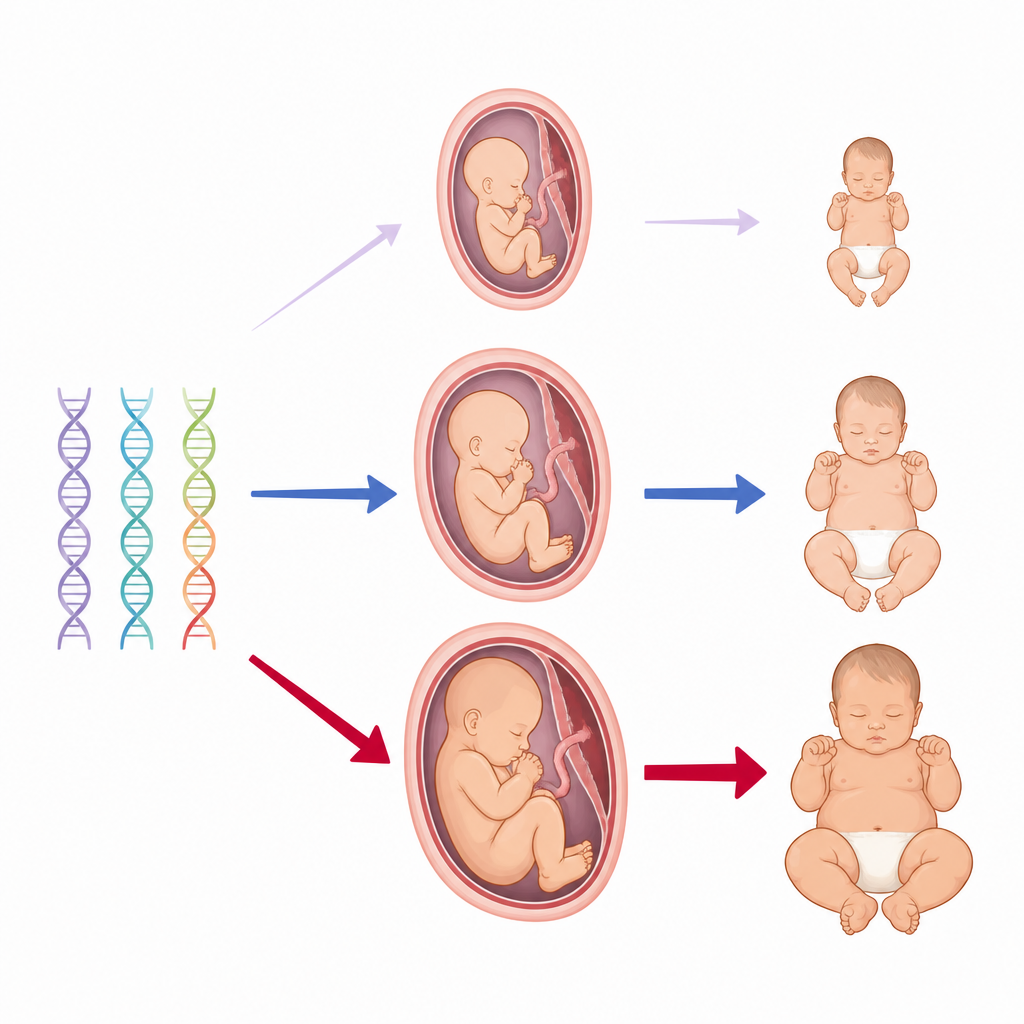
The team also examined genetic scores related more specifically to how long babies are and how much of their weight is likely to be body fat. The score linked to body length was associated with birthweight in both term and preterm babies, especially in those born just a few weeks early. In contrast, the score linked to a baby’s fatness was strongly tied to birthweight only in term babies and was much weaker in preterm infants. This pattern hints that skeletal growth may follow similar genetic rules in early and full term pregnancies, while the build up of fat late in pregnancy is more easily disrupted when babies are born early.
Differences across ancestry groups
The study also compared babies of European and South Asian genetic backgrounds. In the South Asian group, the same genetic scores had smaller effects on birthweight, and for preterm babies the results were less clear. This may be because the scores were developed mainly in people of European ancestry and may not capture genetic influences as well in other groups. It may also reflect that standard growth charts, used to convert birthweights into comparable values, fit European babies better than others. These findings underline the need for ancestry specific genetic tools and growth references.
What this means for tiny newborns
Overall, the study shows that many of the same genetic factors that help determine how big a baby will be at term also matter for preterm babies, but their influence is weaker, especially for the very smallest and earliest arrivals. This suggests that, for preterm infants, non genetic factors such as the uterine environment, placental health, or other unmeasured genes may play a larger role in limiting growth. Understanding these influences better will be important for improving care, but larger studies focused on preterm babies will be needed to fully untangle how genes and environment shape their start in life.
Citation: Beaumont, R.N., Kotecha, S.J., Simpson, S.J. et al. Genetic score associations with birthweight in preterm-born infants compared with term-born infants. Sci Rep 16, 15082 (2026). https://doi.org/10.1038/s41598-026-45823-4
Keywords: preterm birth, birthweight genetics, fetal growth, neonatal health, polygenic score