Clear Sky Science · en
A cross-sectional study on dysphagia-related quality of life and its associated factors in chinese patients with sjögren’s syndrome
Why swallowing problems matter
Swallowing is something most people never think about until it becomes difficult or painful. For people with Sjögren’s syndrome, a long-lasting immune disease that dries out the mouth and eyes, swallowing can turn everyday activities such as eating with friends into a constant struggle. This study looked at how much swallowing problems affect day-to-day life for Chinese patients with Sjögren’s syndrome, and which health issues tend to go hand in hand with worse swallowing experiences.
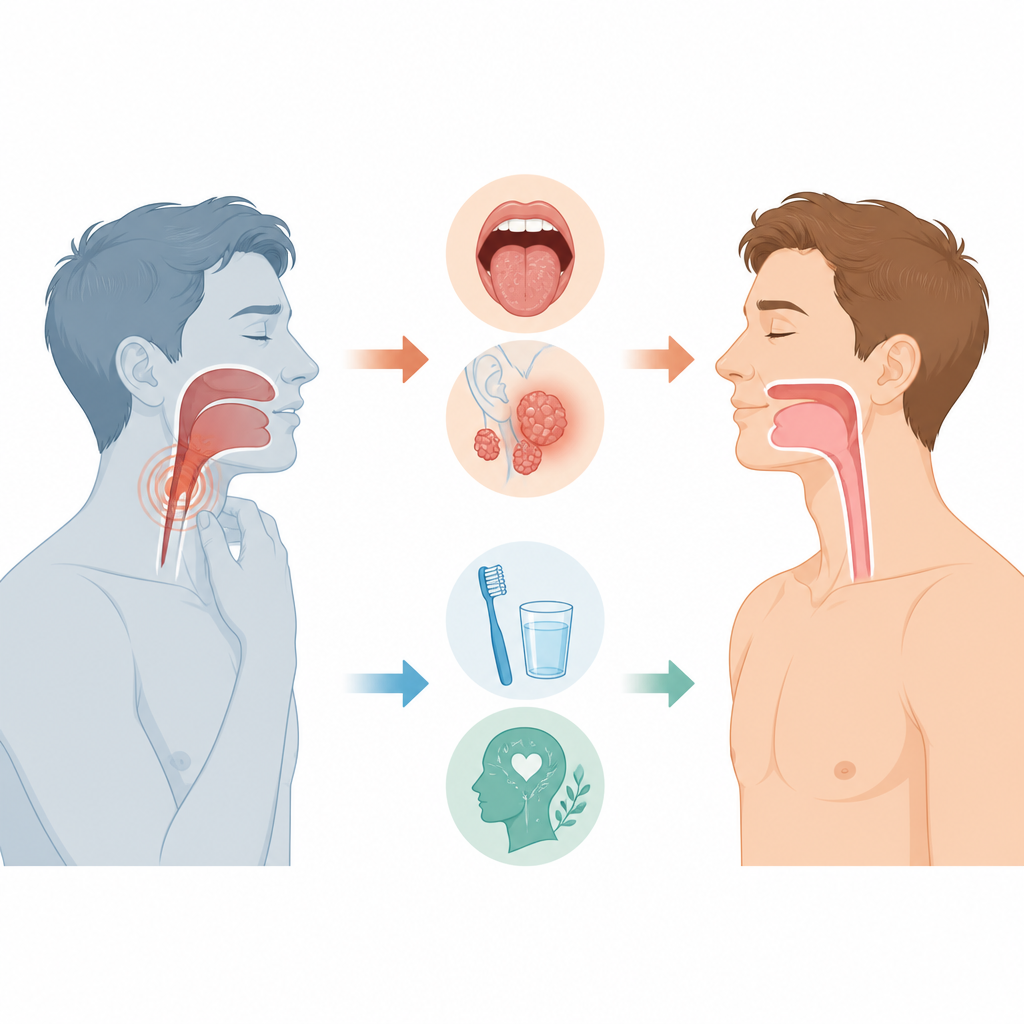
Looking at life with a dry mouth
The researchers focused on 231 adults treated at a large hospital in Nanjing, China, all diagnosed with Sjögren’s syndrome. Instead of relying on clinic tests alone, they used detailed questionnaires to capture how patients felt about their swallowing in daily life. The main survey, called the MD Anderson Dysphagia Inventory, asked about physical effort while eating, social situations such as dining out, and emotions like embarrassment or worry. Other surveys measured pain, tiredness, sleep, mood, and oral health, while blood tests checked for signs of ongoing body-wide inflammation.
How common and how bad are the swallowing troubles
On average, patients scored in the middle range for swallowing-related quality of life, but nearly one in four fell into a group the researchers labeled as clearly impaired. Many of these patients agreed with statements such as “swallowing takes great effort” and felt that their swallowing limited daily activities. The physical strain of eating stood out as the most frequent problem, followed by emotional concerns and practical issues such as others having difficulty cooking for them. These patterns suggest that the act of swallowing itself is the main challenge, with social and emotional burdens building on top of that physical effort.
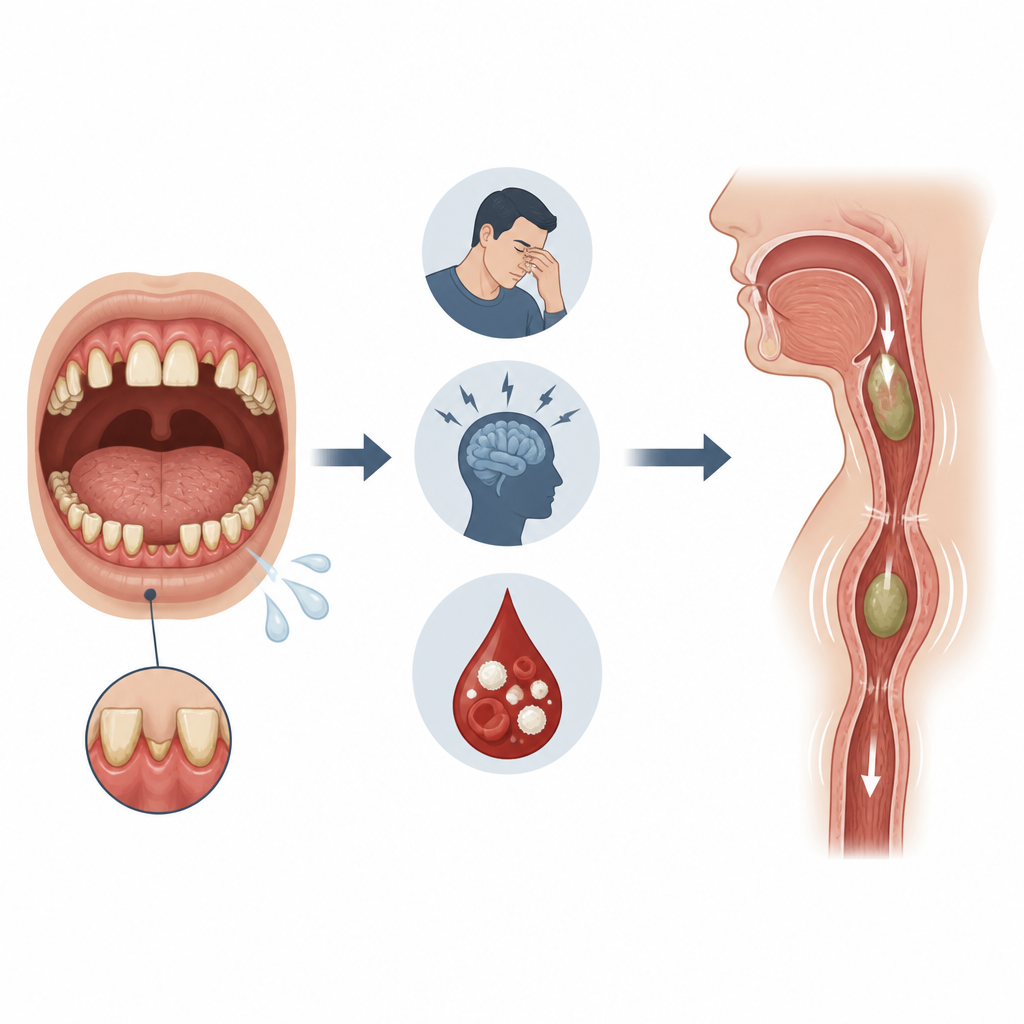
What goes along with worse swallowing
When the team compared patients with the poorest swallowing-related quality of life to those coping better, clear trends emerged. Patients who struggled more with swallowing tended to be older, thinner, and to report more pain, worse sleep, and more active disease overall. They also had poorer self-rated oral health, felt more anxious and depressed, and were more severely fatigued. Blood tests showed higher levels of erythrocyte sedimentation rate, a common marker that rises with body-wide inflammation. After using statistical methods to sort out overlapping effects, four factors remained closely tied to poorer swallowing-related quality of life: worse oral health, higher anxiety, greater fatigue, and higher inflammation levels.
What this means for care
The findings paint a picture of swallowing problems in Sjögren’s syndrome as part of a web of physical and emotional burdens, rather than a stand-alone complaint. Dry mouth and damaged teeth can make chewing and swallowing painful and slow. Constant tiredness and worry can sap the energy and confidence needed for eating, while hidden inflammation in the body may further harm the salivary glands and throat. The authors suggest that doctors should not only ask about dry mouth and joint pain, but also regularly check how patients feel about swallowing, how healthy their mouths are, how tired and anxious they feel, and whether signs of inflammation are rising.
Take-home message
For about one in four Chinese patients with Sjögren’s syndrome in this study, swallowing problems seriously interfered with daily life. These difficulties were most closely linked with poor oral health, high anxiety, strong fatigue, and signs of ongoing inflammation in the blood. To a layperson, the message is that easing swallowing troubles in Sjögren’s syndrome will likely require more than one type of treatment, combining good mouth care, attention to mood and tiredness, and medical control of the underlying disease, rather than focusing on the throat alone.
Citation: Zhou, L., Tang, Y., Sha, B. et al. A cross-sectional study on dysphagia-related quality of life and its associated factors in chinese patients with sjögren’s syndrome. Sci Rep 16, 14943 (2026). https://doi.org/10.1038/s41598-026-45816-3
Keywords: Sjögren’s syndrome, swallowing problems, dry mouth, oral health, fatigue and anxiety