Clear Sky Science · en
Study on the regulation mechanism of sodium biphenyl concentration on the electrochemical performance of porous carbon anodes
Why better batteries matter
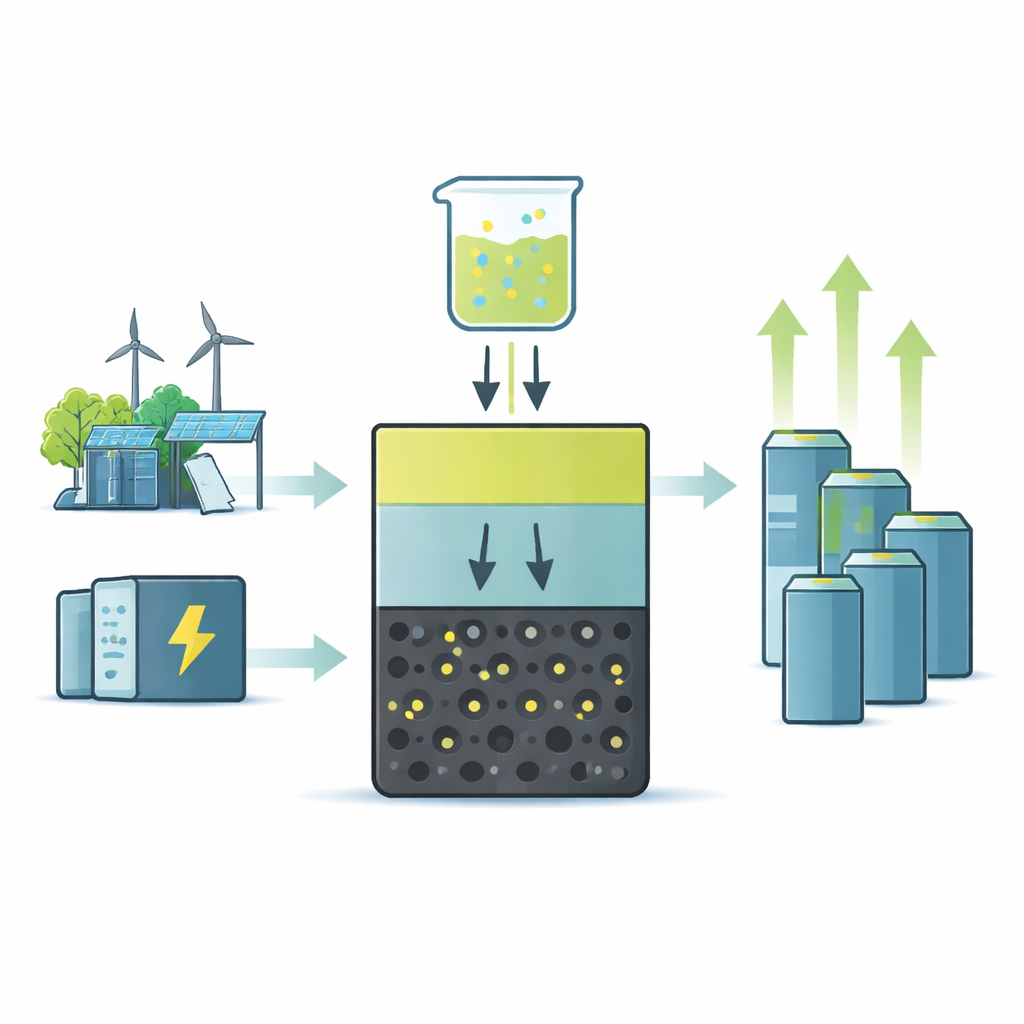
As wind and solar power grow, we need batteries that are cheap, long‑lasting, and safe to help smooth out their stop‑and‑start nature. Today’s workhorse lithium‑ion batteries rely on relatively scarce elements, which keeps costs high. Sodium‑ion batteries, built around abundant table‑salt–like sodium, are a promising alternative. But a key part of these batteries—the carbon anode—wastes too many sodium ions in its first use, lowering efficiency and cutting into usable energy. This study explores a chemical “head start” treatment for carbon anodes that could make sodium‑ion batteries more practical for large‑scale energy storage.
Giving the anode a head start
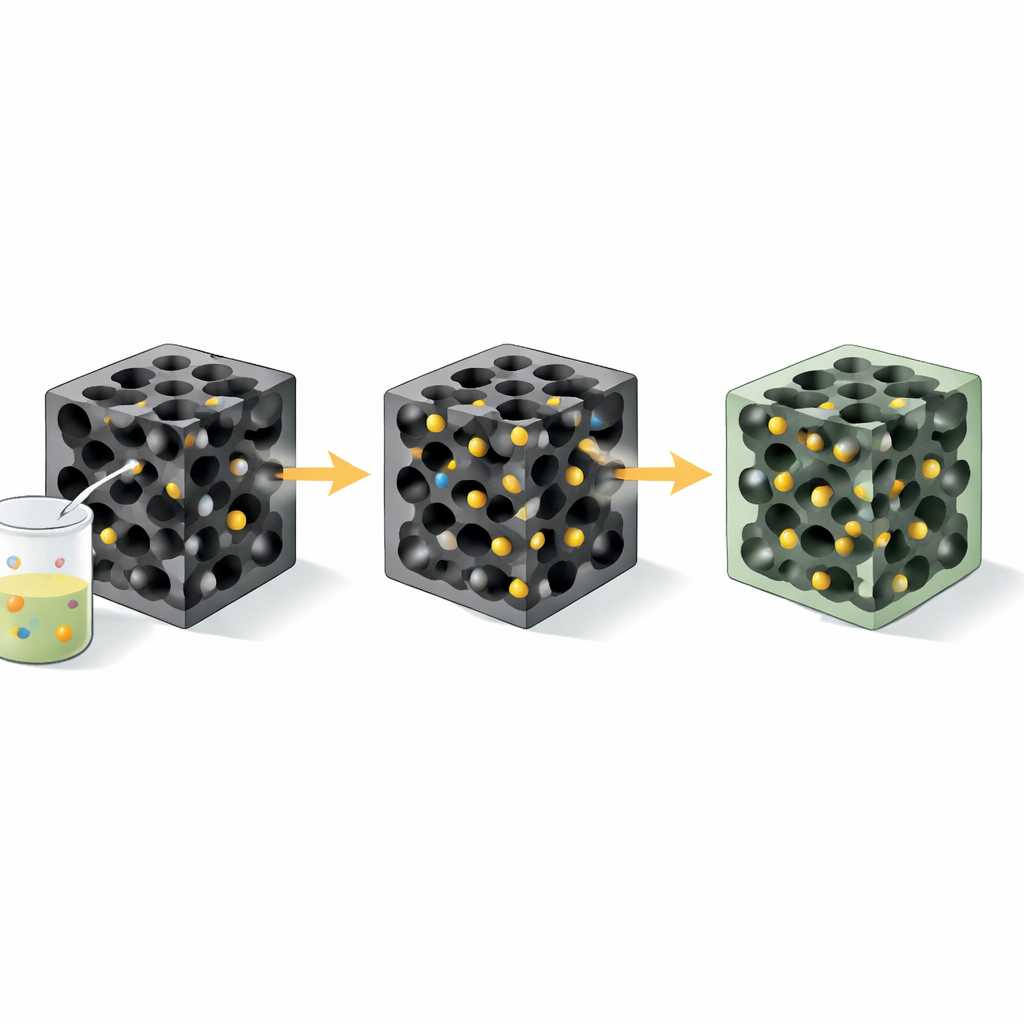
The researchers focus on a porous, sulfur‑doped carbon material that can store a lot of sodium but initially uses it inefficiently: in its first charge–discharge cycle, less than half of the sodium put in can be recovered. The team uses a chemical trick called pre‑sodiation, soaking the carbon electrode in a solution made from metallic sodium and an organic molecule (biphenyl) dissolved in a common battery solvent. This solution donates sodium atoms into the carbon before the battery is ever cycled, partly “pre‑charging” the anode so it does not have to borrow as much sodium from the cathode during its first use.
What happens inside the carbon
Microscope images reveal that the carbon starts out as a sponge‑like network full of interconnected pores—excellent for letting liquid electrolyte and sodium ions in, but also prone to unwanted reactions that permanently trap sodium. After the pre‑sodiation soak, the overall framework stays intact, and sodium atoms are seen evenly distributed throughout the pores and thin layers of the carbon. When this treated carbon later meets the battery electrolyte, a thin, uniform protective skin called the interphase forms on its surface. This skin, made from both organic and inorganic fragments of the electrolyte, acts like a controlled gateway: it protects the surface from further damage while still letting sodium ions move in and out.
Finding the sweet spot in treatment strength
The central question is how strongly to pre‑sodiate the anode. The team prepares sodium–biphenyl solutions of three strengths and treats different electrodes for the same short time. At low concentration, the initial efficiency rises from about 46% to over 61%, and the electrode delivers higher capacity across a wide range of charging speeds. As the solution gets stronger, the apparent first‑cycle efficiency can even exceed 100%, because the anode gives back more sodium than it took from the cathode thanks to its pre‑loaded content. However, this comes with a trade‑off: the protective surface layer becomes thicker and more rigid, blocking some sodium pathways and reducing how much charge the anode can store, especially at high rates.
Balancing power, lifetime, and efficiency
Electrical tests show this balance clearly. Moderate pre‑sodiation improves both the first‑cycle efficiency and the ability of the anode to work under fast charging and discharging, while also boosting long‑term stability over hundreds of cycles. Heavier treatment, by contrast, protects the surface very well but slows sodium transport and lowers usable capacity. The researchers capture this behavior with a simple mathematical curve: as solution strength grows, the extra sodium added to the anode climbs quickly at first and then levels off, indicating that storage sites in the porous carbon saturate. Pushing beyond the point that roughly matches the anode’s natural first‑cycle losses tips the system into over‑treatment, where extra sodium does more harm than good.
From lab cells to full batteries
To see whether this strategy works in complete devices, the team builds full sodium‑ion batteries pairing their treated anodes with a commercial cathode. Compared with untreated cells, the pre‑sodiated versions start out with much higher usable capacity and initial efficiency, hold more energy over a range of operating speeds, and retain a larger fraction of their capacity after hundreds of charge–discharge cycles. The overall energy density of the full battery rises significantly when the anode is given an appropriate chemical head start, showing that this is not just a lab curiosity but a practical route to better devices.
What this means for future sodium batteries
To a non‑specialist, the core message is that how much sodium you pre‑load into a carbon anode matters as much as the treatment itself. A carefully chosen sodium–biphenyl concentration creates a protective skin that limits early waste while keeping the carbon’s internal storage spaces open for business, delivering both high efficiency and strong performance over time. Overdoing the treatment, however, smothers some of those spaces and slows ion traffic. By mapping out this balance, the study offers battery designers a clear, tunable lever for making sodium‑ion batteries more efficient, durable, and competitive for large‑scale energy storage.
Citation: Wu, H., Liu, X., Jamadon, N.H. et al. Study on the regulation mechanism of sodium biphenyl concentration on the electrochemical performance of porous carbon anodes. Sci Rep 16, 14413 (2026). https://doi.org/10.1038/s41598-026-45815-4
Keywords: sodium-ion batteries, carbon anodes, pre-sodiation, energy storage, electrode interfaces