Clear Sky Science · en
ResSeMo: deep convolutional neural network integration for high-accuracy waste classification and efficient processing
Why Sorting Trash With Smarts Matters
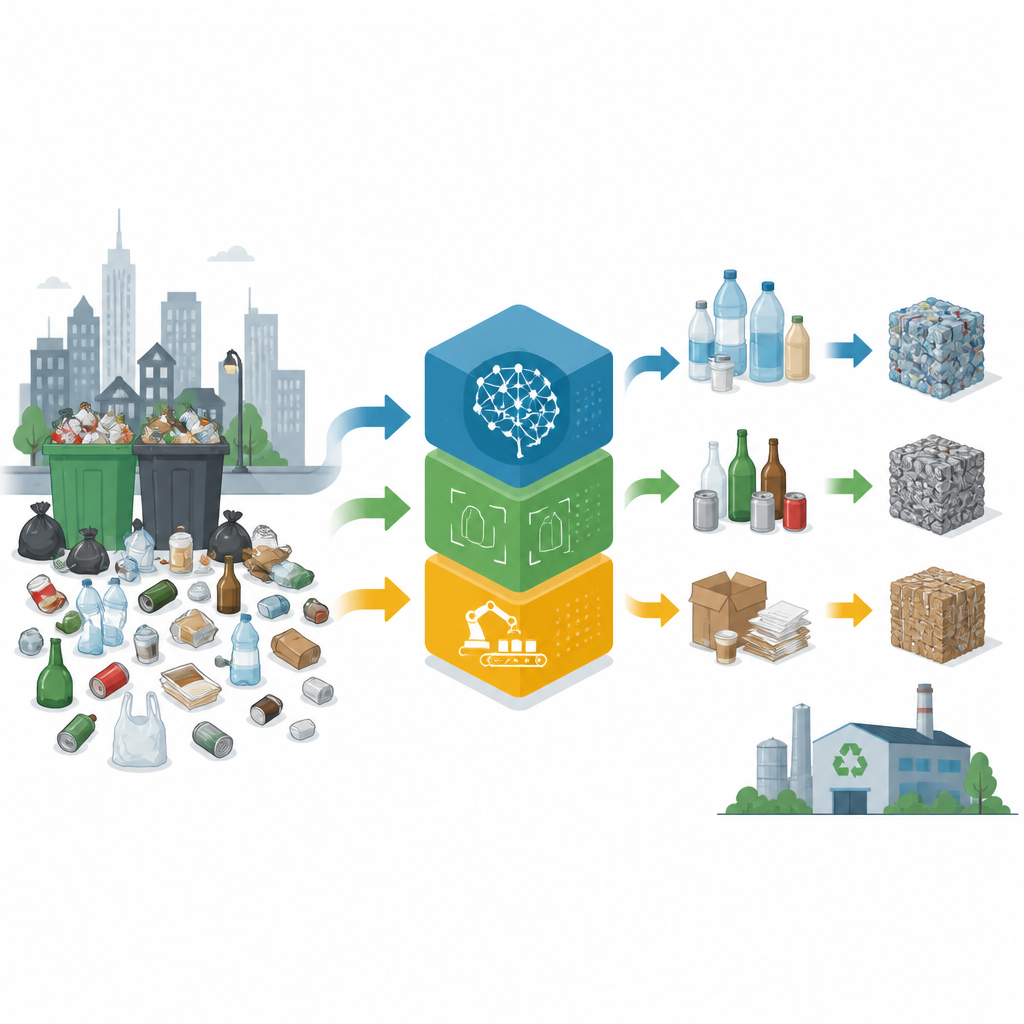
Every day, cities around the world struggle with mountains of mixed garbage. When bottles, cans, food scraps, and batteries end up in the same bin, it becomes harder and more expensive to recycle them safely. This paper introduces ResSeMo, a new computer vision system that teaches machines to recognize different kinds of waste quickly and reliably, even in real street scenes, helping move us closer to cleaner neighborhoods and more efficient recycling.
The Growing Pile of Urban Waste
Urbanization has sharply increased the amount of trash people generate. Traditional sorting methods rely on workers and simple machines that often misclassify more than a quarter of the waste they see. That means valuable materials are buried or burned instead of reused, and dangerous items like batteries slip through. Researchers have turned to modern image recognition, where cameras and algorithms examine photos of trash and decide whether an item is glass, plastic, paper, metal, or something else. Yet many existing systems are either slow and heavy, or they work well only in clean, controlled lab conditions, not on cluttered sidewalks or inside full trash cans.
A New Three Part Brain for Trash
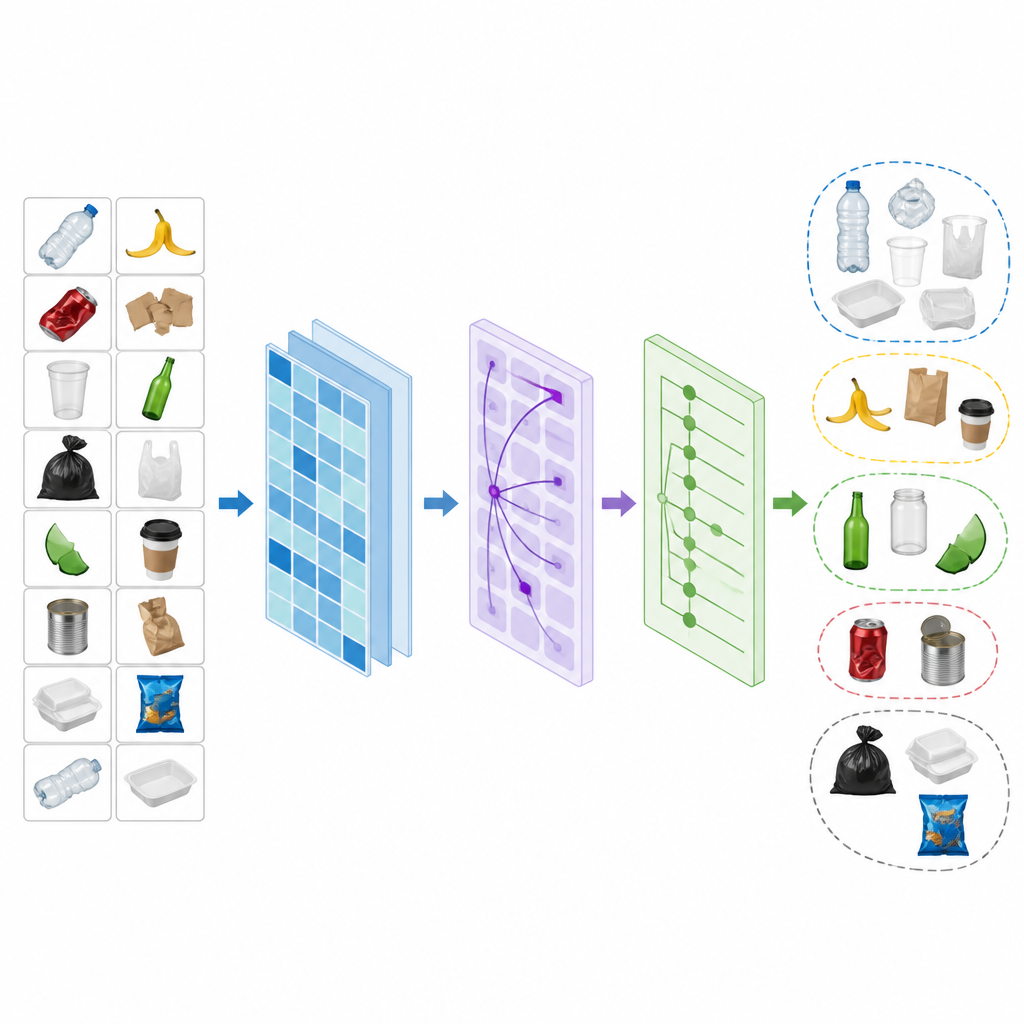
ResSeMo tackles this problem by combining three types of neural network modules into one coordinated “brain.” The first part specializes in spotting rich visual details at multiple scales, such as texture, outlines, and shine, so it can distinguish a glass bottle from a plastic one. The second part acts like a spotlight, boosting the most important visual cues, such as corrosion marks on metal or patterns typical of batteries, while downplaying distracting backgrounds. The final part focuses on doing all this with far fewer calculations, allowing the system to run on small devices like smart bins or low power sensors without taking up much memory or energy. Together they form a step by step pipeline that turns messy images into confident category decisions.
Training on Real World Trash
To test ResSeMo, the authors used two major image collections. The first, TrashNet, contains a few thousand photos taken in simple settings where each object is clear and centered. The second, TACO, is much larger and closer to reality, filled with litter scattered on streets, parks, and indoor corners, often tiny, partly hidden, or poorly lit. The team carefully prepared this data: they aligned category labels between the two sources, expanded the number of examples with standard tricks like rotation and brightness changes, and enlarged image regions around very small objects such as bottle caps to make them easier for the model to see. They also added extra labels describing how dirty and how bulky each item looks, to support later analysis of how sorting choices might affect the wider waste handling chain.
Putting the Model to the Test
ResSeMo was compared with ten well known networks, including heavy hitters often used in research and lighter ones designed for phones. On the simpler TrashNet photos, the new system correctly classified just over nine out of ten items while using far fewer computing steps than the most powerful competitors. On the more demanding TACO images, it still recognized nearly 87 percent of items correctly and kept processing times short. The model also held up well under tough conditions: when the researchers added noise, blur, darkness, glare, or simulated bad weather, ResSeMo’s accuracy dropped only modestly and stayed higher than rival models. Further tests on small boards like NVIDIA Jetson Nano and Raspberry Pi showed that a compressed version could run with low power and memory, making it suitable for devices embedded in the field.
What This Means for Everyday Life
In plain terms, ResSeMo shows that it is possible to build a trash sorting system that is both sharp eyed and practical. By mixing powerful pattern recognition with a design that fits on small, low power hardware, the approach helps bridge the gap between research and real bins on real streets. While more work is needed to handle rare waste types or extreme conditions, this study demonstrates a promising path for cities that want to automate front line sorting, recover more materials, and keep harmful items out of landfills and incinerators.
Citation: Liu, T., Li, B. & Wang, Z. ResSeMo: deep convolutional neural network integration for high-accuracy waste classification and efficient processing. Sci Rep 16, 15167 (2026). https://doi.org/10.1038/s41598-026-45814-5
Keywords: waste classification, deep learning, smart recycling, edge AI, urban sanitation