Clear Sky Science · en
Network topology and recovery delay thresholds determine cascading failure vulnerability in sports systems
Why small problems in sports can snowball
Fans often talk about a team “falling apart” after a star gets hurt or a season goes off the rails following one bad incident. This study asks a simple question behind those stories: when does a small setback stay small, and when does it ripple through an entire sports organization? By treating teams and leagues as networks of connected people, the research shows how certain team structures and slow responses can turn minor issues into major collapses.
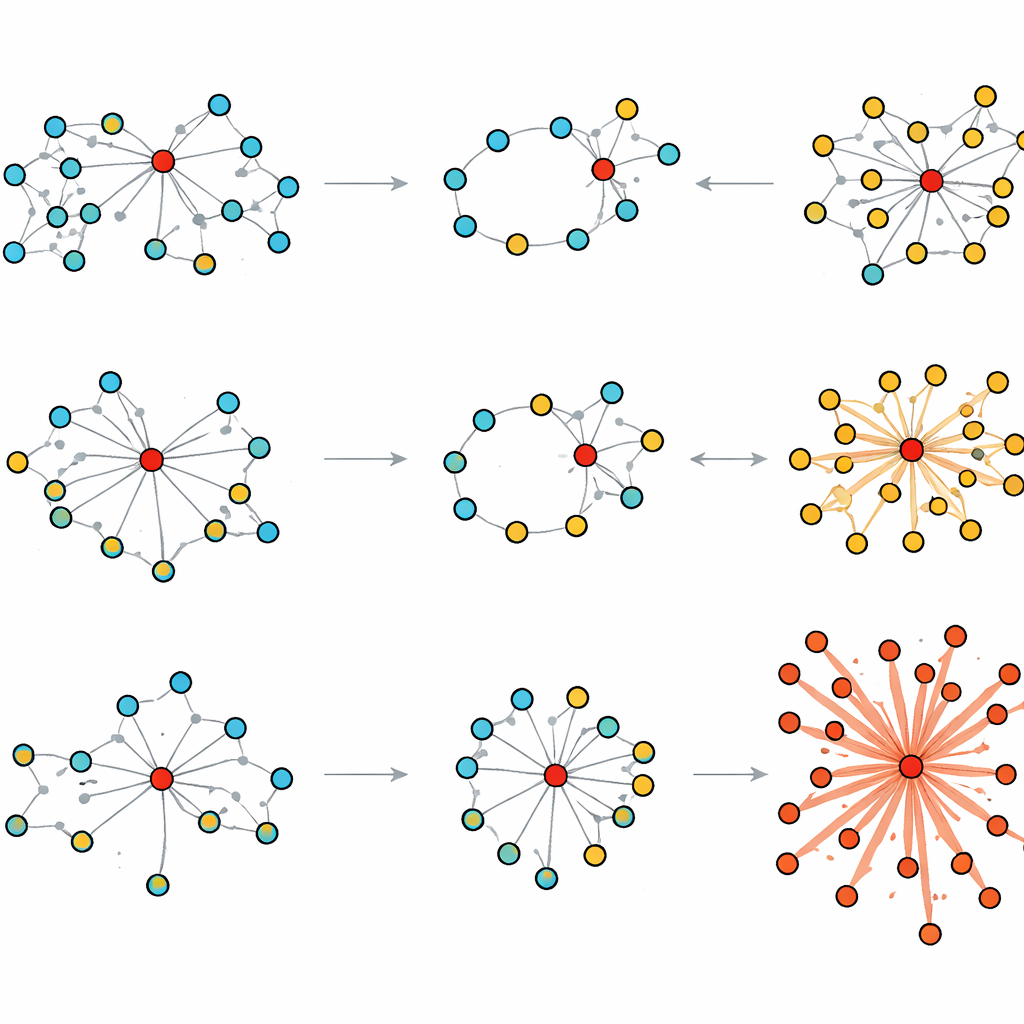
How teams form hidden webs of connection
The author views sports organizations as webs of linked individuals: players, staff, and decision‑makers whose fortunes are tied together. Four basic patterns are examined. In random networks, connections are loose and scattered, like community sports. Regular networks look orderly, with everyone linked in a similar way, like a set rotation. Small‑world networks have tight clusters with a few shortcuts between groups, similar to pro athletes’ social circles. Scale‑free networks are dominated by hubs, where one or two central figures handle most of the flow, fitting many star‑driven professional teams. In all of these settings, the study tracks how “failure” — an injury, slump, or off‑field problem — can pass from one person to another.
Why star‑centered teams face sharper risks
Using a network‑agent computer model, the study lets thousands of simulated seasons play out across these four structures. Each “player” in the model can invest in protection, copy what seems to work for others, or try new approaches. The results show a clear pattern: star‑centered, hub‑heavy networks are much easier to knock over. When a key figure in this kind of structure fails, the disruption spreads quickly along their many links. A new measure, the Network Vulnerability Index, captures how fragile each structure is. Star‑based networks score about 57 percent higher on this index than evenly structured teams, and they occupy the largest “danger zone” in the model’s map of system behavior, meaning there are more ways for them to tip into trouble.
Timing of recovery: the tipping point
Structure, however, is only half the story. The other half is speed. The model builds in “recovery delay” — how long it takes before an intervention is made, such as medical treatment, a lineup change, or a league‑wide policy. When recovery is almost immediate, the simulations show that failures tend to stay local: the team absorbs the shock, and overall performance remains stable, even in star‑heavy networks. But when recovery is delayed by just one extra step, the picture changes dramatically. Failures begin to feed on one another over time, and the model shifts from steady, manageable behavior to fast, runaway cascades. This shift is sharpest in star‑dependent teams, where the same delay pushes the system from relative safety into widespread collapse.
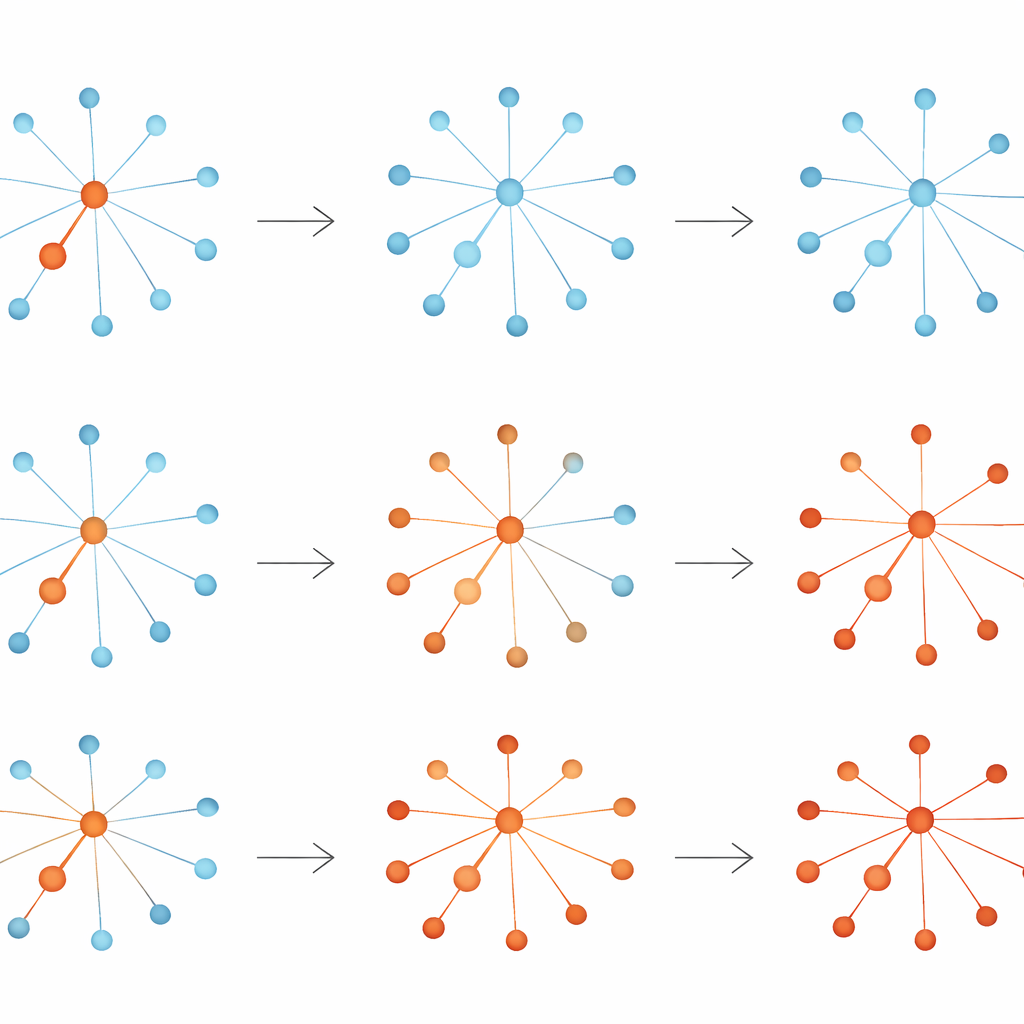
Real‑world proof from injuries and shutdowns
To test whether the model reflects reality, the study compares its predictions with detailed NBA injury records and the timelines of COVID‑19 shutdowns across 12 major leagues. In the injury data, bursts of related injuries and the spacing between them closely match the simulated cascades. In the pandemic case, leagues whose structures resembled star‑dominated networks tended to stay shut down longer. Those that moved quickly with strict measures recovered nearly 27 percent faster than leagues that waited. Across both kinds of evidence, systems with hub players and slow reactions suffered the most extensive and prolonged disruptions, supporting the model’s warnings.
What this means for building safer, steadier sports systems
For non‑specialists, the main takeaway is straightforward: who is connected to whom, and how fast leaders respond, largely decides whether a sports system bends or breaks. Star‑centered teams and leagues are not doomed, but they live closer to the edge. If a key person falters and help is slow, problems can spread rapidly through their many ties. By measuring vulnerability and identifying critical time windows for action, this work suggests practical steps: spread responsibilities more evenly, monitor hub players closely, and design rapid‑response protocols that kick in at the first sign of trouble. Done well, such structure‑aware strategies can keep inevitable setbacks from turning into full‑blown collapses.
Citation: Park, C. Network topology and recovery delay thresholds determine cascading failure vulnerability in sports systems. Sci Rep 16, 10852 (2026). https://doi.org/10.1038/s41598-026-45805-6
Keywords: sports networks, cascading failures, star players, risk management, recovery timing