Clear Sky Science · en
Optimizing weathering steel tie rod production for sustainable greenhouse structures
Stronger greenhouses for a thirsty world
As water becomes scarcer, many countries are turning to greenhouses to grow food with far less waste. But the metal frames that hold these structures together sit in a warm, humid fog created by irrigation and plant breathing, a recipe for rust and costly failures. This study looks inside a real factory in Egypt that makes one small but crucial part of the greenhouse skeleton—the steel tie rod—and shows how smarter choice of steel and better hot-pressing conditions can make these rods last longer, stay safer, and support more sustainable farming.
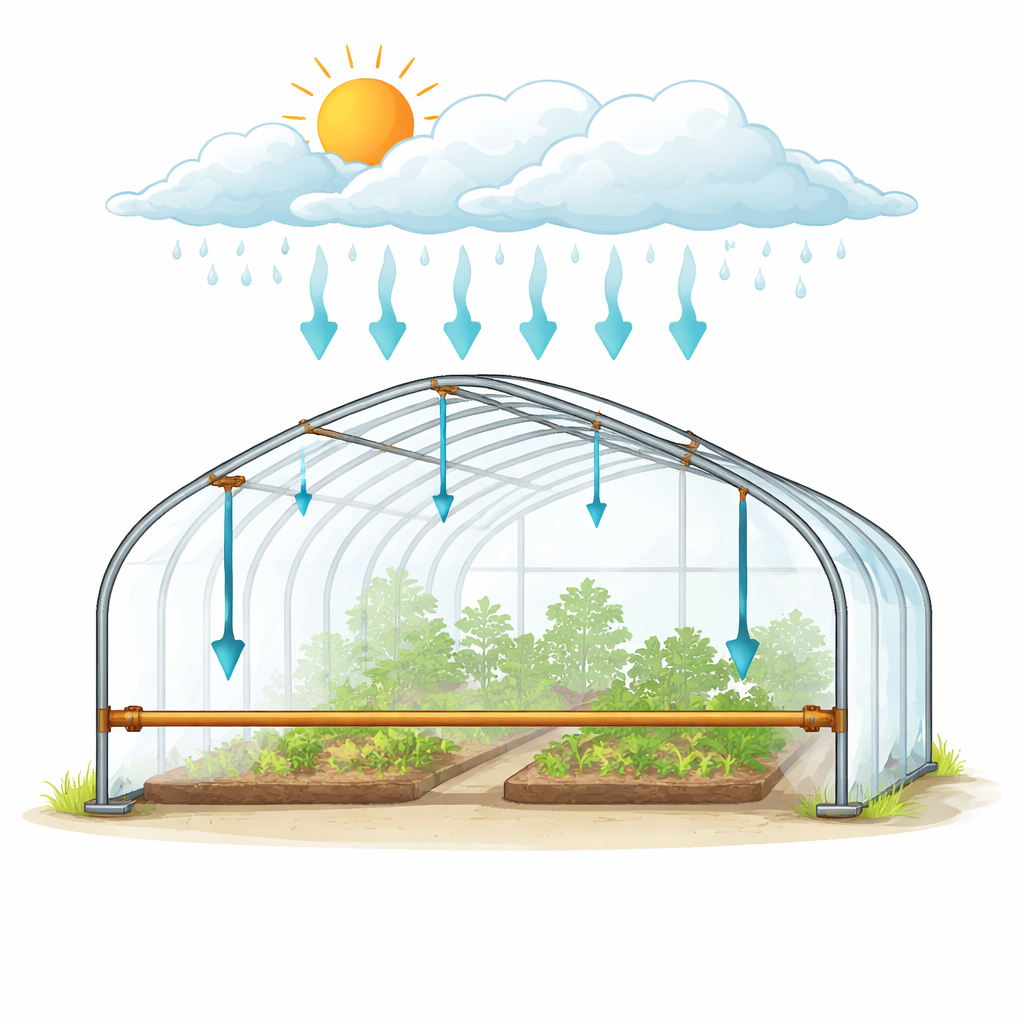
The hidden backbone of a greenhouse
Inside a greenhouse, curved roof arches carry the weight of plastic, wind, and sometimes even sand or light snow. These arches tend to push outward at their bases, and tie rods act like strong belts that pull them back together, keeping the roof from spreading and collapsing. At each end of the rod, a flared disc called a flange creates a wider surface for bolted connections, helping forces flow smoothly through the frame. In the Egyptian factory examined here, some flanges came out with uneven thickness, raising concerns that these weak spots could concentrate stress and shorten the life of the structure, especially in the harsh, damp environment of irrigated greenhouses.
Rust, smarter steel, and a protective skin
Standard low‑carbon structural steel is easy to bend and form, so it is widely used in farm buildings. Yet, in a greenhouse, water vapor condenses on the cooler metal surfaces, and daily temperature swings repeat this wetting‑drying cycle, speeding up corrosion. The authors explored the use of weathering steel, a low‑alloy steel that forms a tight, protective rust layer, or patina, instead of the flaky rust that usually eats away at steel. By carefully measuring the chemical makeup of the tie‑rod material, they found it matched a common structural grade, enriched with copper and phosphorus. Using a standard corrosion index that links composition to expected resistance, they showed that performance peaks when the copper content is about 0.37%, especially when phosphorus is also present. Below this level, the steel forms a thin, even protective film; above it, thicker, rough copper oxides actually weaken the barrier. In practice, the tie rods also receive a zinc coating, so the copper–phosphorus alloy acts as a second line of defense in spots where the coating is damaged.
From glowing metal to finished part
To understand why flange thickness was uneven, the team tracked the full manufacturing route. Bars 20 millimeters in diameter were heated at one end to 700 °C for a few seconds in an induction furnace, then rushed to a 14‑ton press that spread the hot tip into a flange. Tests confirmed that, overall, the steel met strength and hardness targets and showed a fine mix of soft ferrite and harder pearlite, a pattern known to balance toughness and resistance to localized attack. Microscopy of the flange region revealed refined grains and no continuous networks that might act as easy crack or corrosion paths. However, when the researchers compared the actual pressing conditions—a moderate strain rate at 700 °C—with published processing maps for similar steels, they discovered that production was occurring in an unstable zone where metal flow tends to be uneven.
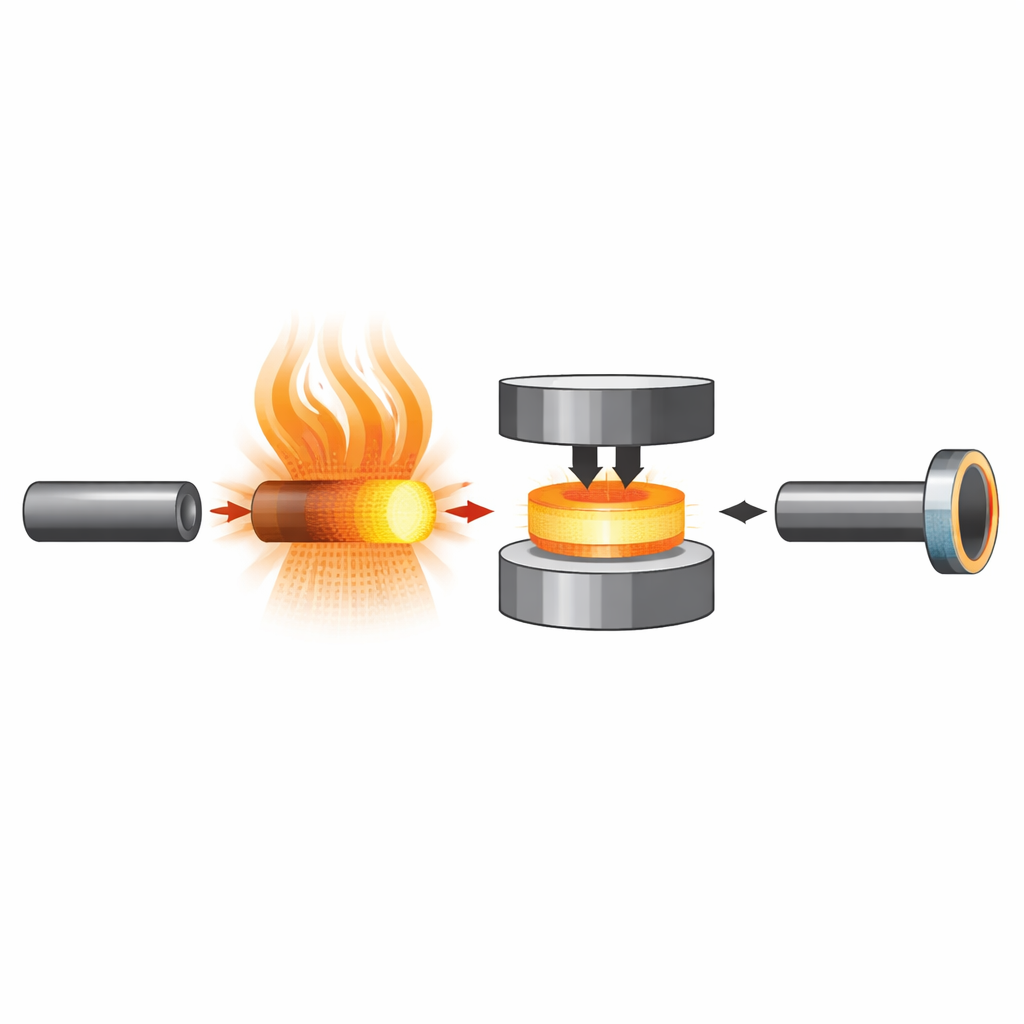
Finding the sweet spot in the hot‑pressing window
Processing maps combine temperature and deformation speed to show where steel can be shaped smoothly and where it is likely to buckle, crack, or flow irregularly. For this tie‑rod steel, stable regions span roughly 670–1027 °C, with an especially favorable window around 800–850 °C and much slower pressing rates than those used in the factory. Within this window, the steel undergoes controlled softening and grain refinement, allowing the hot metal to fill the die more uniformly and creating a more consistent flange thickness. The study highlights that even when the die is perfectly symmetric, pressing at the wrong temperature and speed can introduce hidden weaknesses in the final part.
Building longer‑lasting farm structures
By combining a carefully tuned weathering steel composition—particularly the right copper and phosphorus levels—with better‑chosen hot‑pressing conditions, the authors show how a common component can be transformed into a more durable, reliable part of greenhouse frames. Stronger, corrosion‑resistant tie rods mean fewer replacements, less material and energy use, and reduced risk of structural problems in food‑producing greenhouses. In simple terms, this work demonstrates that paying attention to both what the steel is made of and how it is shaped can make greenhouse infrastructure tougher and more sustainable in the face of an increasingly demanding climate.
Citation: El-Meligy, M., El-Bitar, T. & Mohammed, A. Optimizing weathering steel tie rod production for sustainable greenhouse structures. Sci Rep 16, 14021 (2026). https://doi.org/10.1038/s41598-026-45791-9
Keywords: greenhouse structures, weathering steel, corrosion resistance, hot forging, sustainable agriculture