Clear Sky Science · en
Analysis of corneal biomechanical characteristics and clinical correlations in children with dust mite-allergic conjunctivitis
Why this matters for kids with itchy eyes
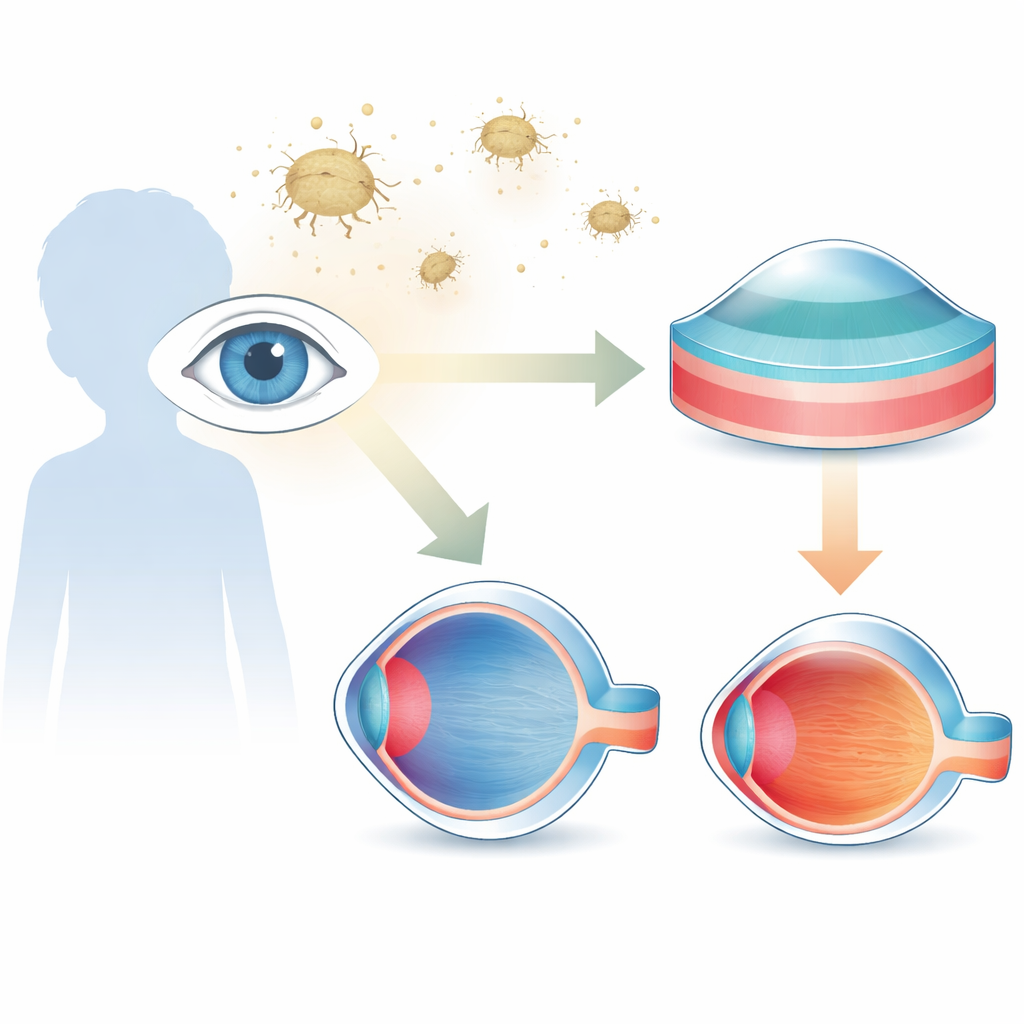
Many children struggle with itchy, watery eyes caused by allergies, especially to dust mites in the home. Parents usually focus on quick relief from redness and irritation, but this study asks a deeper question: can long‑term eye allergies quietly weaken the clear front window of the eye—the cornea—and increase the risk of more serious vision problems later in life?
Looking closely at children’s eyes
Researchers in China examined 260 school‑age children, comparing those with year‑round dust mite–related eye allergies to healthy classmates. All the children had detailed eye checkups and filled out questionnaires about discomfort such as itching, burning, and light sensitivity. The team also measured tear quality and subtle damage on the surface of the eye using a special dye test. Most importantly, they used a high‑speed camera system that gently puffs air at the eye and records how the cornea bends and springs back, allowing them to capture its mechanical behavior—how stiff or “soft” it is—without touching the eye.
What they found inside the cornea
Children with dust mite–allergic conjunctivitis had clearly worse symptoms: stronger itching and redness, poorer tear film, and more tiny surface injuries on the cornea. But the most striking differences lay deeper. When the air‑puff test was applied, their corneas bent more easily and took on shapes that signaled reduced stability. Several timing and shape measurements showed that the allergic group’s corneas flattened sooner, moved faster, and deformed more than those of healthy children, even after accounting for age, sex, and corneal thickness. Together, these changes point to a cornea that is mechanically weaker and more vulnerable to long‑term distortion.
Allergy, rubbing, and hidden damage
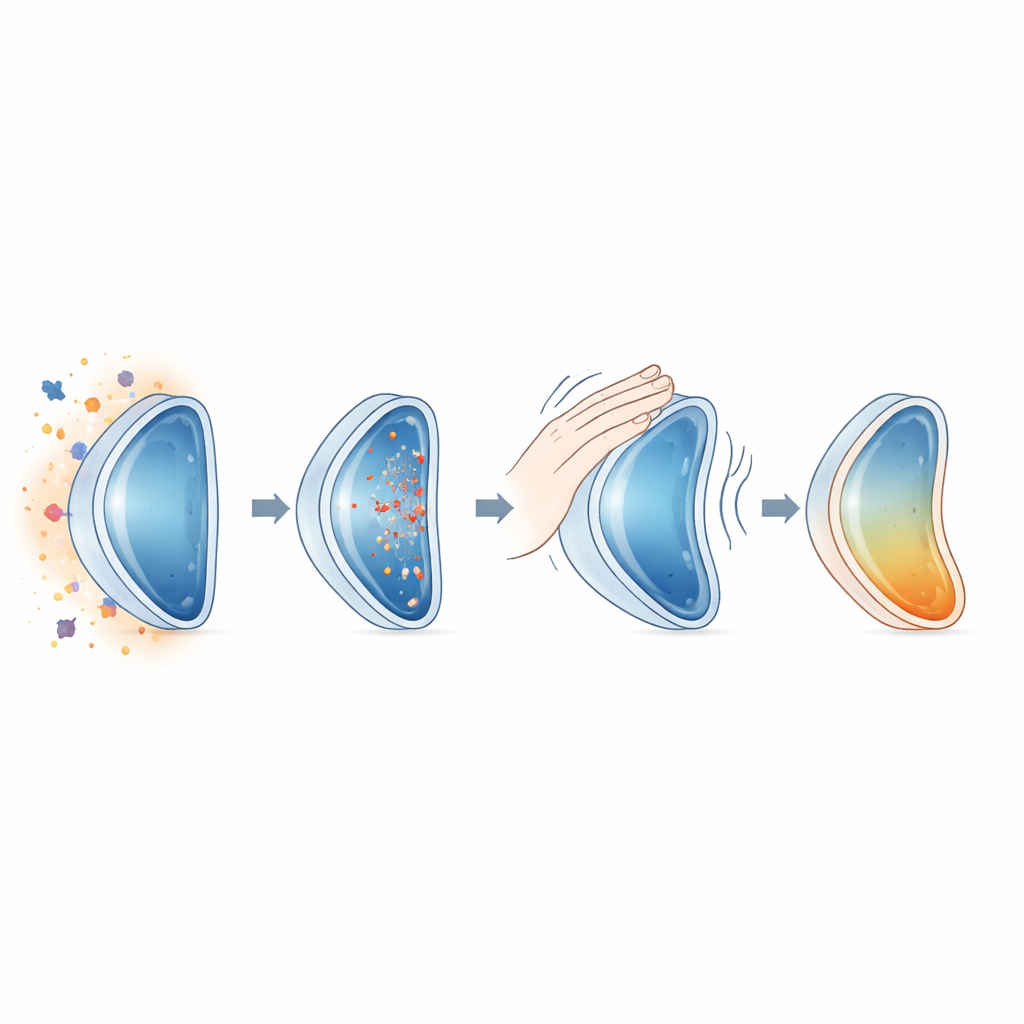
The team then explored how everyday signs like itching, redness, and tear quality related to the cornea’s behavior. They found only weak to moderate links, suggesting that a child may have a mechanically fragile cornea even if the eye surface does not look badly injured. A more detailed analysis showed that surface damage—tiny spots picked up by the dye test—explained only part of the difference in a few key measurements. This supports a picture in which allergy‑driven inflammation and constant eye rubbing do more than scratch the surface: chemicals released during allergy can seep into the deeper corneal layers and gradually loosen its internal framework of collagen fibers, while repeated rubbing adds mechanical wear and tear that softens the tissue.
Different risk levels among allergic children
Interestingly, not all allergic children were alike. When the researchers grouped the allergic participants by their biomechanical measurements, two distinct patterns emerged. One cluster had corneas that were clearly more deformable—a “soft subtype”—while the other looked relatively stable. This soft subgroup may represent children at higher risk for progressive corneal warping disorders, such as keratoconus, which can severely blur vision and sometimes require corneal transplantation. The study also showed that, in healthy children of this age range, differences in corneal behavior were driven more by how thick the cornea was than by age itself, underscoring that some eyes start out structurally more vulnerable than others.
What this means for families and eye care
For families, the message is that dust mite–related eye allergies are not just a nuisance; over time, they may quietly weaken the eye’s clear front window in some children. The authors suggest that doctors caring for allergic kids should not only treat redness and itching, but also consider periodic checks of the cornea’s mechanical strength. Identifying children who fall into the soft, more deformable subtype could allow closer follow‑up, stronger efforts to control allergy and discourage eye rubbing, and early protection of vision before irreversible changes occur.
Citation: Zhu, Y., Chen, Y., Liu, Y. et al. Analysis of corneal biomechanical characteristics and clinical correlations in children with dust mite-allergic conjunctivitis. Sci Rep 16, 10927 (2026). https://doi.org/10.1038/s41598-026-45786-6
Keywords: allergic conjunctivitis, dust mite allergy, corneal biomechanics, children, keratoconus risk