Clear Sky Science · en
Latency-aware attitude control of underactuated quadrotor UAVs using barrier Lyapunov and fuzzy Padé approximation
Keeping Small Drones Steady in a Delayed World
Modern quadcopter drones are everywhere—from inspecting bridges to helping in disaster zones. But keeping these lightweight machines rock-steady in the air is harder than it looks, especially because their motors and sensors do not react instantly. This study presents a new way to make quadrotor drones stay stable and follow commanded angles reliably, even when there is a noticeable delay between the control computer’s commands and the motors’ response. The goal is safer, more precise drones that can be trusted in demanding, long-duration missions.
Why Delays Make Drones Misbehave
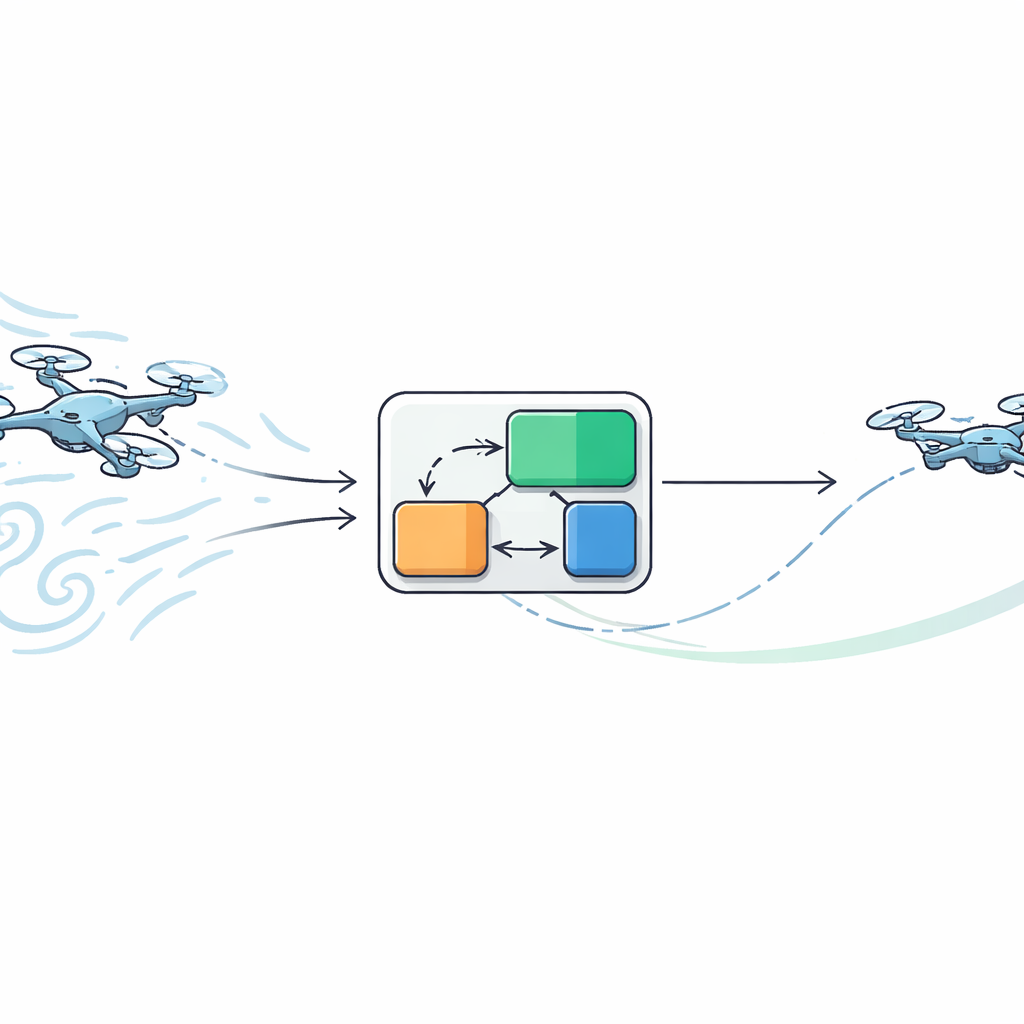
When you move a joystick or an autopilot sends a new command, a drone’s response is never perfectly instant. Measurements must be taken, data processed, and signals sent to the motors. These delays are usually fractions of a second, but for fast, light vehicles that react quickly, even a small pause can cause serious wobbling or loss of control. Traditional control methods often assume those delays are tiny or constant. In reality, they can vary, especially when communication links are busy or onboard computers are heavily loaded. The authors focus on this overlooked problem: how to design a control system that remains reliable when these delays are present and when the drone is disturbed by wind or imperfect modeling.
A Smarter Safety Envelope for Drone Motion
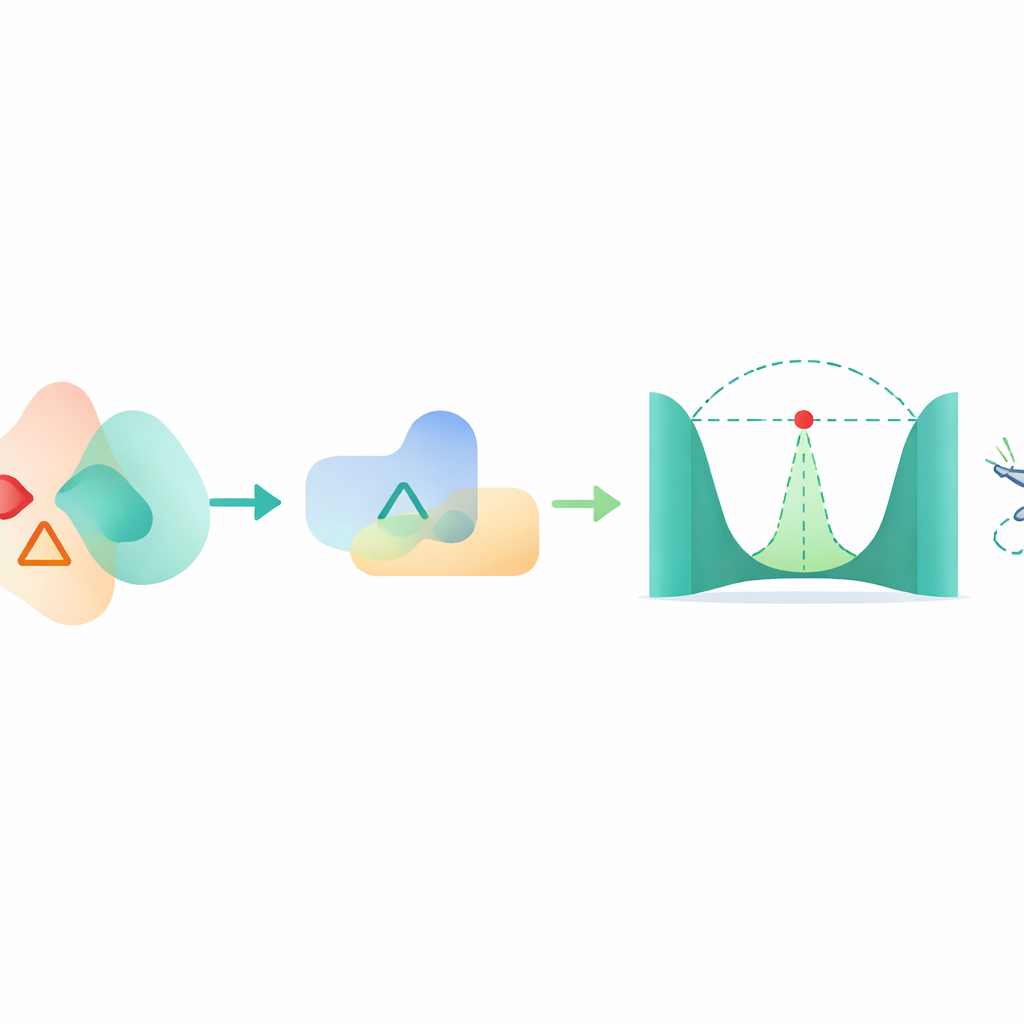
The researchers build their solution around a mathematical safety envelope that keeps the drone’s attitude error—the difference between its desired and actual tilt—within strict bounds. This envelope is enforced using a technique called a barrier function, which strongly pushes the system away from the edges of unsafe regions without needing harsh, abrupt control actions. In plain terms, the controller is designed so that the drone’s roll, pitch, and yaw stay within agreed “safe limits” while still converging quickly toward the desired orientation. This gives a formal guarantee that the drone will not tilt too far, even under disturbances, which is particularly important for operations near obstacles or in confined spaces.
Teaching the Controller to Anticipate Delay
To handle delay, the team adapts a classic idea: instead of reacting only to what the motors are doing now, the controller predicts the effect of commands that will be felt slightly later. Standard prediction tricks, however, are very sensitive to modeling mistakes. The authors upgrade this approach with a fuzzy, or rule-based, layer that continuously tunes the prediction model based on three live signals: how large the current tracking error is, how fast that error is changing, and an estimate of the actual delay. When the delay grows or the drone drifts away from its target, the prediction is strengthened; when things are calm, it softens. This fuzzy–prediction combination feeds into the safety envelope, reshaping the internal variables so that the troublesome delay no longer appears directly in the main stability calculations. The result is a controller that reacts as if the delay had been largely neutralized, while still remaining lightweight enough for onboard computers.
From Equations to Simulations and Real Hardware
The authors first test their controller in detailed computer simulations of a quadrotor’s attitude motion, including external disturbances and delayed inputs. They compare their fuzzy prediction plus safety-envelope design against a standard fuzzy logic controller and more classical methods such as proportional–integral–derivative (PID) and backstepping control. Across roll, pitch, and yaw angles, the new approach achieves faster rise and settling times, keeps overshoot essentially zero, and reduces long-term accumulated error. It maintains these advantages even when the drone’s mass or aerodynamic properties are slightly off from their nominal values. To show that the method is not just a simulation trick, they implement it on a commercial three-degree-of-freedom hover rig, which lets a quadrotor platform rotate freely about roll, pitch, and yaw. Encoders measure the angles with high precision, and the identified input delay from the real hardware is built into the controller. Experiments confirm that the platform tracks desired angles quickly and stays stable despite disturbances and imperfect parameter estimates.
What This Means for Real-World Drone Missions
In essence, this work shows that small drones can be controlled more like reliable tools and less like temperamental toys, even when their control signals arrive late or their environment is messy. By combining a predictive layer that learns how much to compensate for delay with a mathematically enforced safety envelope, the controller keeps attitude errors small, recoveries quick, and responses smooth. This delay-aware design is computationally light enough for practical onboard use, making it attractive for long, critical missions such as search-and-rescue, infrastructure inspection, or multi-drone cooperation where stability, robustness, and predictable behavior are paramount.
Citation: Abro, G.E.M., Memon, S.A., Hoshu, A.A. et al. Latency-aware attitude control of underactuated quadrotor UAVs using barrier Lyapunov and fuzzy Padé approximation. Sci Rep 16, 10633 (2026). https://doi.org/10.1038/s41598-026-45781-x
Keywords: quadrotor control, input delay, fuzzy control, drone stability, autonomous UAVs