Clear Sky Science · en
IoT enabled offshore infrastructure management and its impact on monitoring maintenance safety compliance and structural resilience
Why smarter offshore platforms matter
Out at sea, offshore platforms and other marine structures face pounding waves, salt spray, and fierce storms every day. When something goes wrong, the stakes are high: repairs are costly, shutdowns disrupt energy supplies, and accidents can endanger workers and the environment. This paper explores how a web of connected sensors and devices—often called the Internet of Things, or IoT—can turn these remote structures into “smart” assets that watch themselves, warn crews early, and help managers make better decisions about upkeep and safety.
From clipboards to constant awareness
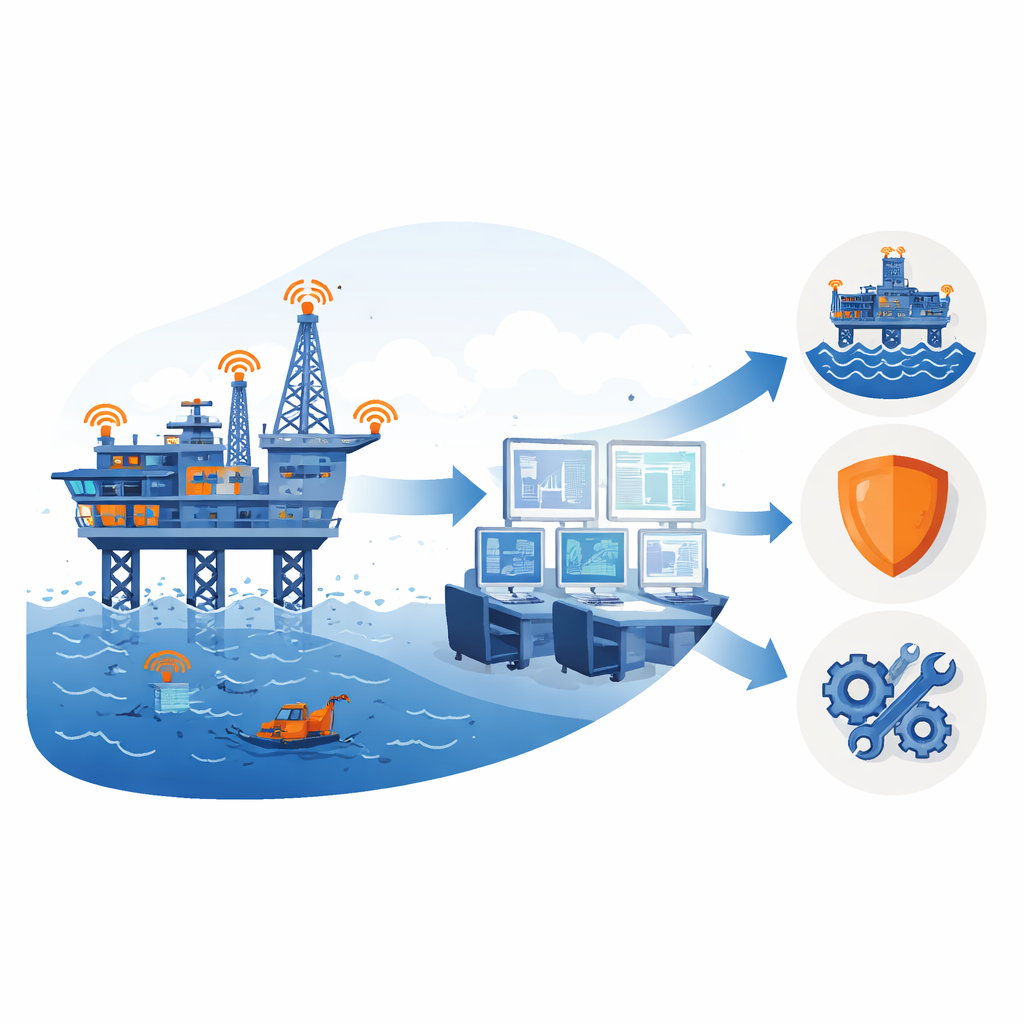
Traditionally, offshore structures have been checked through scheduled inspections and manual measurements. That approach can miss fast-developing problems, and it offers only a snapshot of conditions that change hour by hour. The study describes a shift toward always-on digital monitoring. Networks of sensors mounted on platforms track motion, vibration, temperature, corrosion, and surrounding environmental conditions. Through wireless links, this flow of information reaches onshore control centers, giving engineers a continuous picture of how the structure is behaving and how rough the environment is at any moment.
Connecting data, maintenance, and safety
The authors treat IoT not as a pile of gadgets but as a single working system that joins sensing, communication, and analysis. To see how this affects day-to-day operations, they surveyed 168 professionals in the offshore oil and gas construction sector, including engineers, project managers, and safety officers. Using statistical modeling, they examined links between the degree of IoT use and five key areas: real-time monitoring, data analysis and maintenance, automated responses, safety and regulatory compliance, and the structure’s ability to cope with harsh conditions. Their results show that stronger IoT adoption is closely tied to better monitoring visibility, more informed maintenance planning, and smoother safety processes.
How early warnings build resilience
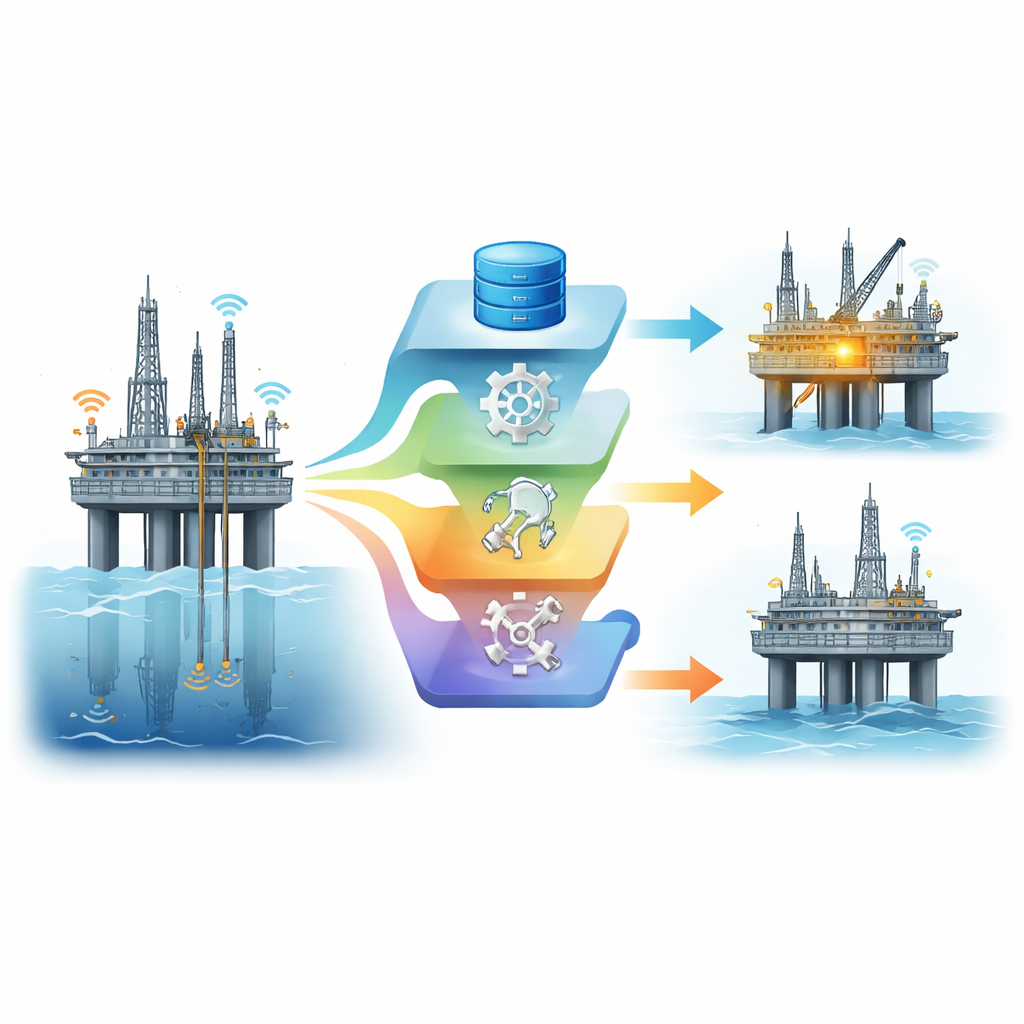
One of the clearest benefits appears in real-time monitoring and predictive maintenance. Constant streams of sensor data allow operators to spot unusual vibrations, rising temperatures, or accelerating corrosion before they turn into serious damage. These early warnings support a style of maintenance based on actual condition rather than fixed calendars. Crews can schedule repairs during planned shutdowns instead of rushing to fix surprise breakdowns. The study finds that this data-driven approach is also linked with better adherence to safety rules, because the same sensor networks can trigger alarms, track hazardous conditions, and document that required checks have taken place. In short, IoT helps platforms absorb stress and recover more quickly by catching problems earlier and coordinating responses.
Limits, gaps, and what IoT does not solve
Not every aspect of offshore management improves equally. The connection between IoT and detailed structural health assessments—such as pinpointing tiny cracks deep inside steel members—is positive but weaker than for monitoring and safety. The authors suggest several reasons: such assessments depend heavily on specialized engineering tools and expert interpretation; many survey respondents may not directly handle these tasks; and current questionnaires capture visible monitoring functions more easily than behind-the-scenes diagnostics. The study also notes that sensor durability, cybersecurity, and the challenge of fitting new systems onto older platforms remain significant hurdles that future research must tackle.
What this means for the future at sea
For non-specialists, the takeaway is straightforward: wiring offshore structures with smart sensing and communication tools makes them safer, more reliable, and cheaper to run over time. According to this research, the biggest gains come from being able to see what is happening in real time and from using that information to predict failures before they occur. While smart alarms, automatic reactions, and deep structural checks still have room to grow, the overall message is encouraging. Integrated IoT systems tie together monitoring, maintenance, and safety into a single feedback loop, helping offshore platforms stand up better to the ocean’s punishment and reducing the chances of sudden, costly, and dangerous failures.
Citation: Alsehaimi, A., Alsulami, B.T., Ghani, M.U. et al. IoT enabled offshore infrastructure management and its impact on monitoring maintenance safety compliance and structural resilience. Sci Rep 16, 10777 (2026). https://doi.org/10.1038/s41598-026-45774-w
Keywords: offshore monitoring, Internet of Things, predictive maintenance, safety compliance, structural resilience