Clear Sky Science · en
Tailored personas for anticipatory grief management among primary family caregivers of patients with advanced lung cancer in China: a qualitative study
Why this study matters for families
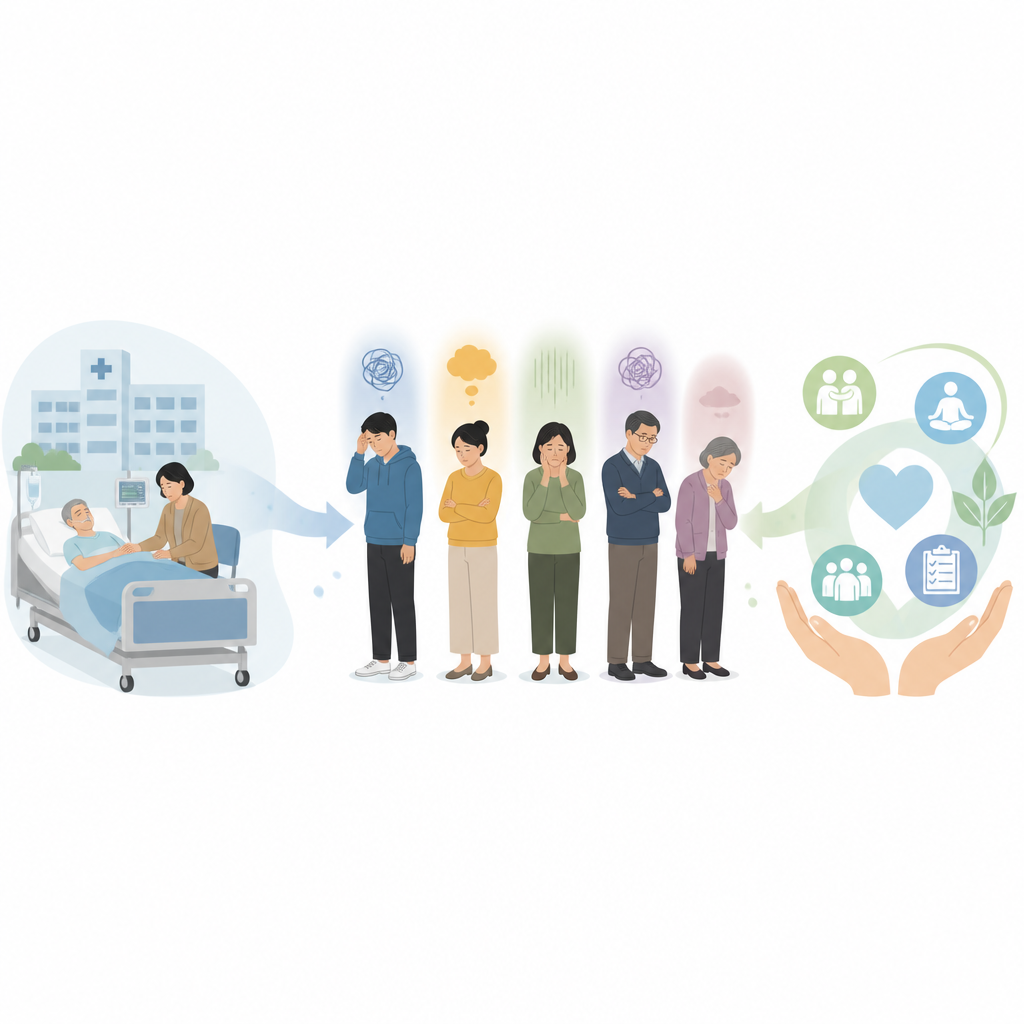
When someone has advanced lung cancer, the person who cares for them at home often carries a quiet, heavy load. Long before death actually happens, these family caregivers may already be grieving, worrying, and reshaping their lives around the illness. This study from China looks closely at how different caregivers experience this “grief in advance” and groups them into easy-to-understand types. By doing so, it offers a way for nurses and doctors to match support to what each kind of caregiver really needs, instead of assuming that all families cope in the same way.
Understanding grief before loss
Anticipatory grief is the mix of sadness, fear, and uncertainty people feel when they expect a loss but it has not yet occurred. For family members looking after someone with advanced lung cancer, this can be especially intense because symptoms are serious, treatments are demanding, and survival chances are often low. The researchers interviewed 19 main caregivers at two large hospitals in Hangzhou, China. Most were older spouses, but there were also children, grandchildren, and other relatives. Through long, in-depth conversations, the team asked how they felt, how they coped, and what worried them about the future. Rather than counting symptoms, the goal was to understand the caregivers’ inner world in their own words.
From stories to patterns of experience
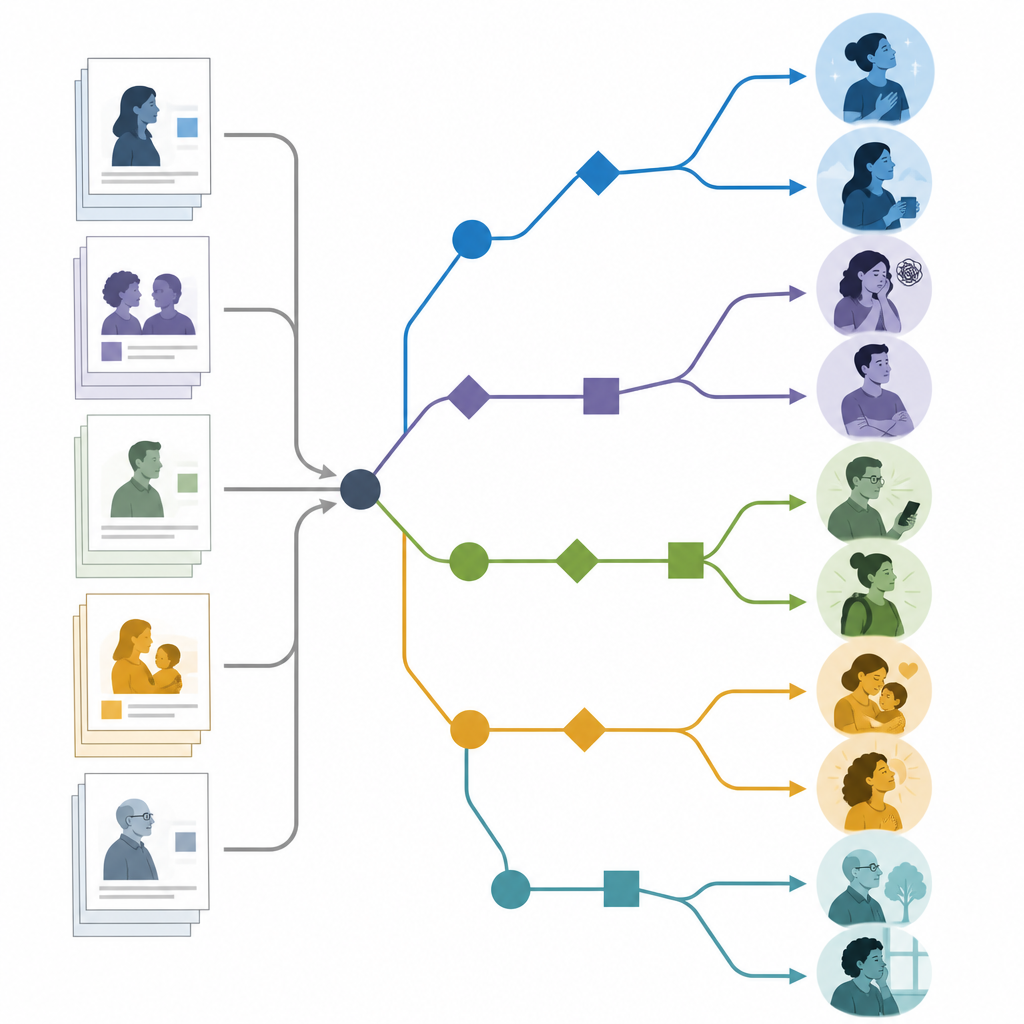
The researchers used a qualitative method that focuses on “lived experience,” reading each interview many times to find repeating themes. They discovered five key areas that shaped caregivers’ grief: how much support they had from family, how they showed or hid their emotions, how heavy their emotional load felt, how they made sense of illness and death, and how they thought about the future. These areas became dimensions on which caregivers differed. Using a stepwise decision process, the team built a kind of map that sorted people into groups based on their strengths and struggles in these five areas. This map helps turn rich but messy stories into patterns that can guide real-world care.
Five kinds of caregivers
From this analysis came five caregiver “personas,” or typical characters. “The optimist behind the smiling mask” tries to stay cheerful for the patient, often with decent family help, but hides personal sadness and focuses on getting through each day. “The lone warrior trudging forward under heavy burdens” has little support, feels overwhelmed and exhausted, and often plans quietly for the patient’s death. “The master of meaning reconstruction” draws strength from faith or personal beliefs, accepts death as part of life, and carefully prepares for a dignified ending with strong family backing. “The conflicted decision-maker” is pulled between relatives over money, treatment choices, and family tensions, feeling torn and unsure about the future. Finally, “the feature-weaving mixer” combines shifting traits from several types, moving between hope, worry, sacrifice, and preparation as circumstances change.
Turning insight into tailored help
Each persona points to different kinds of help. Caregivers hiding behind a smile may need gentle encouragement to share their feelings with friends or professionals, so they do not burn out. Those battling alone may benefit from hospital models that temporarily take over hands-on care and from simple emotional-release methods to ease intense distress. Caregivers who find meaning in faith or in ideas about fate may be supported by respecting these beliefs and helping them use them as a source of inner strength. For people stuck in family conflict, clear, plain-language explanations of treatment choices and neutral guidance from health workers can make decisions less painful. For the mixed group, regular check-ins are key, so support can change as their needs change.
What this means for families and care teams
In everyday language, this study shows that there is no single “typical” family caregiver of a person with advanced lung cancer. Instead, caregivers fall into several patterns of coping, from quiet fighters to faith-guided planners to relatives caught in financial and emotional tug-of-war. By naming and describing these patterns, the researchers give nurses, doctors, and counselors a practical tool to recognize who is in front of them and what kind of help might work best. The hope is that, with more tailored support, caregivers can carry their grief with less loneliness and strain, while also finding new value and meaning in the time they still have with their loved one.
Citation: Liu, X., Jiang, N., Yan, H. et al. Tailored personas for anticipatory grief management among primary family caregivers of patients with advanced lung cancer in China: a qualitative study. Sci Rep 16, 14985 (2026). https://doi.org/10.1038/s41598-026-45767-9
Keywords: anticipatory grief, family caregivers, advanced lung cancer, caregiver personas, precision nursing