Clear Sky Science · en
Investigating alterations associated with heat stress and the recovery of the intestinal barrier using IPEC-J2 as an intestinal epithelial porcine cell model
Why hot weather can upset the gut
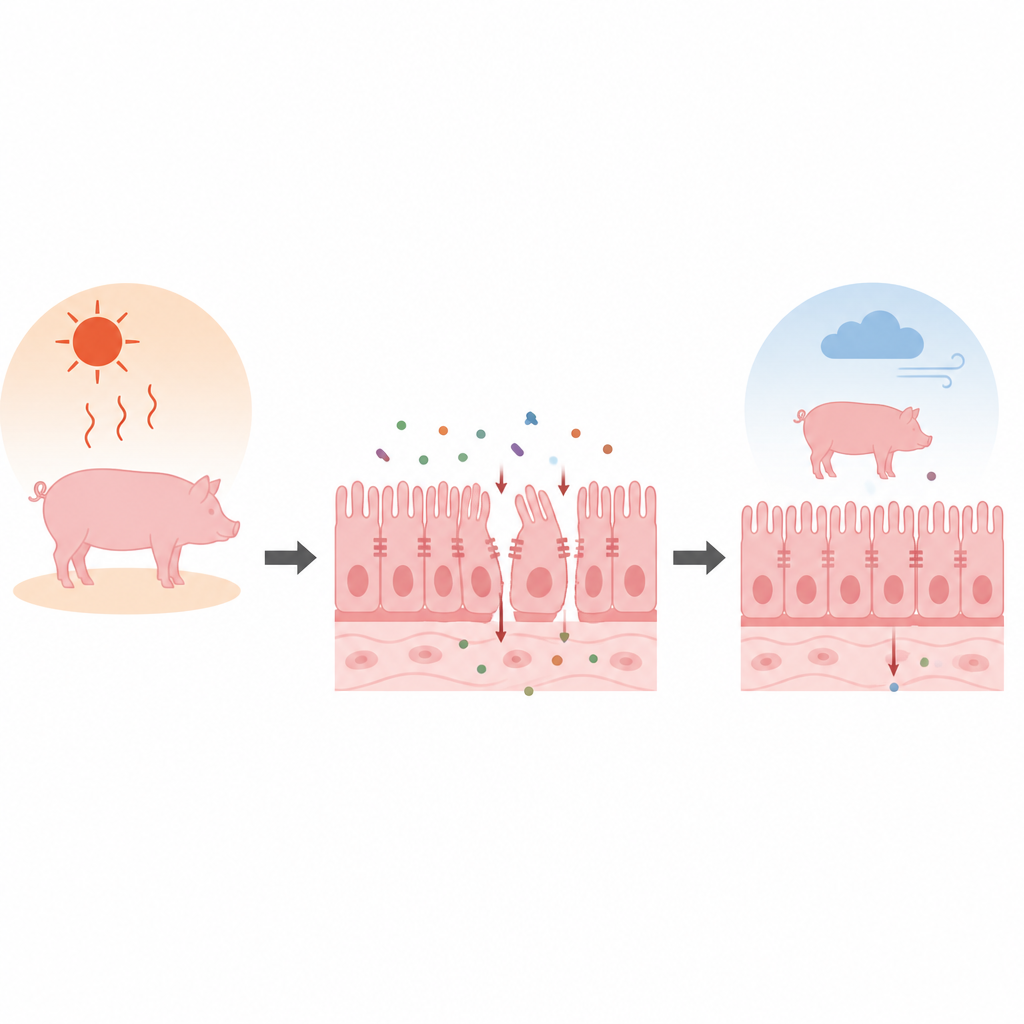
Heatwaves are becoming more common, and they do not only make animals and people feel uncomfortable; they can also disturb the gut, the body’s main gateway for food and microbes. This study uses pig intestinal cells grown in the lab to explore what happens to the gut’s protective lining during a period of high heat and what recovers once temperatures drop again. Because the pig digestive system is close to that of humans, these findings can help us understand how extreme heat might affect gut health in both farm animals and people.
The gut’s protective wall under pressure
The inner surface of the intestine is lined with a thin sheet of cells that acts like a living wall. Neighboring cells are sealed together by protein “zippers,” and a layer of sticky mucus on top traps germs and particles. Together, these features keep harmful substances inside the gut, while allowing nutrients to pass into the body. When this barrier weakens, unwanted molecules and microbes can leak through, which may lead to inflammation and illness. Scientists know that high temperatures can disturb this system in live pigs, but it is less clear exactly how the cells themselves respond over time and whether they can bounce back after a heatwave.
Simulating a heatwave in a dish
To mimic a heatwave, the researchers grew pig intestinal cells at a comfortable temperature and then exposed them to higher heat for five days, followed by five days back at normal warmth. They checked how well the cells survived, how many were undergoing programmed cell death, and how tightly the barrier was sealed by measuring electrical resistance and the leakage of small test dyes across the cell layer. They also looked at two key sealing proteins, ZO-1 and occludin, and at mucus production, focusing on a major mucus component called MUC2. Finally, they tracked signs of oxidative stress, a chemical strain caused by reactive molecules that often build up during heat exposure, and measured the activity of the cells’ antioxidant defenses and stress-response proteins.
What heat does to the intestinal barrier
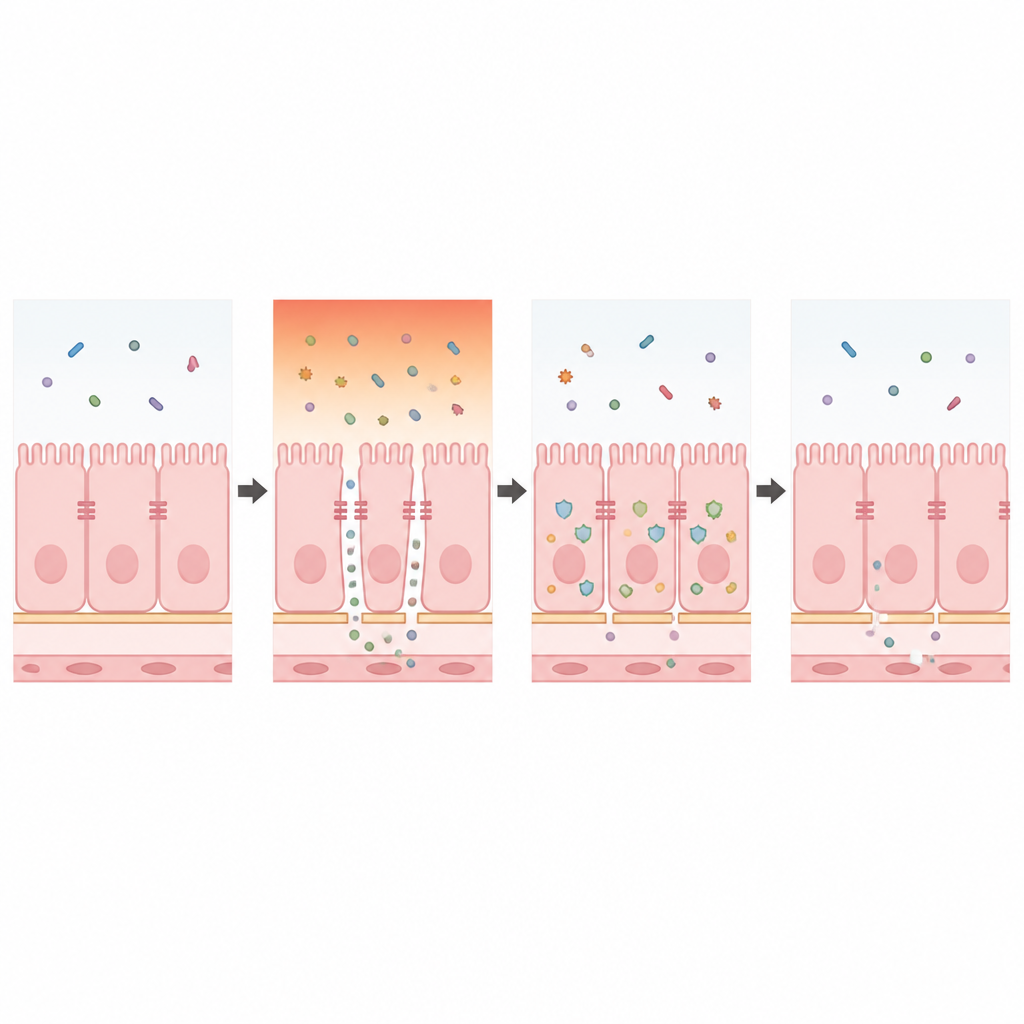
During the five days of heat, the intestinal cell sheet showed clear signs of damage. More cells displayed features of cell death, and the barrier became leakier, allowing small dye molecules to pass between cells more easily. The protein ZO-1, which helps link neighboring cells at their borders, was reduced and misplaced inside the cells instead of forming a neat line at their contacts, while occludin changed less. The number of mucus-producing cells marked by MUC2 dropped, suggesting that the protective mucus layer would be thinner. At the same time, the heated cells produced more reactive oxygen species, a sign of oxidative stress, and ramped up several protective proteins, including antioxidant enzymes and the heat shock protein HSP70. This pattern points to a gut lining that is under strain, with weakened sealing and mucus, but actively trying to defend itself.
How much the cells can recover
Once the cells were returned to normal temperature for five days, many of these changes eased. Cell death rates fell back to the levels seen in cells that had never been heated, and the barrier’s leakiness to test dyes declined so that passage across the layer matched the control condition. Electrical resistance across the cell sheet even increased, indicating tighter sealing. Levels and placement of ZO-1 and occludin improved, and most antioxidant markers, including the regulator Nrf2 and several enzymes, returned to normal ranges. However, not everything went back to baseline. MUC2-positive cells, and thus inferred mucus production, remained lower than in never-heated cells. The cells also stayed more sensitive to an added oxidative challenge, and HSP70 levels actually fell below control values, hinting at a changed stress memory in the recovered cells.
What this means for animals and people
Overall, the study shows that a heatwave-like insult can temporarily damage the gut’s barrier by loosening cell seals, reducing mucus, and increasing chemical stress, but that many of these features can rebound once temperatures normalize. At the same time, some defenses, especially mucus production and how cells handle oxidative strain, do not fully recover in this model, suggesting that repeated or prolonged heat events could leave the intestine more vulnerable. While this work was done in pig cells in a dish, it supports the idea that protecting animals, and possibly humans, from sustained high heat could help maintain gut health during the hotter summers of the future.
Citation: Perruchot, MH., Boudry, G., Wiart-Letort, S. et al. Investigating alterations associated with heat stress and the recovery of the intestinal barrier using IPEC-J2 as an intestinal epithelial porcine cell model. Sci Rep 16, 15453 (2026). https://doi.org/10.1038/s41598-026-45755-z
Keywords: heat stress, intestinal barrier, pig gut model, oxidative stress, mucus production