Clear Sky Science · en
A hybrid evaluation model for intelligent manufacturing under uncertainties by integrating human-machine systems and automation strategies
Why smarter factories need smarter choices
As factories become filled with robots, sensors, and AI, managers face a deceptively simple question: how much should we automate, and how much should we still rely on people? The answer is rarely clear-cut. Real production lines are noisy, unpredictable environments where human trust, safety, and workload matter just as much as speed and cost. This paper introduces a new way to judge different automation setups that takes this messy reality into account, helping decision‑makers choose configurations that are efficient, resilient, and genuinely human‑centered.

The challenge of judging human–machine teamwork
Modern “intelligent manufacturing” systems blend people, robots, and digital tools. Evaluating such systems is hard because many of the most important factors—operator trust, perceived safety, ease of collaboration—are subjective and change over time. At the same time, factories stream oceans of data from sensors and cyber‑physical systems that can be incomplete or noisy. Traditional scoring approaches either lean on rigid checklists, or depend heavily on expert opinion, or look only at numeric performance. None can simultaneously capture shifting human perceptions, conflicting criteria, and hard data—yet that combination is exactly what Industry 5.0, with its emphasis on human‑centered and resilient production, demands.
A new lens for uncertainty in expert judgment
The study’s first innovation is a mathematical lens for describing expert opinion called circular spherical fuzzy sets. In plain terms, instead of forcing an engineer to label an option simply as “good” or “bad,” the method lets them express how strongly it seems good, how strongly it seems not good, how unsure they are, and how their confidence can swing back and forth. For example, an operator’s trust in a collaborative robot might grow as productivity rises, drop sharply after a near‑collision, then slowly recover after retraining. This kind of cyclical hesitation cannot be handled well by earlier fuzzy tools, which assume that uncertainty moves in a straight line. The circular extension adds a directional, almost compass‑like element to hesitation, better reflecting how real people revise their judgments as situations evolve.
Balancing gut feeling and hard numbers
To turn these rich but messy opinions into clear rankings of automation options, the author combines two decision techniques into a single hybrid model. One part, called CRITIC, looks at the data and determines which criteria really carry weight by seeing how much they vary and how strongly they clash with one another. Another part, MAIRCA, compares each option to an imagined “ideal” set of scores and measures how far away it falls. The circular fuzzy evaluations from experts are first converted into specially designed numerical scores so that CRITIC can operate on them without discarding the underlying uncertainty. Together, this trio—circular fuzzy modeling, data‑driven weighting, and ideal‑versus‑real comparison—aims to strike a balance between human insight and objective structure.
Putting the model to work in a test factory
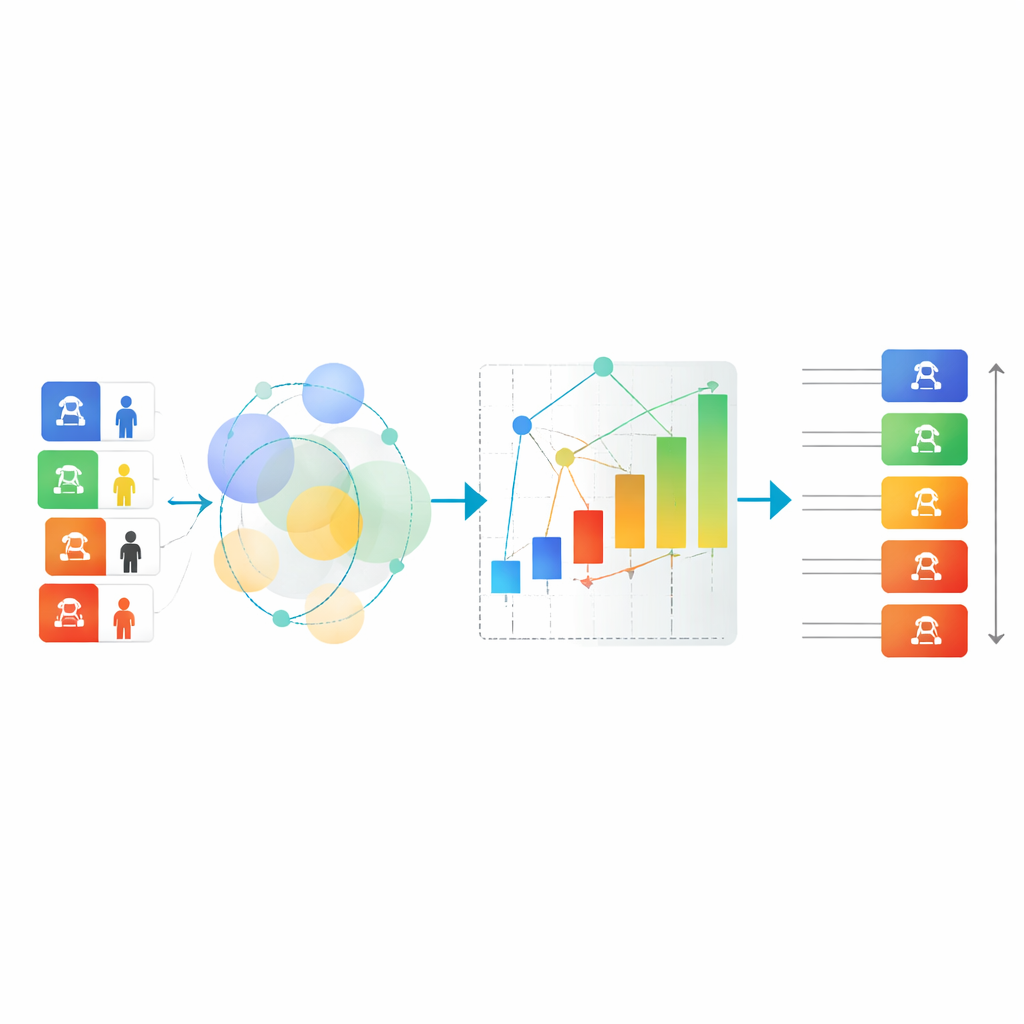
To show how the framework behaves, the paper walks through a hypothetical case of a medium‑sized manufacturer choosing among four automation designs: a semi‑automated hybrid line, an operator‑guided cyber‑physical system, a fully automated line, and a collaborative‑robot scenario. Eight criteria mix economic, technical, and human concerns, including cost, efficiency, flexibility, human‑factor integration, safety, maintenance burden, reliability, and data use. Experts rate each option using linguistic terms like “high” or “medium,” which are translated into circular fuzzy values. The hybrid method then calculates how important each criterion is, constructs an ideal benchmark, measures how far each option deviates from that ideal, and ranks them accordingly. In this test, the semi‑automated hybrid line comes out on top, largely because it performs solidly across all criteria without major weaknesses, while options that chase maximum automation pay a price in human‑factor integration and complexity.
How this changes decisions in real factories
Beyond the example, the study compares its hybrid model with popular methods such as AHP and TOPSIS and with fuzzy variants of these tools. Those classics are easier to apply but prone to unstable rankings and weak handling of uncertainty. By contrast, the new approach shows steadier rankings when key parameters are varied and can better distinguish between closely matched alternatives, especially when expert hesitation is strongly context‑dependent. The author is careful to note that the current results are based on synthetic data and that full validation on real production lines is future work. Still, the framework points toward decision tools that see factories as socio‑technical systems, where people and machines co‑adapt over time.
What this means for the future of work and automation
In everyday terms, the paper’s conclusion is that decisions about automation should neither ignore human judgment nor drown it in data. Instead, they should explicitly model how people’s views shift as they gain experience, encounter incidents, and adapt to new technology. The proposed model provides a structured way to do this, while also accounting for costs, safety, flexibility, and digital capabilities. Used wisely, such tools could help companies choose automation strategies that are not only efficient on paper but also trusted by workers, safer in practice, and more robust when conditions change—key ingredients for the factories envisioned under Industry 5.0.
Citation: Chen, Z. A hybrid evaluation model for intelligent manufacturing under uncertainties by integrating human-machine systems and automation strategies. Sci Rep 16, 10936 (2026). https://doi.org/10.1038/s41598-026-45749-x
Keywords: intelligent manufacturing, human–machine collaboration, automation strategy, decision-making model, fuzzy uncertainty