Clear Sky Science · en
Green synthesized silver and zinc oxide nanoparticles with antifungal, DNA protection, DNA cleavage, and cytotoxic activities
Fighting Crop Loss and Cancer with Tiny Green Tools
Every year, farmers lose huge portions of their harvest to fungal diseases, while doctors search for better ways to attack hard-to-treat cancers. This study shows how plant-based nanotechnology—using particles so small they are invisible to the naked eye—can tackle both problems at once. By making silver and zinc oxide nanoparticles from a common tree, the researchers created tiny tools that can protect crops, guard our genetic material, and even help kill cancer cells.
Turning Leaves into Powerful Particles
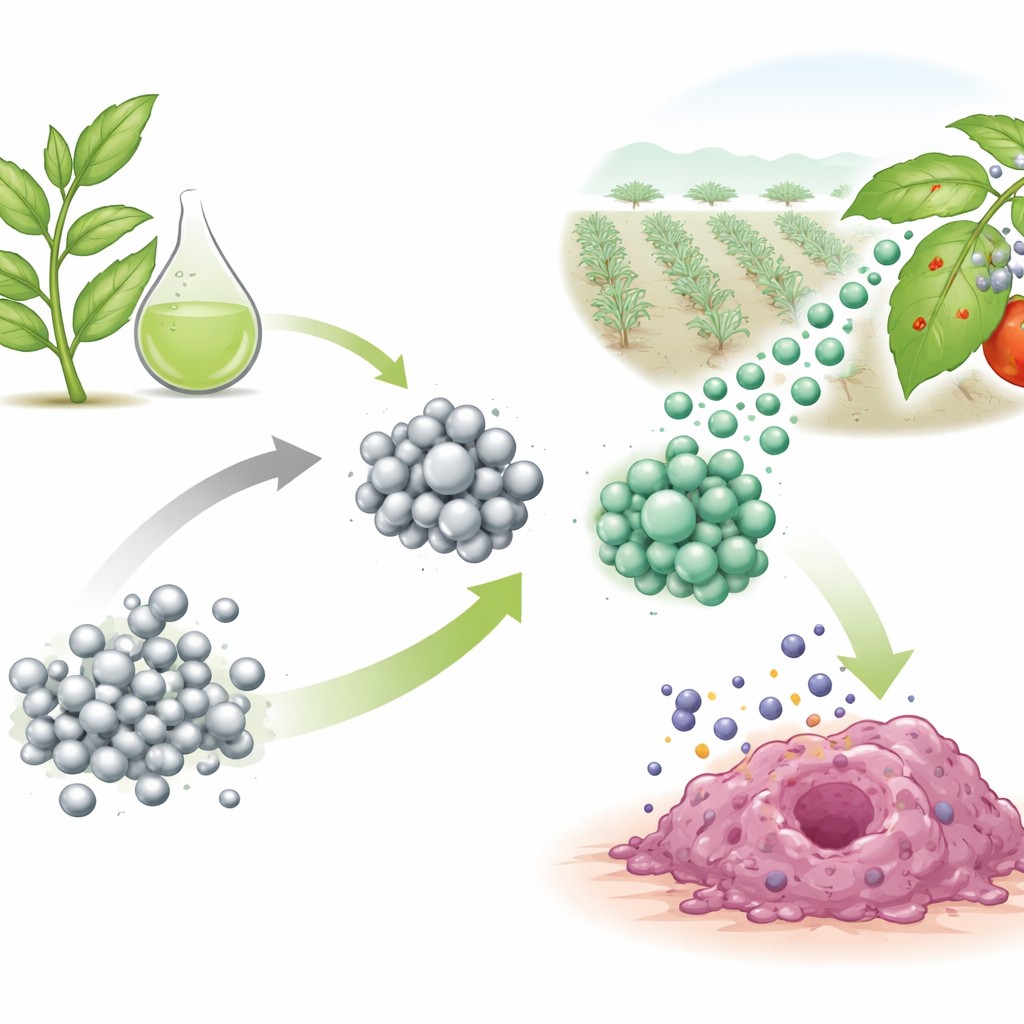
The team used leaves of Pongamia pinnata, a hardy tree rich in natural chemicals, as a kind of mini "factory" to build metal nanoparticles. Instead of relying on harsh industrial methods, they mixed concentrated silver and zinc salts with a water extract of the leaves and gently heated the solution. Within minutes, visible color changes signaled that the metal ions had been transformed into solid nanoparticles. After spinning, washing, and drying, they obtained stable silver and zinc oxide powders that could be easily stored and redispersed for later use. Microscopy and other tests confirmed that the silver particles were mostly rod to spherical in shape, while the zinc oxide particles were mainly spherical to hexagonal and both were only billionths of a meter in size.
Stopping Crop-Destroying Fungi
The researchers next tested whether these green-made particles could fight four major fungal enemies of crops: two species that cause serious diseases in mango and sugarcane, and two others that ravage maize, rice, and many other plants. In lab dishes, both types of nanoparticles slowed or stopped fungal growth in a clear dose-dependent manner—the more particles added, the stronger the inhibition. Silver particles were generally the more aggressive fungus fighters, reaching near-complete suppression at higher doses. Crucially, the powders remained effective even after being stored for two to three years, suggesting they could be turned into practical, long-lasting treatments.
Protecting Fruits and Leaves in Real Tissues
To move beyond petri dishes, the team sprayed or dipped real plant tissues. On detached mango fruits, silver and zinc oxide nanoparticles sharply reduced the dark, spreading lesions caused by anthracnose fungus, with silver giving almost complete protection at the highest tested level. On detached leaves of maize and rice infected with another destructive fungus, both kinds of particles cut disease symptoms dramatically, and at top doses prevented visible lesions altogether. These tests mimic how such treatments might work in the field, suggesting that plant-based nano-sprays could one day serve as cleaner alternatives to conventional fungicides.
Guarding and Cutting DNA on Demand
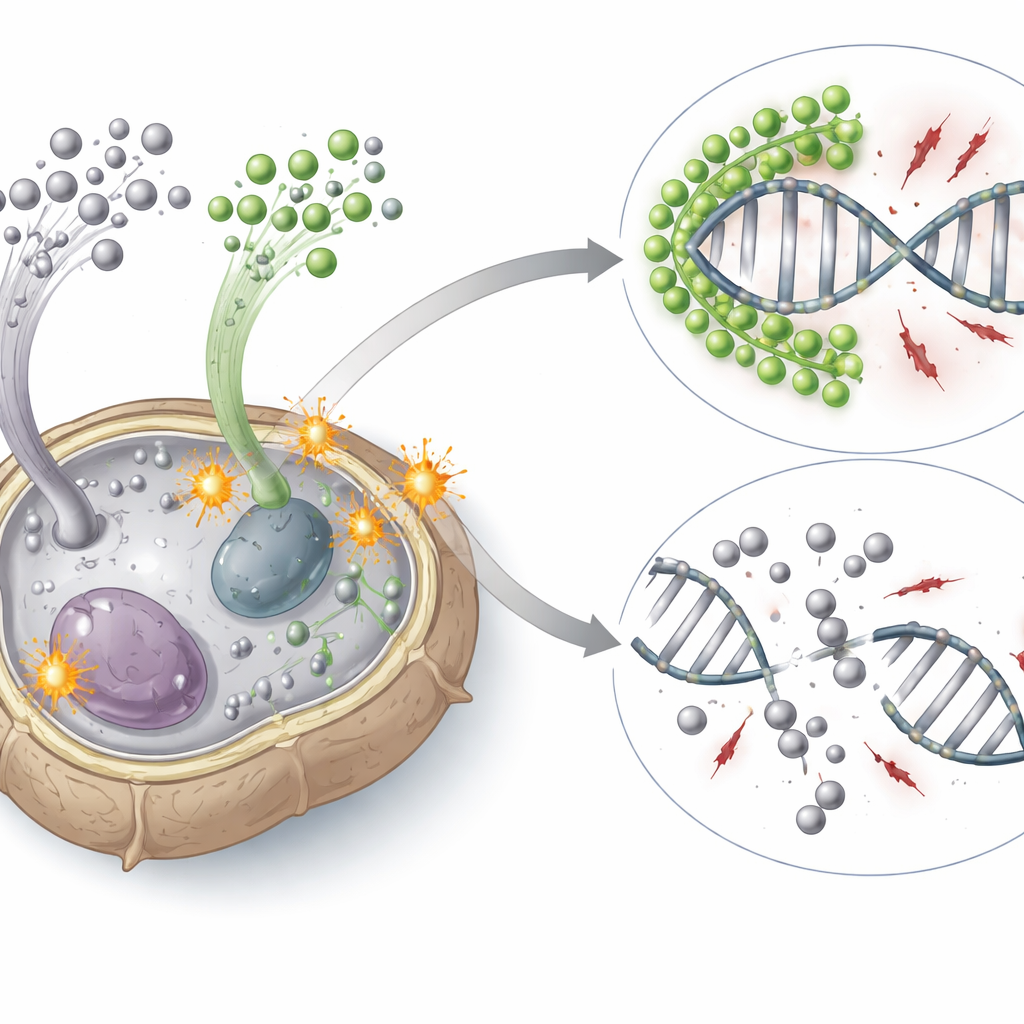
Beyond plant disease, the study probed how the nanoparticles interact with DNA, the molecule that carries genetic information. Zinc oxide nanoparticles behaved like tiny shields: under harsh conditions that normally break DNA strands, adding zinc oxide helped preserve the DNA, even against an enzyme specifically designed to cut it. Silver nanoparticles, in contrast, acted like molecular scissors. In the presence of light and oxidizing chemicals, they promoted the breaking of DNA strands instead of protecting them. This dual behavior—one particle type guarding DNA, the other helping to cut it—highlights how fine chemical details at the nanoscale can flip biological outcomes.
Attacking Cancer Cells While Weighing the Risks
Because silver can damage DNA and both metals can stress cells, the team tested their powders on human glioblastoma cells, a highly aggressive brain cancer. In culture, rising doses of both nanoparticles steadily reduced cancer cell survival, with zinc oxide showing slightly stronger effects. The results hint that these green-made particles might be further developed as components of cancer therapies, where targeted DNA damage in tumor cells is a goal rather than a threat. At the same time, the authors stress that such powers must be handled carefully: what harms cancer cells could also harm healthy tissues or beneficial organisms if used unwisely.
What This Could Mean for Food and Health
In simple terms, this work shows that a single tree leaf extract can help create two very different nanoscopic tools: one that protects DNA and crops, and another that can slice DNA and kill both fungi and cancer cells. The process avoids harsh chemicals and produces stable powders that keep their activity for years, making them attractive for future agricultural and medical products. Before they can be widely used, though, scientists will need to test their safety in whole plants, animals, and ecosystems. Still, this study sketches a future in which carefully designed, plant-made nanoparticles help secure both our food supply and our health.
Citation: Singh, J., Kumar, A., Singh, A. et al. Green synthesized silver and zinc oxide nanoparticles with antifungal, DNA protection, DNA cleavage, and cytotoxic activities. Sci Rep 16, 10573 (2026). https://doi.org/10.1038/s41598-026-45745-1
Keywords: green nanotechnology, silver nanoparticles, zinc oxide nanoparticles, crop fungal diseases, cancer nanomedicine