Clear Sky Science · en
Research on overdyeing process of indigo and turmeric on nylon knitted fabrics
Greener Colors for Everyday Clothes
Most of the bright colors in our clothes come at an environmental cost, because many synthetic dyes generate polluted wastewater and rely on petrochemicals. This study explores a gentler way to color nylon fabrics using two age‑old, plant‑based colorants—indigo, the classic blue dye, and turmeric, the golden spice from the kitchen—while still achieving modern performance in color quality and hygiene.
From Kitchen and Field to Clothing
Indigo and turmeric have long histories in both traditional medicine and craft. Indigo, derived from plants used for centuries in East Asia, provides a deep blue tone and has known anti‑inflammatory properties. Turmeric’s vivid yellow pigment, curcumin, is widely used as a natural food color and is also prized for its antibacterial and antioxidant effects. The researchers chose nylon knitted fabric as their test material because it is widely used in apparel and absorbs dyes readily, making it a realistic stand‑in for many everyday garments such as sportswear and underwear.
Layering Dyes to Make New Shades
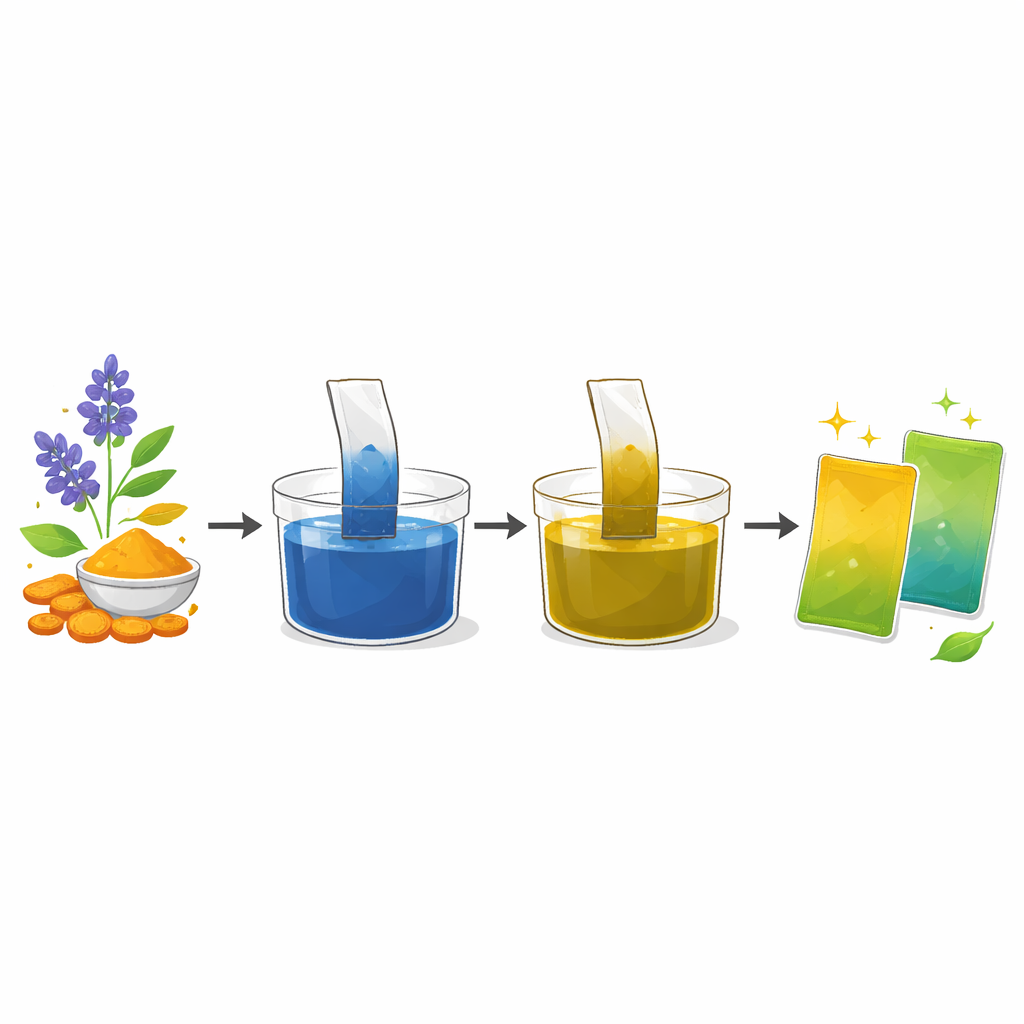
Instead of trying to find a plant that produces a pure green dye, the team borrowed a traditional idea: build green by layering blue and yellow. First, they dyed nylon fabric in an indigo bath under alkaline, reducing conditions, which help the usually insoluble blue pigment slip into the fiber and then lock in place when exposed to air. Next, they placed this blue fabric into a separate bath containing dissolved turmeric, allowing a yellow layer to form on top of the blue base. By carefully adjusting how much dye they used, the bath temperature, and the dyeing time, they created a series of samples ranging from yellow‑green to blue‑green.
Tuning the Recipe for the Right Green
To move beyond trial and error, the researchers systematically changed one factor at a time—turmeric concentration, dyeing temperature, and dyeing time—and measured how the fabric color responded using precise color‑measurement tools. For yellow‑green shades, stronger turmeric solutions and a dyeing temperature of about 80 °C produced deeper, brighter color, with 20 minutes emerging as the sweet spot for dyeing time. For blue‑green shades, they started with a darker indigo base, then found that slightly lower turmeric levels and a moderate temperature of about 50 °C yielded rich blue‑green hues, again with 20 minutes as the optimal duration. These tuned recipes gave fabrics that visually matched the target greens while maintaining a pleasing depth and balance between yellow and blue.
Color That Lasts and Fights Germs
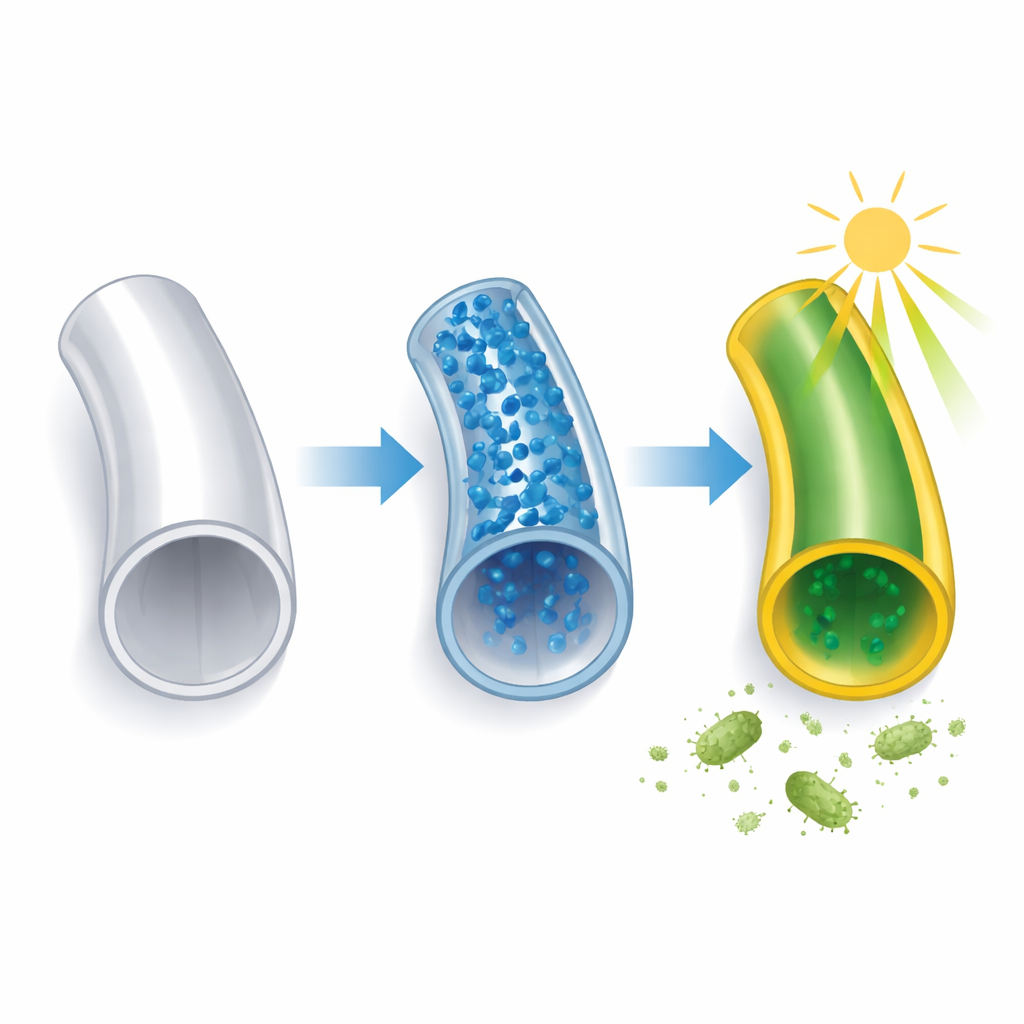
Attractive color is not enough for real‑world clothing; it must also withstand repeated washing and rubbing. Under standard textile tests, the overdyed nylon scored grade 4 or better for color fastness, a level that meets common apparel requirements. That means the greens did not easily fade or rub off onto other fabrics. The team also tested how well the dyed fabric could slow the growth of microbes that cause odors or infections. Against two common bacteria, Staphylococcus aureus and Escherichia coli, the fabrics showed around 98–99% reduction in growth, and they also significantly suppressed a fungus linked to skin issues. These results suggest that the natural dyes do more than color the fabric: they help keep it fresher and more hygienic.
What This Means for Future Clothes
By combining traditional plant dyes with modern testing, the study shows it is possible to produce stable green shades on synthetic nylon using largely renewable, biodegradable materials while cutting reliance on conventional synthetic dyes. The resulting fabrics hold their color through washing and provide strong antibacterial protection, making them promising for items like sportswear, socks, and intimate apparel. While more work is needed to scale up the process and fully quantify environmental gains, this layered‑dye approach points toward clothing that is not only colorful and functional, but also kinder to the planet.
Citation: Wu, Y., Yuan, X., Chen, X. et al. Research on overdyeing process of indigo and turmeric on nylon knitted fabrics. Sci Rep 16, 10794 (2026). https://doi.org/10.1038/s41598-026-45744-2
Keywords: natural dyes, indigo and turmeric, nylon textiles, antibacterial fabric, sustainable dyeing