Clear Sky Science · en
Plasma EAAT2 and GABA as candidate biomarkers in males with autism spectrum disorder: an exploratory case–control study with ROC analysis
Why brain chemistry in autism matters
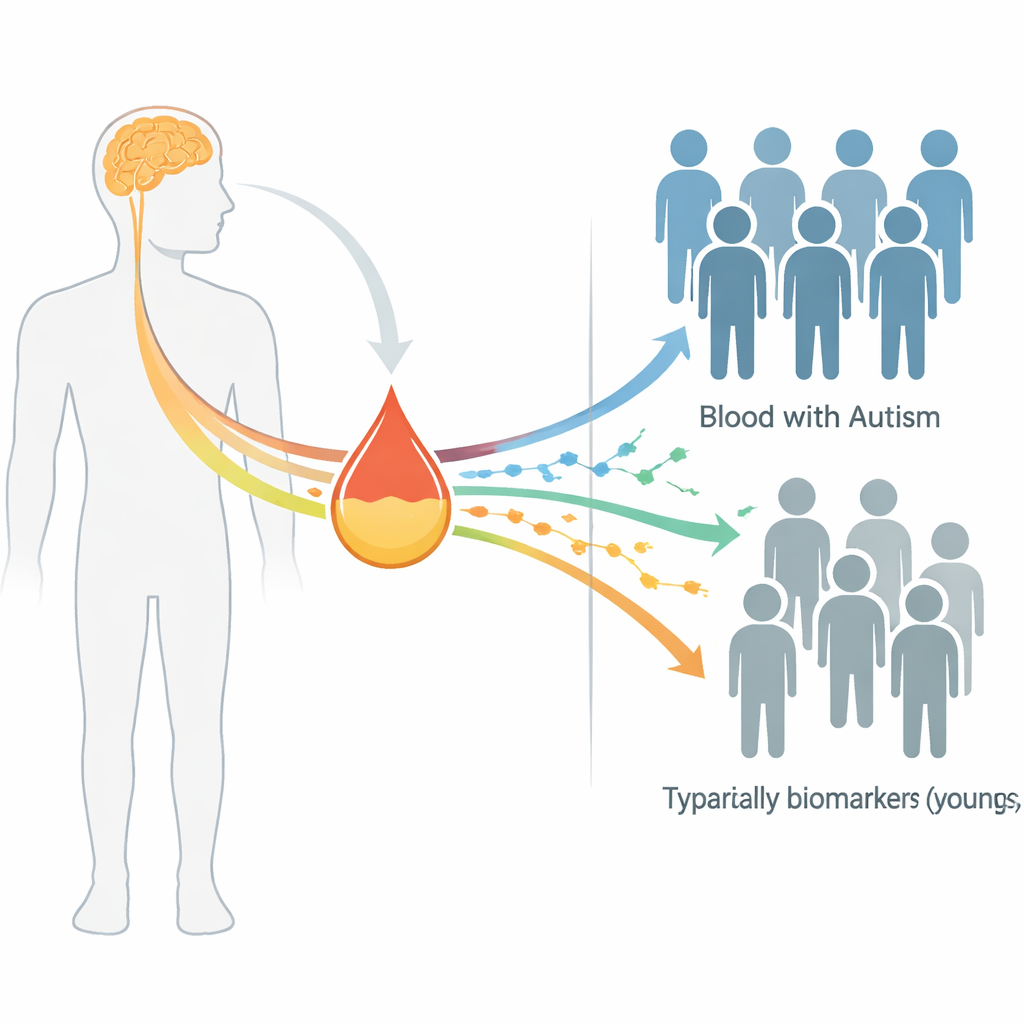
Autism spectrum disorder is usually diagnosed by observing behavior, but many families and clinicians wonder whether a simple blood test could someday help identify or monitor the condition. This study explores whether certain chemical messengers linked to brain signaling, measured in a routine blood sample, might help distinguish boys with autism from typically developing peers. Understanding these possible “fingerprints” in the blood could eventually deepen our grasp of autism biology and support more personalized care, even though such tests are far from ready for clinic use.
Looking for clues in the blood
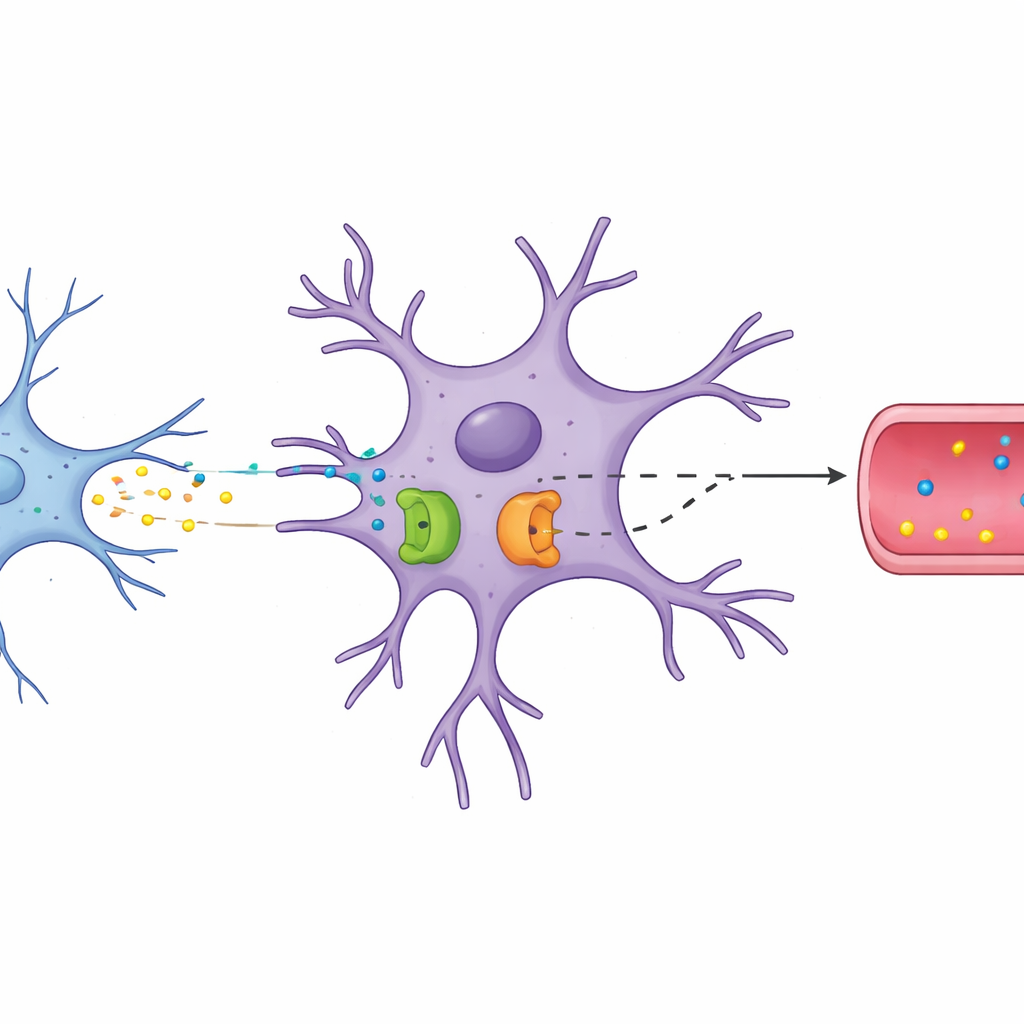
The researchers focused on three molecules that participate in the brain’s balance between activity and calm. One, called EAAT2, is a protein on support cells that helps clear away the excitatory messenger glutamate after it is released between nerve cells. Another, GABA, is a chemical messenger that tends to quiet brain activity. The third, related to a specific GABA receptor, reflects how cells might respond to GABA’s calming signal. Because the brain and the bloodstream constantly exchange substances, the team asked whether levels of these molecules in blood plasma might track with the presence of autism.
How the study was carried out
The team recruited 46 boys with autism and 26 typically developing boys of similar ages at a single medical center in Saudi Arabia. All participants provided a fasting blood sample. The scientists then used standard laboratory kits to measure the three molecules in plasma, taking care to run each sample twice and to handle values that fell outside the reliable measuring range in a consistent way. Clinical ratings were also collected to divide autism cases into milder and more severe groups based on well-established scales of social communication challenges and repetitive behaviors.
What the measurements revealed
Two of the blood markers stood out. On average, boys with autism showed markedly lower levels of EAAT2 and GABA in their plasma than typically developing boys. The third marker, tied to a particular GABA receptor, tended to be lower as well but did not differ enough to be considered statistically reliable in this sample. Within the autism group, boys rated as more severely affected had especially low EAAT2 levels compared with those in the milder range. When the researchers examined how the markers varied together, they found that EAAT2 and GABA moved in opposite directions in some subgroups, hinting at a shift in the usual balance between excitatory and calming influences.
How well do these markers separate groups?
To describe how clearly the markers distinguished boys with autism from controls, the authors used a common tool called receiver operating characteristic analysis. EAAT2 alone provided strong separation between the two groups, while GABA offered moderate separation and the receptor-related marker added little by itself. When the three were combined mathematically, the separation within this particular sample looked extremely high. However, these results come from a relatively small, all-male, case–control study where the same data were used both to choose and to test the cutoffs, a recipe for overestimating performance. The authors stress that these numbers should not be treated as proof of a diagnostic test.
What this work means and what it does not
For a general reader, the key message is that boys with autism in this study showed a distinct blood pattern: lower levels of a glutamate-clearing protein and a calming brain messenger. This pattern fits with broader ideas that autism involves changes in the balance between neural excitation and inhibition, possibly involving support cells in the brain. Yet the findings are early and have important limits. The study cannot show cause and effect, cannot pinpoint where in the body the signals arise, and does not apply directly to girls or to children with other developmental conditions. Before any blood test based on these markers could be considered for practical use, larger and more diverse studies, rigorous validation of the laboratory methods, and careful checks against many real-world confounding factors would be essential.
Citation: El-Ansary, A., Alabdali, A., Bacha, A.B. et al. Plasma EAAT2 and GABA as candidate biomarkers in males with autism spectrum disorder: an exploratory case–control study with ROC analysis. Sci Rep 16, 14418 (2026). https://doi.org/10.1038/s41598-026-45737-1
Keywords: autism biomarkers, blood tests for autism, brain signaling imbalance, GABA and glutamate, astrocyte function