Clear Sky Science · en
Investigation of carbonation-induced microstructural changes in low-cement concrete using sustainable binders: GGBS and calcium carbonate
Stronger concrete with a smaller carbon footprint
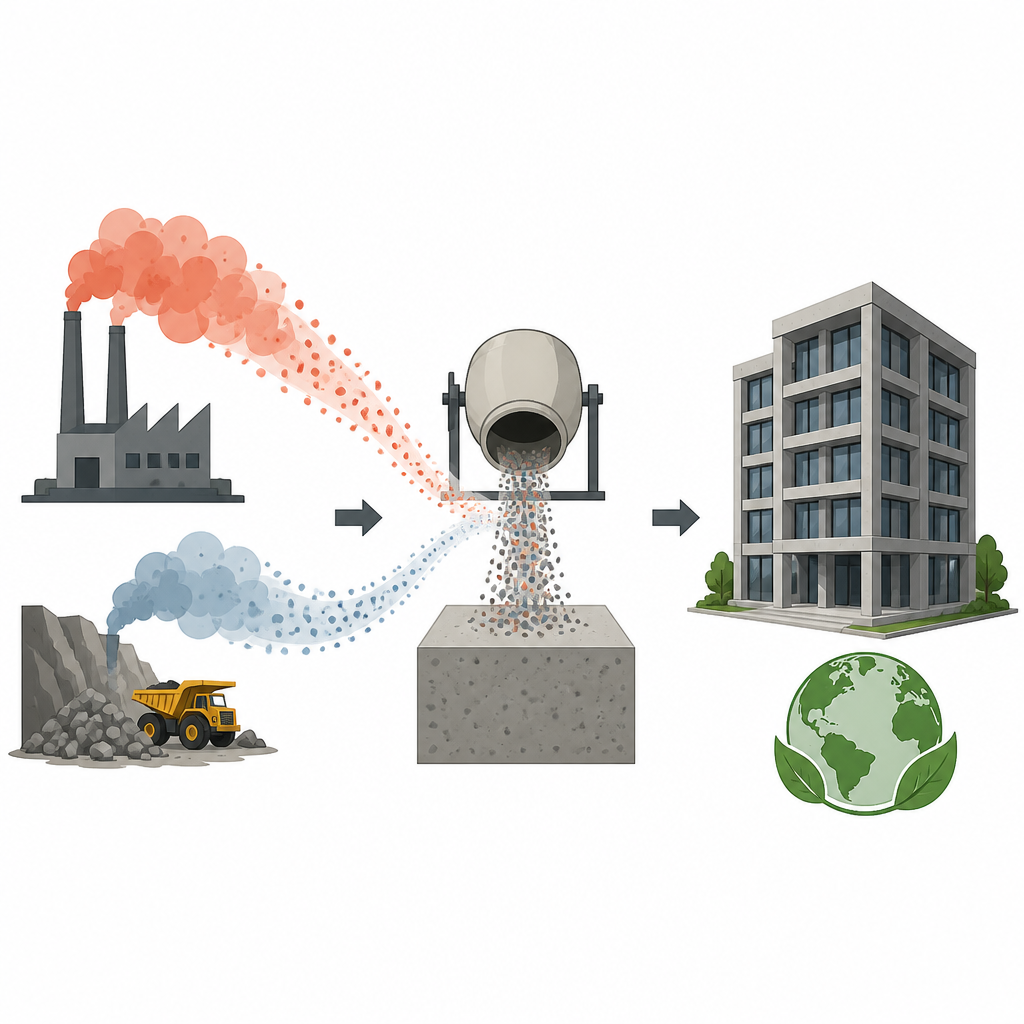
Concrete quietly supports almost every modern building, road, and bridge, but making its key ingredient, cement, releases large amounts of carbon dioxide. This study explores how a common mineral, calcium carbonate, together with an industrial by-product called ground granulated blast furnace slag, can replace a significant share of cement while still producing strong, long-lasting concrete. The work shows how simple powder-sized changes inside the mix can cut emissions and even improve performance.
Why rethink what goes into concrete
Cement production is responsible for a notable share of human-made carbon emissions, because it requires heating limestone to very high temperatures. At the same time, the world’s appetite for concrete keeps growing. The researchers set out to see whether they could swap much of the cement for more sustainable materials without sacrificing strength or durability. They focused on two ingredients: slag from steel production, already known to work well in concrete, and finely ground calcium carbonate powder, a widely available mineral often used as a filler in other products.
How the new concrete mixes were made and tested
The team designed concrete where only half of the binder was ordinary cement, while the other half was slag. They then replaced part of the slag with calcium carbonate at levels from 5 to 20 percent, all while keeping the water content the same. They also made simpler mortar mixes to study flow and early behavior. Fresh mixes were checked for workability using standard slump and flow tests. Hardened samples were tested over three months for compressive strength, how well they resist pulling apart and bending, and how deep carbon dioxide can penetrate, which is linked to how well steel inside concrete stays protected. Non-destructive tools such as ultrasonic pulse velocity and rebound hammer tests gauged internal quality and surface hardness, and microscopes and electrical tests revealed what was happening inside the material’s pores.
What happens inside the microscopic structure
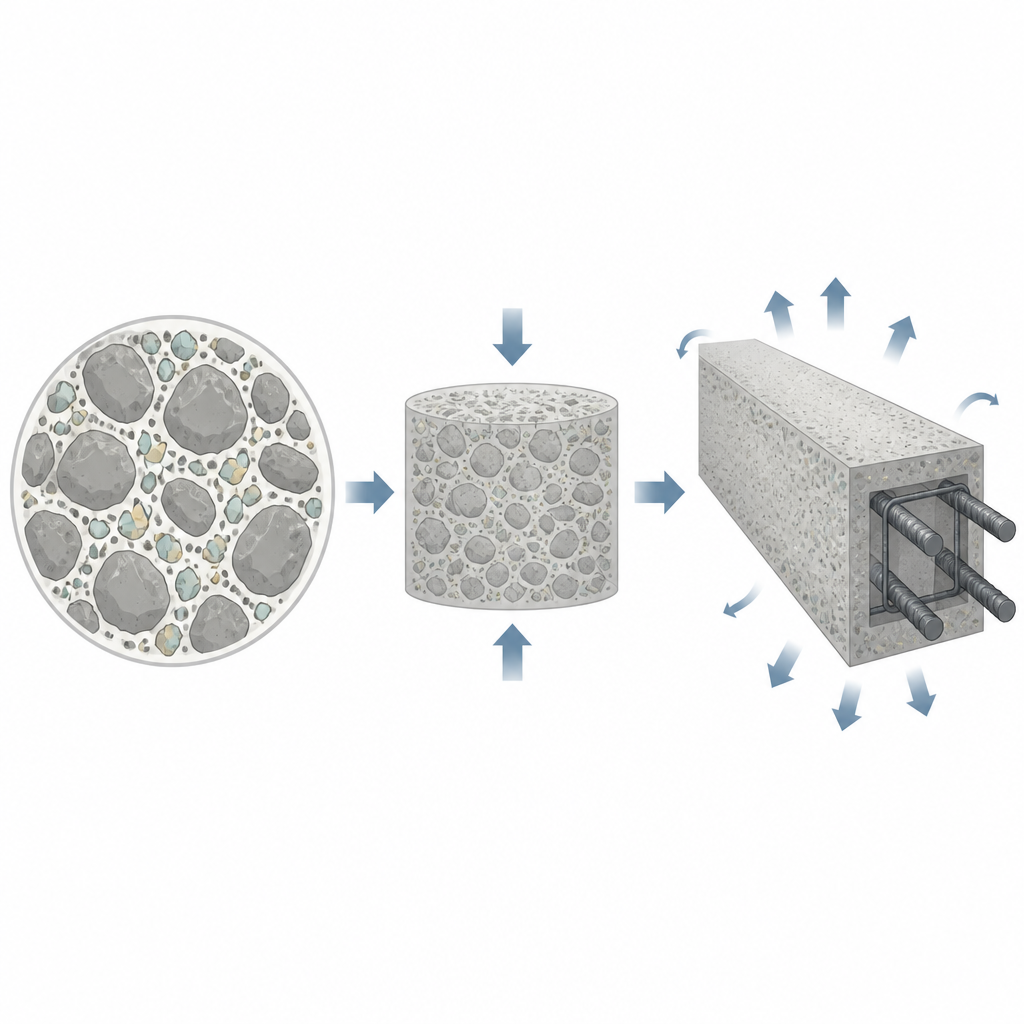
Microscope images showed that the tiny calcium carbonate particles nestle into the gaps between cement and slag grains, acting like micro-sized stones that pack the mix more tightly. This tighter packing reduces empty spaces and makes it harder for water and gas to move through the concrete. Under controlled exposure to carbon dioxide, some of the reaction products in the concrete gradually turn into additional calcium carbonate crystals. These new crystals help seal pores and hairline cracks, further densifying the material. Electrical impedance tests, which track how easily ions move through the concrete, confirmed that mixes with calcium carbonate developed a more refined, less connected pore network over time.
How strength and durability were improved
The results showed a clear sweet spot. When 15 percent of the slag portion was swapped for calcium carbonate, the concrete reached the best overall performance. After 90 days, this mix achieved a compressive strength above 70 megapascals, along with higher resistance to splitting and bending forces than the standard mix without calcium carbonate. It also showed shallower carbonation depth, higher pulse velocity, and greater rebound values, all signs of a denser, better-bonded internal structure. At higher replacement levels, workability dropped and very fine particles began to clump, slightly reducing strength and offsetting the gains from denser packing.
What this means for future building
For a layperson, the takeaway is that a modest addition of finely ground calcium carbonate, combined with slag, can make concrete both greener and tougher. By replacing part of the cement with these materials, builders can cut the carbon cost of construction while gaining stronger, more durable structures. The study suggests that around 15 percent calcium carbonate in this low-cement recipe offers a practical balance between strength, durability, and sustainability, pointing toward everyday concrete that is kinder to the planet without giving up performance.
Citation: Kumar, B.N., Neelamegam, P., Sai, A.P.D. et al. Investigation of carbonation-induced microstructural changes in low-cement concrete using sustainable binders: GGBS and calcium carbonate. Sci Rep 16, 14847 (2026). https://doi.org/10.1038/s41598-026-45725-5
Keywords: low carbon concrete, calcium carbonate, GGBS, microstructure, carbonation