Clear Sky Science · en
Effects of whole-body vibration training on sarcopenia in older adults: a systematic review and meta-analysis of randomized controlled trials
Why shaking the body might help weak muscles
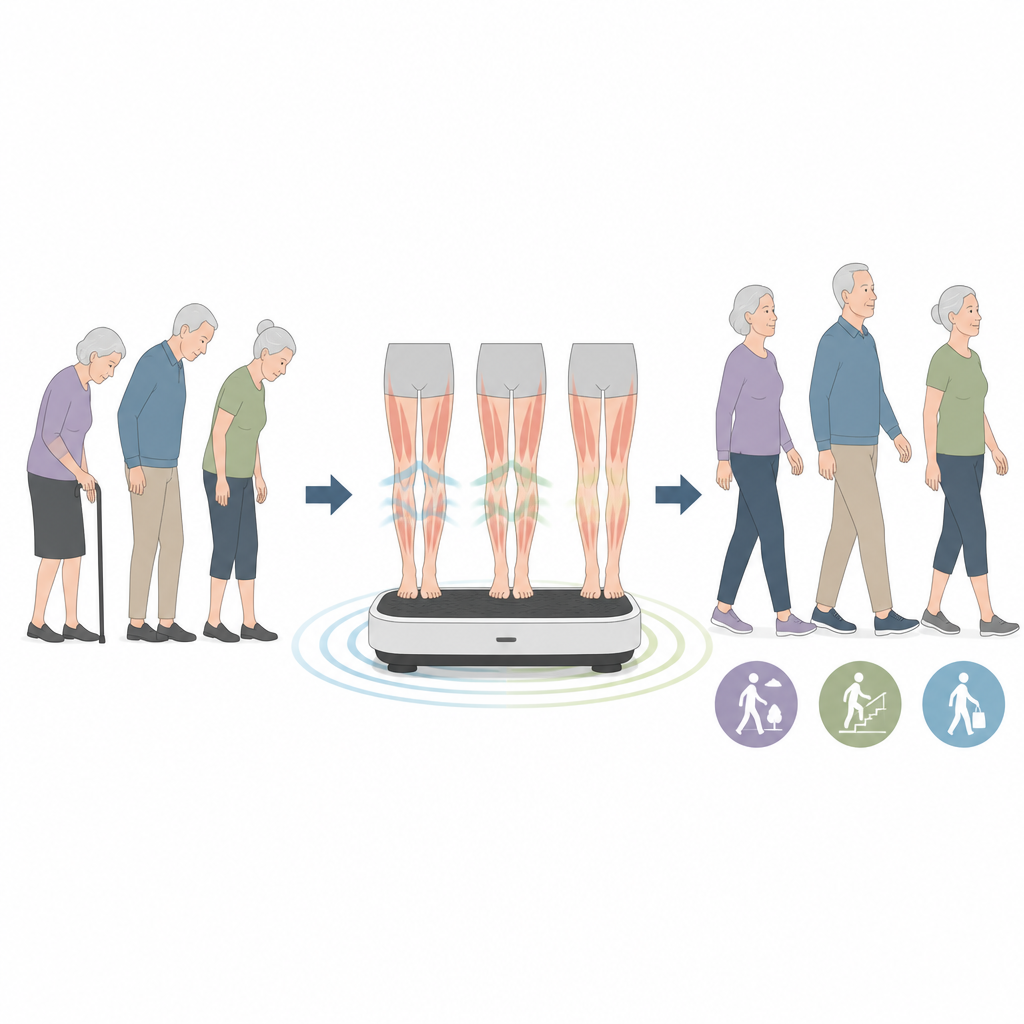
As people grow older, many lose muscle strength and find everyday tasks such as walking, standing up, or keeping balance harder. This condition, called age related muscle loss, can lead to falls, hospital stays, and loss of independence. Traditional strength workouts help, but not everyone is able to lift weights or join exercise classes. This study asks whether simply standing or exercising on a gently shaking platform can safely boost strength and movement in older adults with serious muscle loss.
A new kind of easy exercise
Whole body vibration training looks quite simple. A person stands, sits, or does light movements on a platform that vibrates several times a second. These small shakes cause quick, automatic muscle tightening without much effort from the person. Earlier research in generally healthy older adults hinted that this approach might improve strength, balance, and even bone health. But it was not clear if the same benefits applied to older adults who already had marked muscle loss, a group that often struggles most with standard exercise programs.
Gathering clues from several trials
To get a clearer answer, the authors combined results from the best available clinical tests, called randomized controlled trials. They searched major medical databases up to early 2025 and found six suitable trials, including 202 older adults with muscle loss. In each trial, volunteers were randomly assigned either to vibration training or to a comparison program, such as usual care, health education, or similar exercises performed on a platform that was turned off. The vibration programs differed in how strong and how long the shaking lasted, ranging from a single session to 12 weeks of training.
What improved and what did not
Across all six trials, people who used the vibration platforms showed a clear increase in lower body strength compared with those in the control groups. Measures of physical performance, such as walking speed, getting up from a chair, and balance tests, also improved by a moderate amount. These gains are important because stronger legs and better movement are closely tied to fewer falls and more independent living. However, detailed scans and body measurements showed little or no change in actual muscle size during the relatively short study periods. Blood tests that looked at hormones and inflammation also did not shift in a clear way.
How shaking helps without bigger muscles
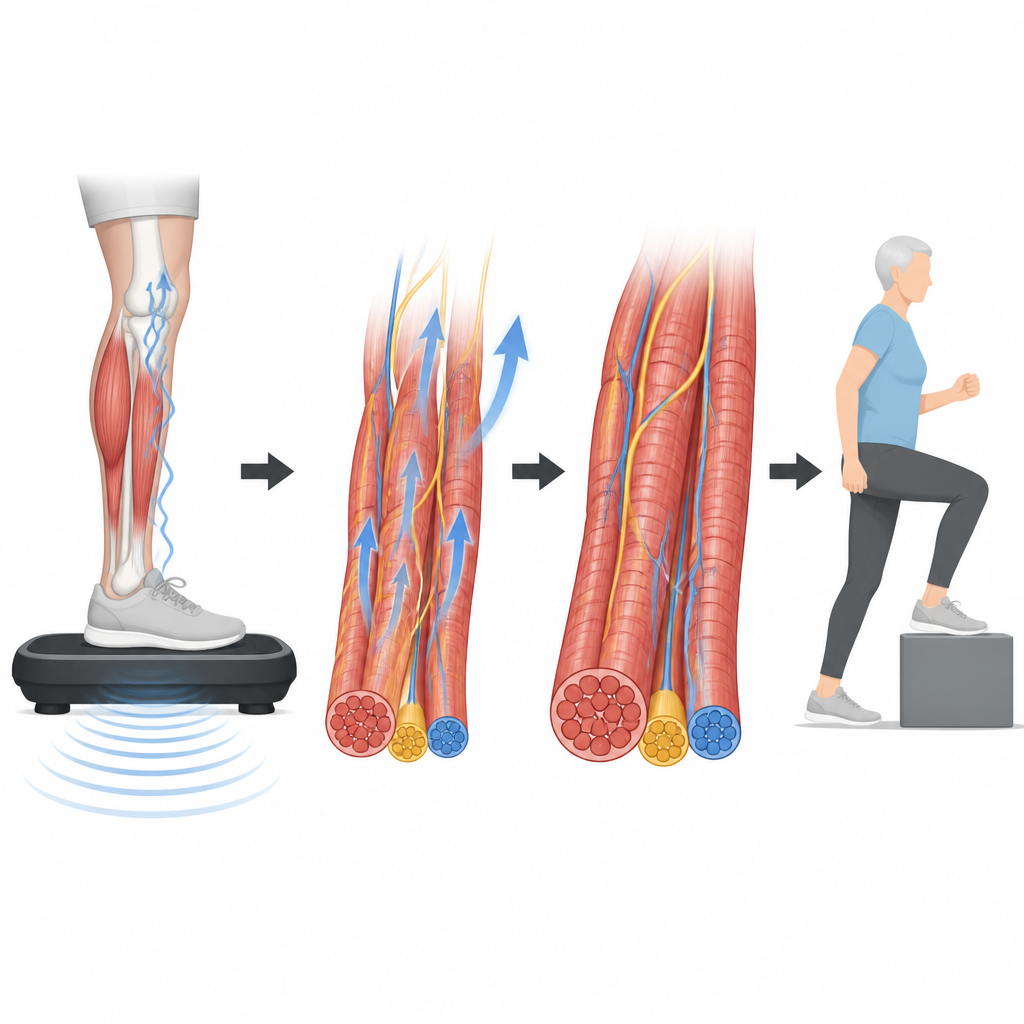
The lack of visible muscle growth suggests that vibration training may work mainly by tuning the way nerves and muscles talk to each other, rather than by building large new muscle fibers. The repeated quick tightening of muscles triggered by the platform can improve how many muscle cells are activated and how well they fire together. Animal studies back this idea and point to changes in nerve junctions, cell energy factories, and local inflammation. In people, this likely translates into stronger, more coordinated movements even when the muscles themselves have not grown much in size.
What this means for older adults
Overall, the review concludes that whole body vibration training can safely and meaningfully boost leg strength and everyday movement in older adults with serious muscle loss, even though it does not enlarge muscles over the short term. Because it requires little effort and can be done in clinics, community centers, or possibly at home, it may be a useful add on to more traditional exercise and nutrition plans, especially for those who cannot tolerate heavy workouts. Larger, longer studies are still needed to confirm how long the benefits last and to fine tune the best vibration settings, but the current evidence suggests that a gentle shake could become a practical tool in helping older people stay on their feet.
Citation: Beom, J., Lim, JY. & Lee, S.Y. Effects of whole-body vibration training on sarcopenia in older adults: a systematic review and meta-analysis of randomized controlled trials. Sci Rep 16, 14915 (2026). https://doi.org/10.1038/s41598-026-45710-y
Keywords: sarcopenia, older adults, whole body vibration, muscle strength, physical performance