Clear Sky Science · en
Yttrium oxide nanoparticles induce potent selective cytotoxicity in HeLa cervical cance cells through ROS-mediated genomic instability and mitochondrial apoptosis
New hope from tiny particles
Cervical cancer is still a major killer of women worldwide, and many current treatments damage healthy tissue along with tumors. This study explores whether ultra-small particles of a metal oxide, called yttrium oxide nanoparticles, can act like precision weapons that harm cervical cancer cells far more than normal cells. By watching how these particles affect cancer cells in the lab, the researchers hope to lay groundwork for gentler, more selective cancer therapies in the future.
How the tiny particles were tested
The team worked with HeLa cells, a classic model of cervical cancer, and compared them to normal human skin pigment cells called melanocytes. They exposed both cell types to increasing amounts of yttrium oxide nanoparticles and measured how many cells survived after three days. The nanoparticles had been carefully characterized in earlier work: they are very pure, extremely small (around 14 nanometers across), and form stable suspensions, making them suitable for biological experiments.
Stronger hit on cancer cells than on normal cells
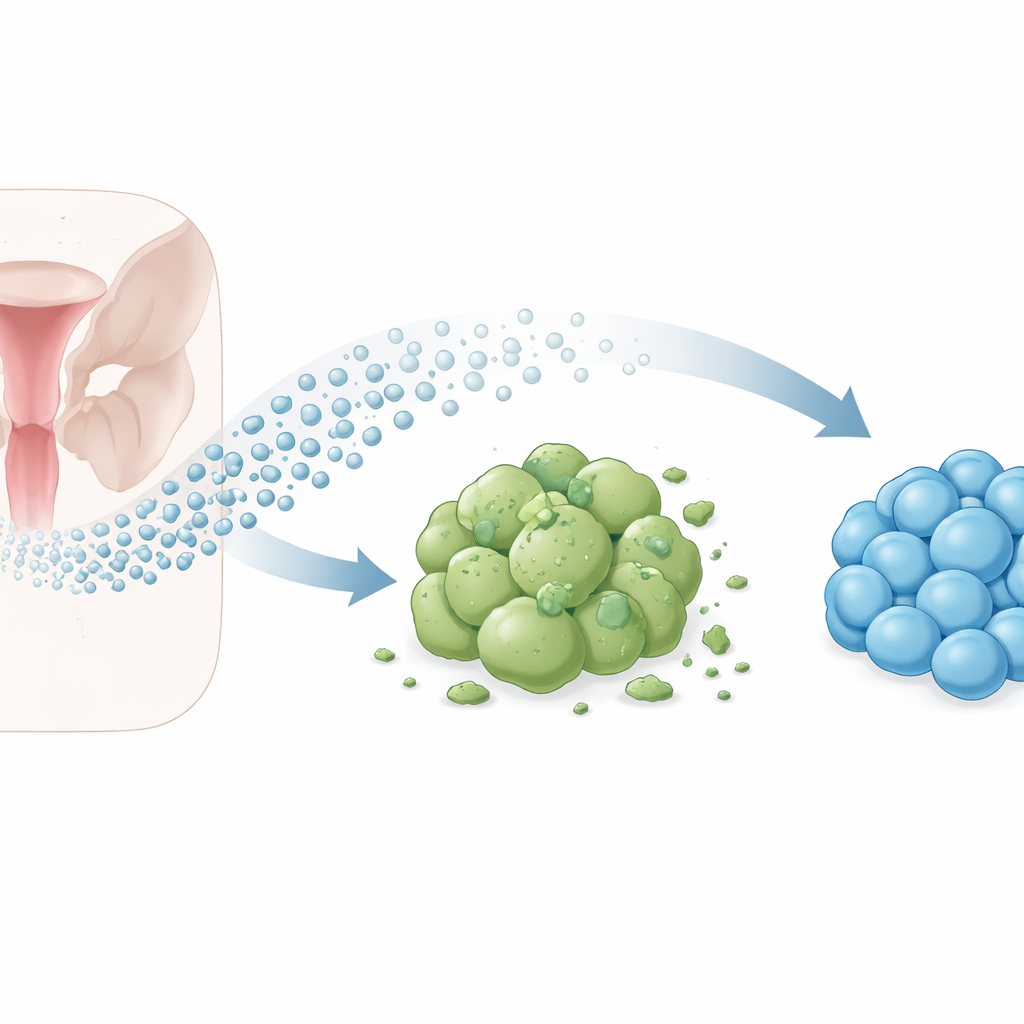
The survival tests showed that the nanoparticles were far more toxic to cancer cells than to normal cells. HeLa cells lost half their viability at a relatively low dose, while the normal melanocytes needed about five times more nanoparticles to reach the same level of damage. This large difference, described as a high “selectivity index,” suggests that the particles preferentially attack cancer cells while sparing healthy ones under these conditions. That kind of selectivity is one of the main goals of modern cancer medicine.
Inside the cell: burn, break, and shut down
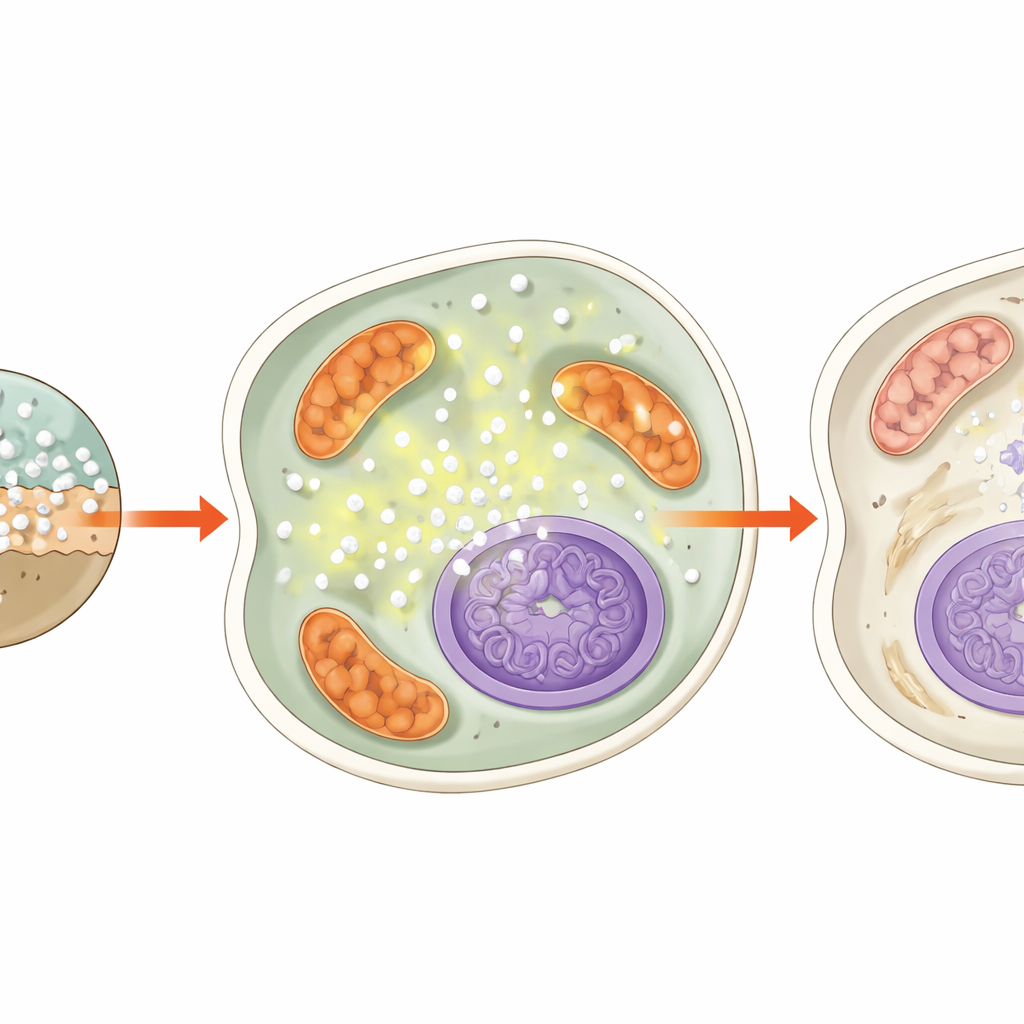
To understand what was happening inside the cancer cells, the researchers looked at several hallmarks of cellular stress. They found that treated HeLa cells produced much higher levels of reactive oxygen species—highly reactive molecules that can act like chemical sparks inside the cell. These sparks were linked to clear signs of DNA damage, seen as the genetic material stretching into long “comet tails” under the microscope. At the same time, the tiny power stations of the cell, the mitochondria, lost their normal electrical charge, a warning sign that they were failing. Together, these changes show that the nanoparticles push cancer cells into a state of severe oxidative stress, genetic injury, and energy breakdown.
Cells pushed toward a tidy self-destruct
Rather than simply bursting, the damaged cancer cells mainly underwent apoptosis, a tidy form of programmed self-destruction. Under fluorescent staining, treated HeLa cells showed classic features of this process: shrunken, bright, fragmented nuclei and the formation of small apoptotic bodies. Gene activity inside the cells also shifted. A stress-responsive guardian gene (p53) and a mitochondrial gene (ND3) were turned up strongly, signaling that the cell recognized serious damage and that its energy factories were under strain. Interestingly, an anti-death gene (Bcl-2) was also increased, likely reflecting a failed attempt by the cells to protect themselves as the damage became overwhelming.
What this could mean for future treatments
In simple terms, this study suggests that yttrium oxide nanoparticles can act as smart stressors that hit cervical cancer cells harder than nearby healthy cells. They flood the cancer cells with reactive molecules, damage their DNA, cripple their power sources, and ultimately trigger a controlled self-destruct program. Because these experiments were done only in dishes and used just one cancer and one normal cell type, the findings are still preliminary. But they offer an encouraging proof-of-concept that carefully designed nanoparticles might one day become part of more targeted, less harmful treatments for cervical cancer, provided that future animal and clinical studies confirm their safety and effectiveness.
Citation: Mohamed, H.R.H., Elhaggan, S.O., Hekal, R.S. et al. Yttrium oxide nanoparticles induce potent selective cytotoxicity in HeLa cervical cance cells through ROS-mediated genomic instability and mitochondrial apoptosis. Sci Rep 16, 12239 (2026). https://doi.org/10.1038/s41598-026-45693-w
Keywords: cervical cancer, nanoparticles, yttrium oxide, oxidative stress, mitochondrial apoptosis