Clear Sky Science · en
Cloning, expression and characterisation of short-chain dehydrogenase/reductase SDR12 (A0A7I5E7J1) from a parasitic nematode Haemonchus contortus
Why tiny worms and their chemistry matter
Parasitic worms are a hidden drain on global farming, weakening sheep and goats and costing farmers money. To control these infections, veterinarians rely on deworming drugs, but many worm populations are gradually becoming less sensitive to treatment. This study looks inside one such worm, Haemonchus contortus, to examine a single enzyme that may help the parasite handle both its own metabolism and the drugs meant to kill it.
Meet the barber pole worm and its defenses
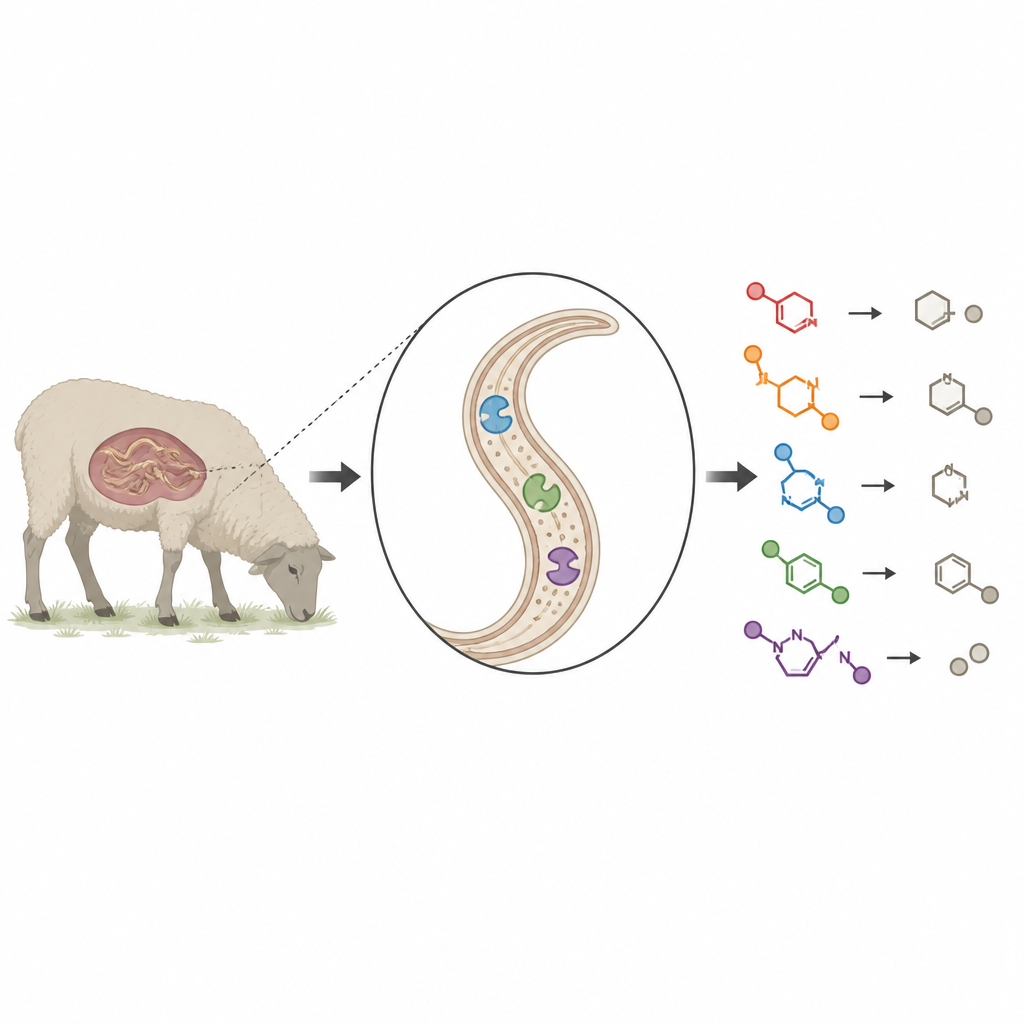
Haemonchus contortus, also known as the barber pole worm, lives in the stomach of sheep and goats and feeds on their blood. Over time, repeated drug treatments select for worms that can survive medicine that once worked well. One group of enzymes, called short-chain dehydrogenases/reductases, helps many organisms break down both natural body chemicals and foreign compounds such as medicines or pollutants. The researchers had previously seen that a particular member of this group, called SDR12, is more active in a drug-resistant strain of H. contortus than in a drug-susceptible strain, hinting that it might be part of the worm’s protective toolkit.
Cloning the worm enzyme in a friendly bacterium
To investigate SDR12 in detail, the team first isolated the gene that encodes it from adult worms and inserted this genetic blueprint into a laboratory strain of the bacterium Escherichia coli. The bacteria then acted as tiny factories, producing large amounts of the worm enzyme. After carefully purifying the protein, the scientists confirmed its size and identity using gel-based separation and antibody detection methods. They also used computer tools to compare SDR12 with similar enzymes from other species and found that it shares many key structural features with human enzymes involved in fat processing and steroid chemistry.
Testing which chemicals the enzyme can handle
The main practical question was whether SDR12 could break down flubendazole, a widely used deworming drug whose activity depends on a reactive chemical group. The researchers exposed the purified enzyme to flubendazole under different conditions and monitored the reaction with sensitive mass spectrometry. They did not see any sign that the enzyme converted the drug into a reduced form, suggesting that SDR12 does not directly inactivate this particular medicine. However, when the enzyme was tested against a range of other compounds that contain similar reactive groups, it showed strong activity, especially when paired with a helper molecule that donates electrons, called NADPH. Simple sugars, certain painkillers, and other medical compounds were efficiently converted into less reactive products.
Clues to the enzyme’s role inside the worm
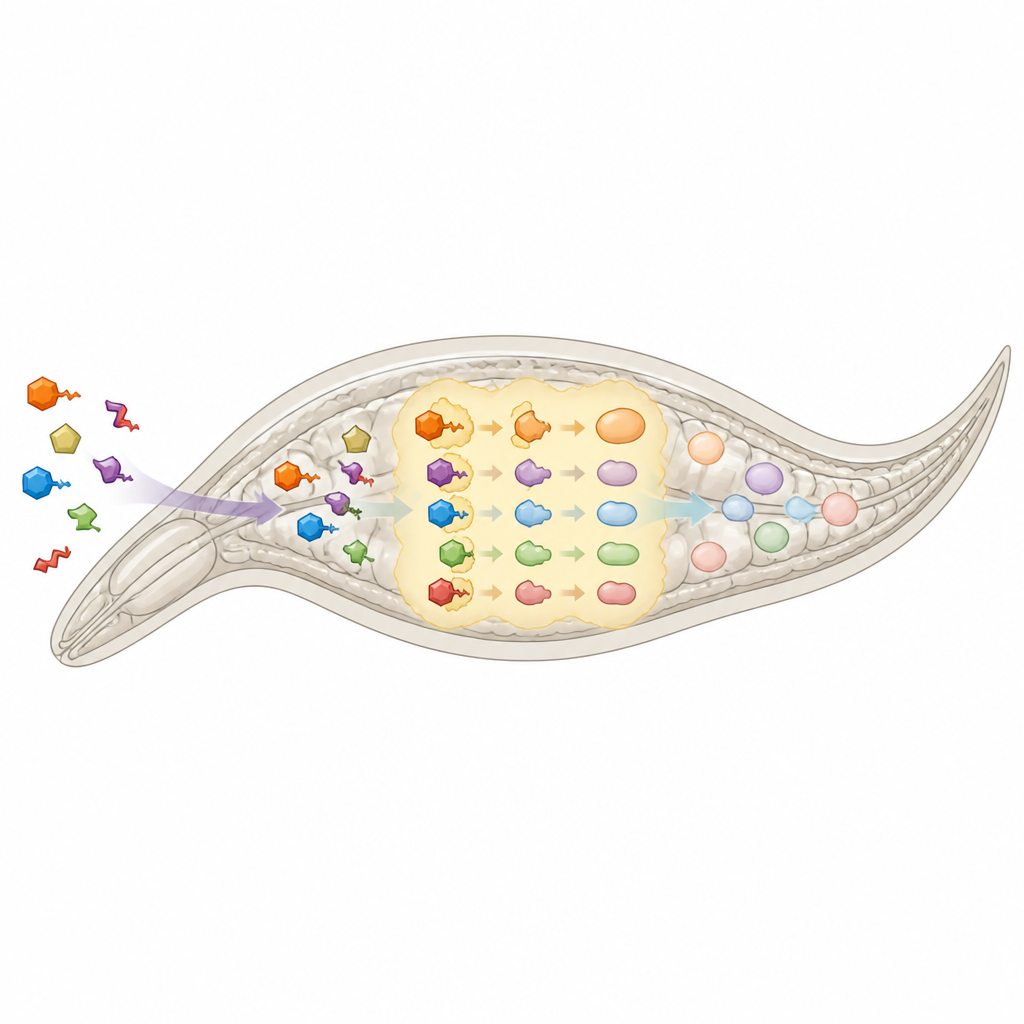
By examining how quickly SDR12 processed different test molecules, the scientists could estimate both how strongly the enzyme binds them and how fast it works. One substrate related to steroid-blocking drugs was bound especially tightly, while a simple sugar derivative was converted very rapidly. Together with the similarity to human enzymes that handle fatty molecules, these patterns point toward a dual role for SDR12 in the worm: helping to manage everyday energy and fat metabolism, and at the same time detoxifying a variety of foreign chemicals that the parasite encounters in its host or in the environment. Interestingly, the gene for SDR12 became more active in female worms after they were exposed to flubendazole, even though the enzyme does not modify that drug directly.
What this means for tackling drug-resistant worms
For non-specialists, the key message is that this worm enzyme acts like a flexible chemical shield rather than a simple drug-destroying tool. SDR12 does not switch off the deworming drug flubendazole itself, but it can neutralize many other reactive compounds and may help worms cope with chemical stress more broadly. Understanding such enzymes gives researchers a clearer picture of how parasites survive inside their hosts and may guide future efforts to design treatments that either bypass these defenses or target them directly. The work also leaves an open question: which other worm enzymes are responsible for altering flubendazole, and could they be the missing links in the story of drug resistance?
Citation: Rychlá, N., Navrátilová, M., Kohoutová, E. et al. Cloning, expression and characterisation of short-chain dehydrogenase/reductase SDR12 (A0A7I5E7J1) from a parasitic nematode Haemonchus contortus. Sci Rep 16, 15539 (2026). https://doi.org/10.1038/s41598-026-45685-w
Keywords: Haemonchus contortus, anthelmintic resistance, drug metabolism, detoxification enzymes, nematode parasites