Clear Sky Science · en
LogoXpertNet: a novel lightweight logo classification using deep learning
Why spotting logos matters
Every day, billions of photos and videos flow through social media, shopping sites, and news feeds, and many of them contain brand logos on shirts, trucks, storefronts, and products. Automatically recognizing these logos is useful for tasks like tracking brand visibility, fighting counterfeits, and investigating digital evidence. But teaching computers to pick out small, often distorted logos in busy real‑world scenes is surprisingly hard. This paper introduces LogoXpertNet, a compact artificial‑intelligence system designed to recognize logos accurately while still being fast and efficient enough to run on everyday devices.
The challenge of tiny symbols in a messy world
Logos are not like everyday objects such as cars or chairs. The same brand can appear in many different forms: printed on fabric, filmed at odd angles, stretched across billboards, or partly hidden behind other objects. At the same time, different brands can look confusingly alike, sharing similar colors, shapes, or decorative patterns. Traditional computer‑vision methods struggle with this mix of small size, distortion, cluttered backgrounds, and look‑alike designs. Even modern deep‑learning systems, while powerful, are often too heavy to run in real time on phones, cameras, or other devices with limited computing power.
A compact network with focused attention
LogoXpertNet tackles these problems by starting from a lightweight neural network family originally developed for mobile phones and then adding a series of purpose‑built modules. The base network quickly scans an image and builds layered feature maps that capture edges, textures, and shapes at different scales. On top of this, a cross‑layer feature fusion unit blends information from shallow layers (which preserve fine details) with deeper layers (which capture broader structure). This helps the system keep track of tiny strokes and sharp boundaries that often distinguish one logo from another while still understanding the larger scene. 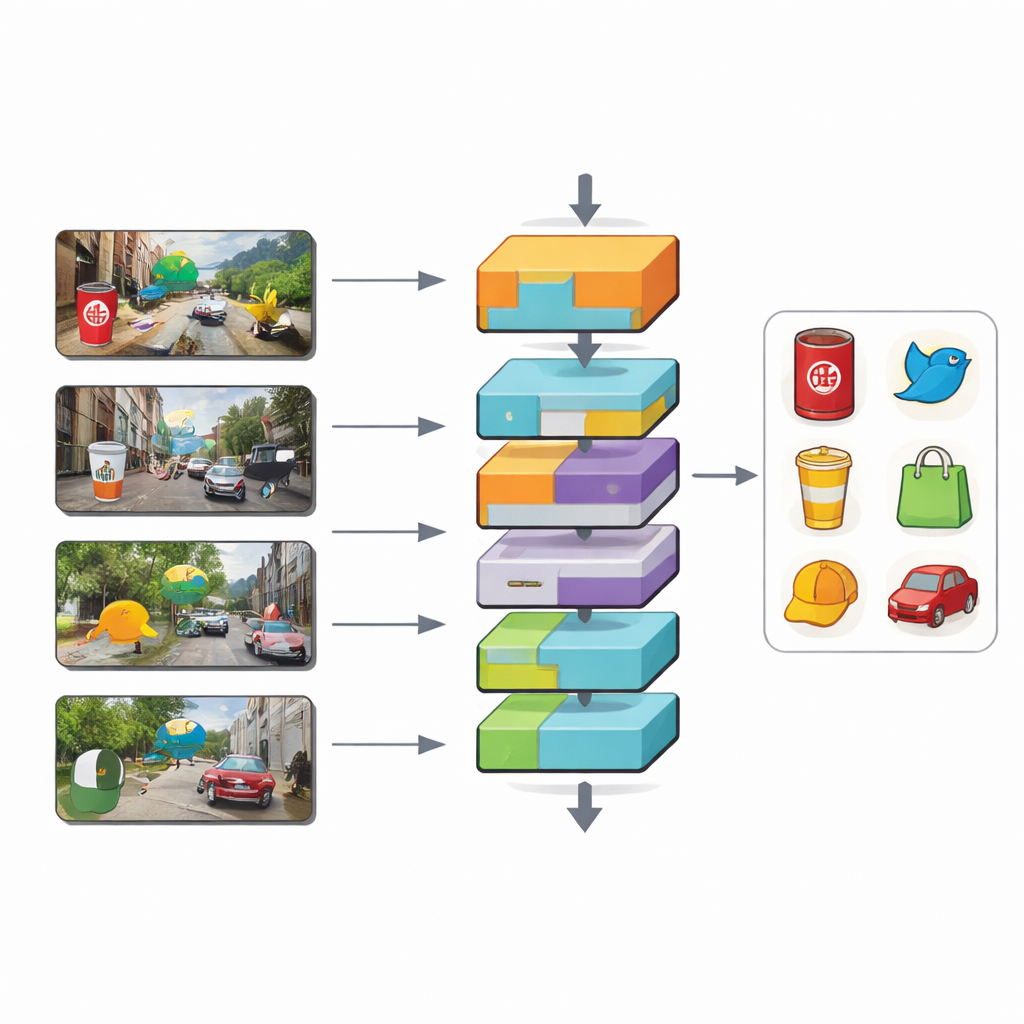
Teaching the model where to look
To further sharpen its view, LogoXpertNet uses special attention blocks that act a bit like a spotlight operator in a theater. One module, called a hierarchical squeeze‑and‑excitation spatial block, looks across multiple scales at once. It examines global patterns across the whole image, the strongest local signals, and smaller neighborhoods, then boosts the most informative channels and regions while dimming the rest. A second module, the feature‑aware attention block, adds another twist: it also analyzes the frequency content of the image, which highlights sharp edges, repeating motifs, and fine textures that are common in logo designs. By combining spatial cues with frequency‑based cues, the system becomes better at pulling a crisp logo signal out of noisy, complex backgrounds.
Putting the system to the test
The authors evaluated LogoXpertNet on three well‑known logo collections that mimic real‑world conditions: a small but varied set of 32 brands from casual photos, a regional news‑image dataset of Belgian logos, and a very large web‑scale collection with millions of images and naturally noisy labels. Across all three, the new system achieved near‑perfect scores, clearly outperforming earlier methods while using a similar or smaller amount of computation. Care was taken to split the data cleanly, remove duplicate images across training and test sets, and report not only accuracy but also how confidently and consistently the model distinguished among brands. The researchers also dissected the network piece by piece, showing that each attention and fusion component provided a meaningful boost in performance. 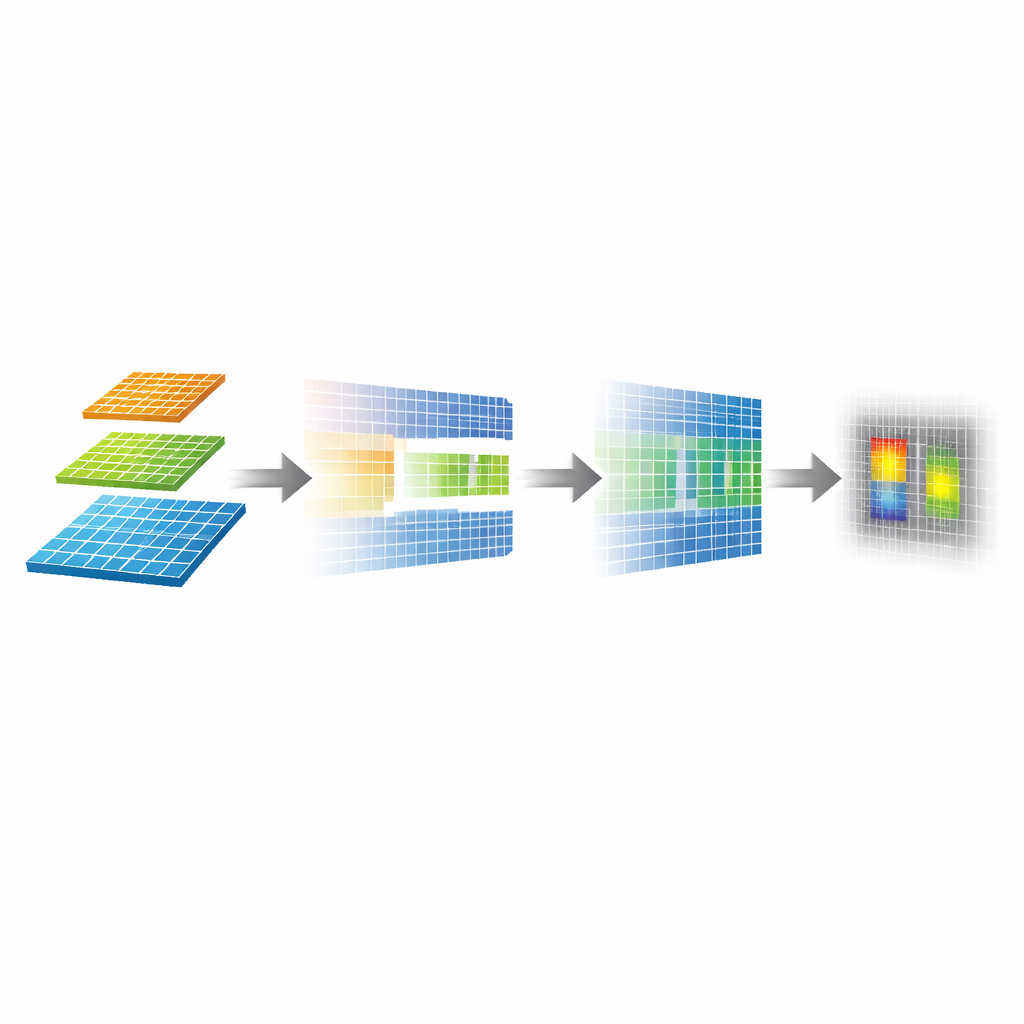
What this means for everyday technology
In simple terms, the paper shows that it is possible to build a logo‑recognition engine that is both sharp‑eyed and lean. By guiding a compact network to focus on just the right details—across layers, across image regions, and even across frequencies—LogoXpertNet can spot and distinguish logos in challenging images without demanding enormous computing resources. The authors caution that real life will still throw tougher cases at such systems, from brand‑new logos to extreme blur and heavy occlusion, and they call for broader testing in truly uncontrolled settings. Even so, their work provides a practical blueprint for bringing accurate logo recognition to phones, cameras, and other everyday devices.
Citation: Mumtaz, M.T., Awang, M.K., Saeed, M.U. et al. LogoXpertNet: a novel lightweight logo classification using deep learning. Sci Rep 16, 10956 (2026). https://doi.org/10.1038/s41598-026-45682-z
Keywords: logo recognition, deep learning, computer vision, brand monitoring, lightweight neural networks