Clear Sky Science · en
Research on industrial internet platforms empowering carbon emission efficiency improvement in manufacturing: based on digital technology availability
Why this matters for cleaner industry
Factories make the goods we rely on, but they also consume huge amounts of energy and release large volumes of carbon dioxide. This paper explores how linking factories to powerful online industrial platforms can help them use energy more wisely, cut carbon emissions, and still stay competitive. It looks at how companies, governments, and digital platforms can work together so that cleaner production becomes the easier and smarter choice, not just an added burden.
How digital tools connect to smokestacks
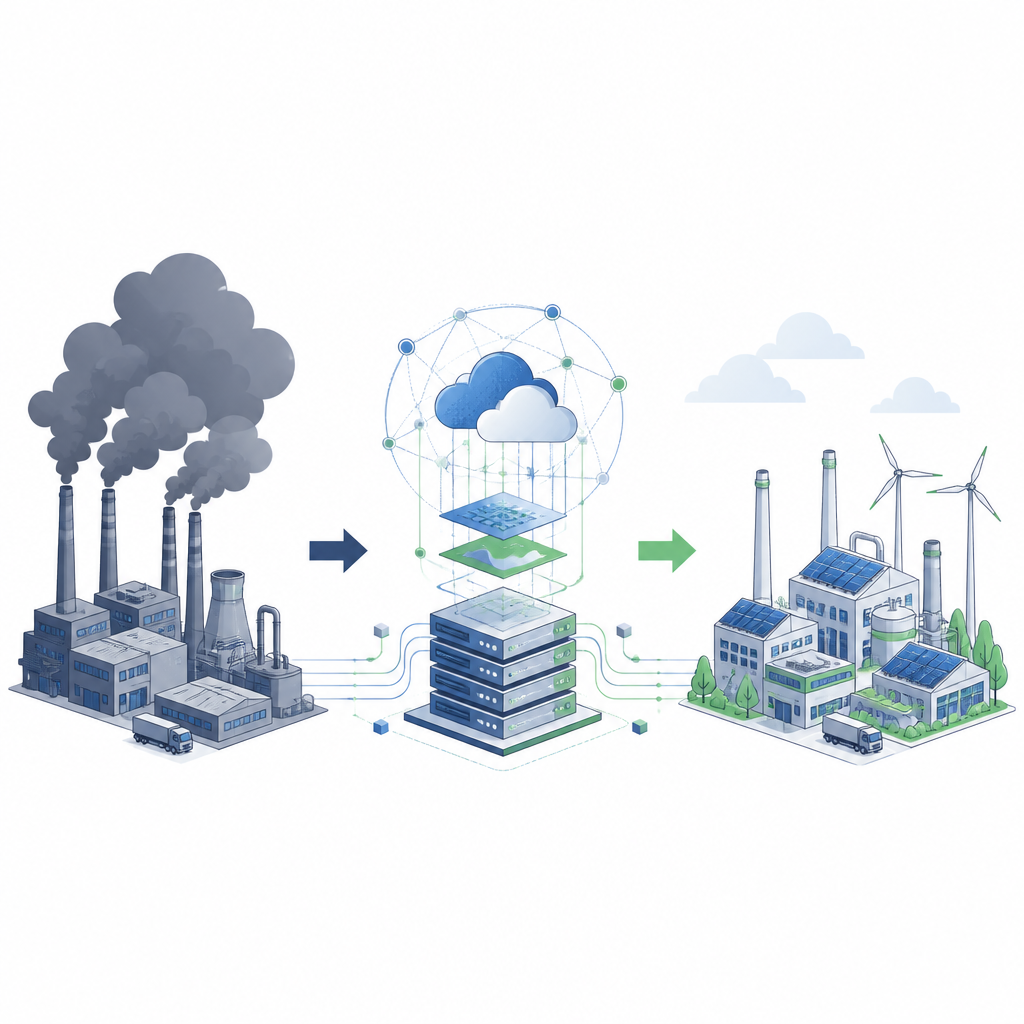
The authors start by explaining that many countries are under pressure to reach carbon neutrality while keeping their manufacturing sectors strong. Traditional approaches, where each factory tries to reduce emissions on its own, are not enough. New “industrial internet” platforms can connect machines, sensors, and production lines across many factories. These platforms gather detailed data on energy use and emissions, help spot wasteful steps, and support new low-carbon technologies, especially when digital systems are well developed and widely available.
From digital potential to real-world action
A key idea in the article is “digital technology availability,” which means how factories and other players perceive and use what digital tools can actually do for them. The authors divide this into two sides. Functional availability is about what the technology can do, such as tracking energy use, monitoring carbon emissions in real time, and redesigning processes to favor clean energy. Relational availability is about how these tools link people and organizations, allowing factories, platform providers, and government agencies to share data, coordinate decisions, and jointly manage carbon-related risks along whole supply chains.
Three stages of working together
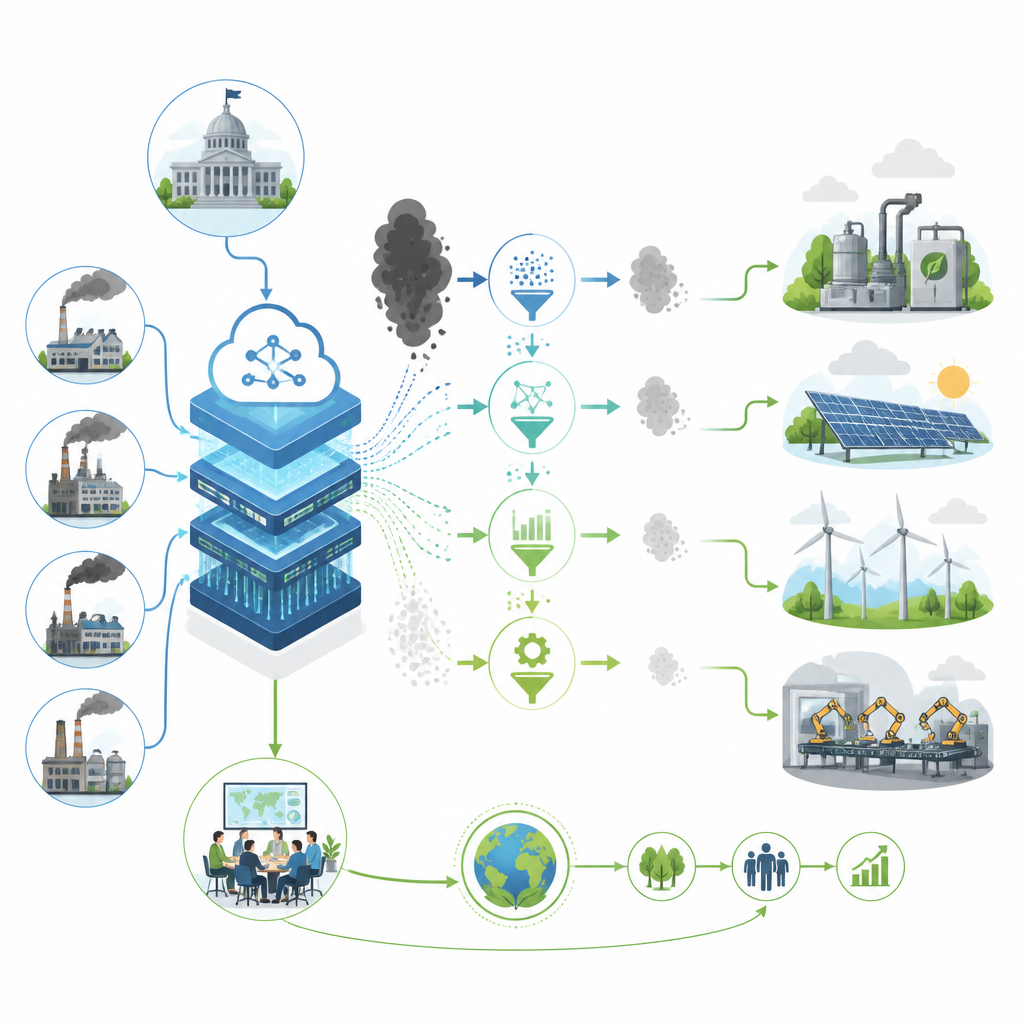
To understand how this plays out over time, the study builds a mathematical game model with three main actors: manufacturing firms, industrial internet platforms, and the government. It then compares three stages of cooperation. In a “primary neutrality” stage, government sets broad rules but offers no targeted support, and each party acts on its own; emission data are patchy and efficiency gains are modest. In an “intermediate dependence” stage, government starts to subsidize digital upgrades and give policy support, which encourages stronger efforts from factories and platforms and leads to sharper cuts in emissions. Finally, in an “advanced symbiosis” stage, all three share information, costs, and benefits in a tightly connected system, so that carbon reduction and economic gains reinforce each other.
What the numbers and cases show
The authors combine their model with real-world examples from Chinese manufacturers such as Haier and its COSMOPlat platform. In early years, factories mainly installed basic meters and monitoring tools, cutting some emissions but at high cost. As policy incentives and smarter platforms spread, firms adopted thousands of sensors, smart energy systems, and clean power sources, and began to share carbon data across partners. The model and case data show that when digital technology is mature and well used, and when government shares costs for upgrades and compliance, both carbon emission efficiency and financial returns improve for all sides, especially in the advanced symbiotic stage.
What this means for the road ahead
In plain terms, the paper concludes that digital industrial platforms can turn low-carbon manufacturing from a costly obligation into a coordinated, data-driven system that benefits factories, governments, and society. However, this works best when digital tools are mature, when rules and incentives are clear, and when the extra value created is fairly shared among all participants. Under those conditions, advanced symbiosis becomes the most effective arrangement, allowing manufacturing to cut emissions more deeply while remaining productive and resilient.
Citation: Qin, H., Shi, H., Zhang, H. et al. Research on industrial internet platforms empowering carbon emission efficiency improvement in manufacturing: based on digital technology availability. Sci Rep 16, 15057 (2026). https://doi.org/10.1038/s41598-026-45672-1
Keywords: industrial internet platform, carbon emission efficiency, digital technology, green manufacturing, government subsidies