Clear Sky Science · en
Removal of antibiotics and antibiotic resistance genes from domestic wastewater using mesocosm-scale constructed wetlands with different filter media
Why cleaning everyday sewage matters
When we take medicine, much of it leaves our bodies and ends up in the drain. Modern sewage plants do not fully remove these drug leftovers or the invisible genetic codes that let bacteria resist antibiotics. This study asks a simple but vital question: can carefully designed, plant-filled ponds called constructed wetlands help strip both antibiotics and resistance genes from household wastewater before it returns to rivers and soils?
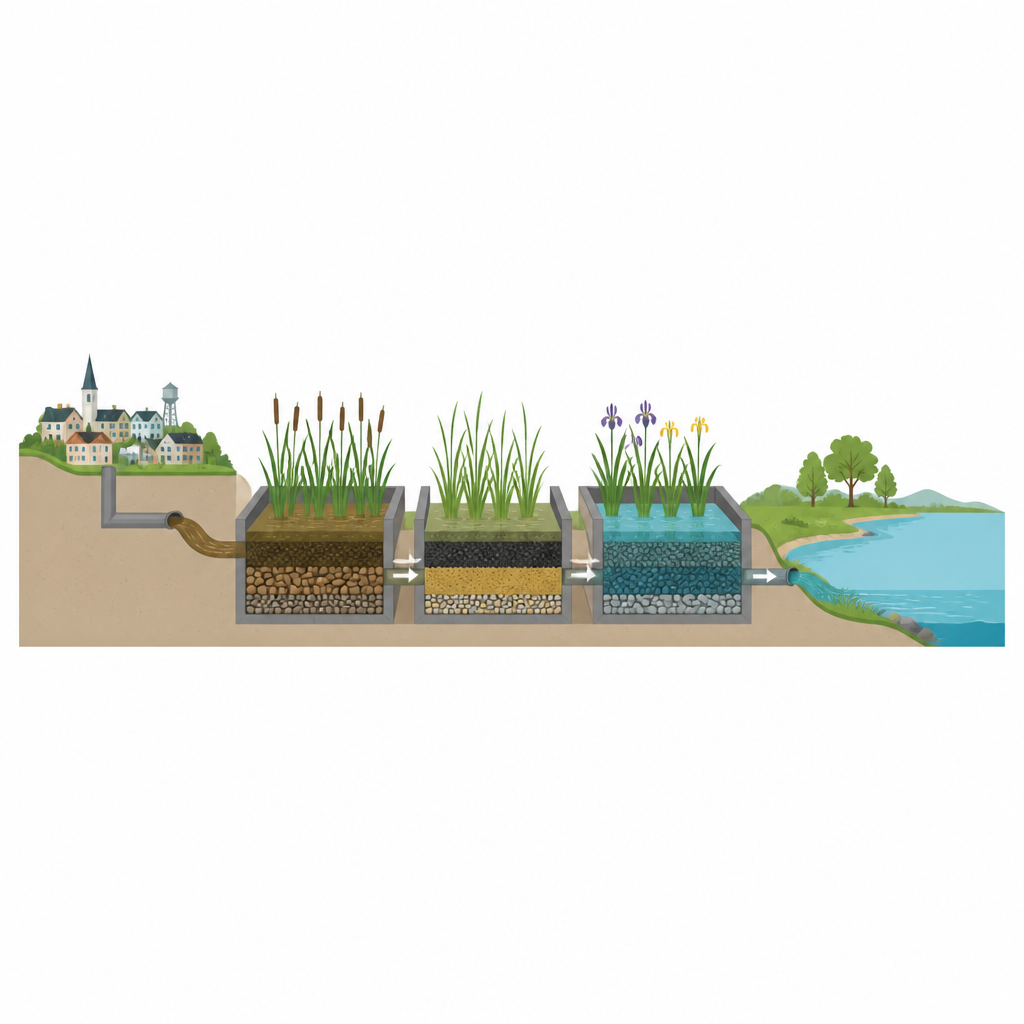
Nature-inspired water cleaning systems
Constructed wetlands mimic marshes by letting water slowly flow through plant roots and layers of rock-like material. In this work, researchers built three medium-scale test systems, each receiving real wastewater from a housing colony in Islamabad. All three had the same layout and the same water plants (cattails), but they differed in what lay beneath the plants: one used common gravel, another used charcoal-like biochar, and the third used a mineral called zeolite. Over four months, the team ran the systems in repeated one-week cycles to see how well each could clean the water.
What they tested in the dirty water
The scientists tracked not only standard pollution measures such as nutrients and organic matter, but also two widely used antibiotics, ciprofloxacin and cefixime. On top of this, they measured six antibiotic resistance genes plus a general marker of bacterial abundance. These genes cover several major families of antibiotics, so they offer a window into how well a treatment step might slow the spread of hard-to-treat bacteria. The team also compared two time scales: water staying in the wetlands for three days versus seven days, to see whether giving nature more time improved removal.
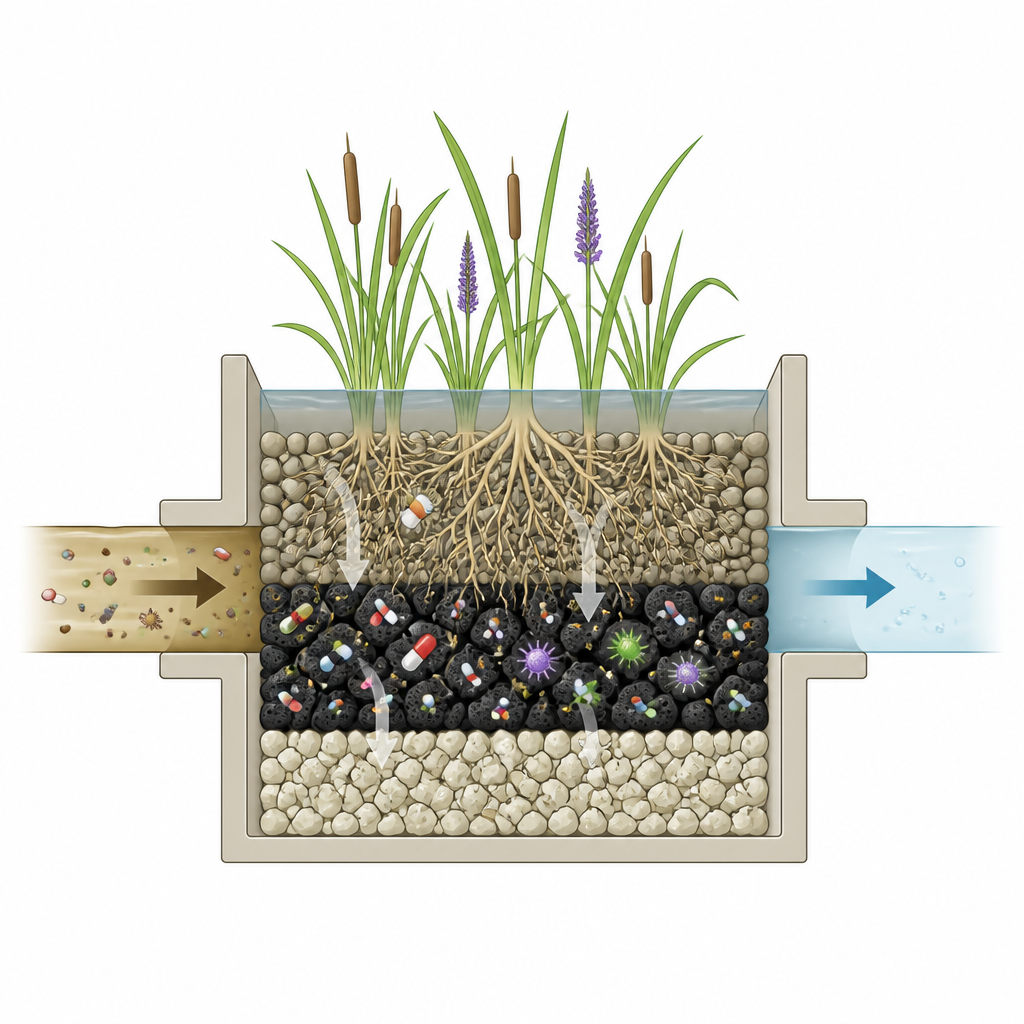
How the three filter materials behaved
All three wetlands brought down common pollutants in similar fashion, trimming nutrients and organic matter but not removing them completely. The big contrasts appeared for antibiotics and resistance genes. Gravel, the simplest material, gave the most uneven performance, sometimes leaving substantial drug residues behind. Biochar did better, thanks to its porous structure that can catch molecules and host helpful microbes. Zeolite, however, usually came out on top. It pushed levels of both ciprofloxacin and cefixime below the lab’s detection limits in most cycles and showed the strongest overall drop in resistance genes, especially when water stayed in the system for seven days.
Time and biology working together
Longer contact time in the wetlands generally meant fewer resistance genes in the outgoing water. Some genes responded more to the type of filter material, while others were more sensitive to how long the water lingered. Statistical tests showed that gene removal lined up closely with how much antibiotic and total bacterial material was taken out, but not with bulk measures like nutrient or oxygen demand. This suggests that the wetlands do more than just dilute or strain the water; they change the small-scale chemistry and biology in ways that weaken the survival and spread of resistance genes, through processes such as adsorption onto media surfaces and microbial breakdown.
What this means for everyday wastewater
To a non-specialist, the core message is reassuring: relatively simple, plant-based systems can meaningfully reduce both leftover antibiotics and the genetic tools that make bacteria drug-resistant in household sewage. Among the options tested, zeolite-filled wetlands with about a week of water contact stood out as the most effective setup. While more work is needed to confirm how these systems perform over many years and at full city scale, the study shows that harnessing natural processes in well-designed wetlands can become a practical, low-energy part of the fight against antibiotic pollution and resistance.
Citation: Alavi, A.F., Dawoud, T.M., Ur Rehman, T. et al. Removal of antibiotics and antibiotic resistance genes from domestic wastewater using mesocosm-scale constructed wetlands with different filter media. Sci Rep 16, 15069 (2026). https://doi.org/10.1038/s41598-026-45669-w
Keywords: wastewater, constructed wetlands, antibiotics, antibiotic resistance genes, zeolite