Clear Sky Science · en
Isolation of soil cellulolytic bacteria and their temperature- and pH-dependent decomposition of carboxymethylcellulose-based hydrogels
Turning Dry Dirt into Living Soil
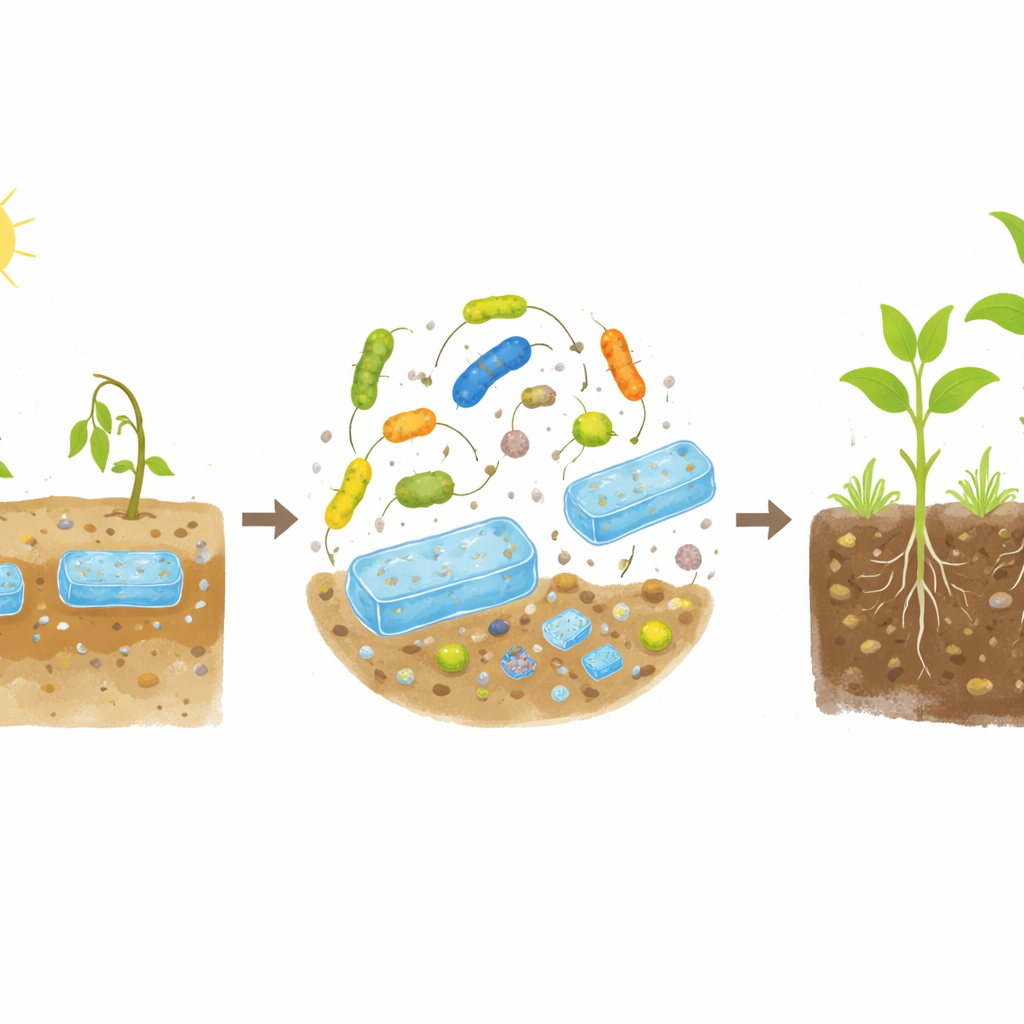
Farmers who grow crops on light, sandy ground often face the same problem: water drains away too quickly, leaving plants thirsty and yields low. One promising fix is to mix the soil with water‑holding “jelly” materials called hydrogels. But to truly be sustainable, these materials must eventually break down and return harmlessly to the environment. This study explores whether naturally occurring soil bacteria can digest a common plant‑based hydrogel, and under what conditions they do this best.
Water-Holding Jellies for Thirsty Fields
The researchers focused on hydrogels made from carboxymethylcellulose (CMC), a modified form of cellulose, the structural material in plants. CMC can soak up many times its own weight in water, forming soft films that act like tiny sponges in soil. By crosslinking CMC with aluminum ions, and sometimes adding nano‑sized particles of calcium carbonate, the team created sturdy hydrogel films that swell strongly in water yet do not dissolve. These materials are meant to keep more moisture around plant roots in sandy, nutrient‑poor soils, while still being based on renewable, plant‑derived ingredients.
Recruiting Local Soil Helpers
To see whether local microbes could break down these hydrogels, the team collected sandy loam soil from a cassava field in Thailand and enriched the community of bacteria that can feed on cellulose‑like substances. From this mixture they isolated 43 distinct bacterial colonies and then screened them on plates containing CMC. Bacteria that produced enzymes to digest CMC created clear halos around their colonies. Five standout strains formed the largest halos and released the most simple sugars, showing that they were strong “cellulose eaters.” DNA analysis revealed that these strains belong to several genera commonly found in soil, including Cohnella, Klebsiella, Microbacterium, and Chryseobacterium. Among them, a Cohnella strain labeled CB16 was the most active degrader.
Finding the Sweet Spot for Breakdown
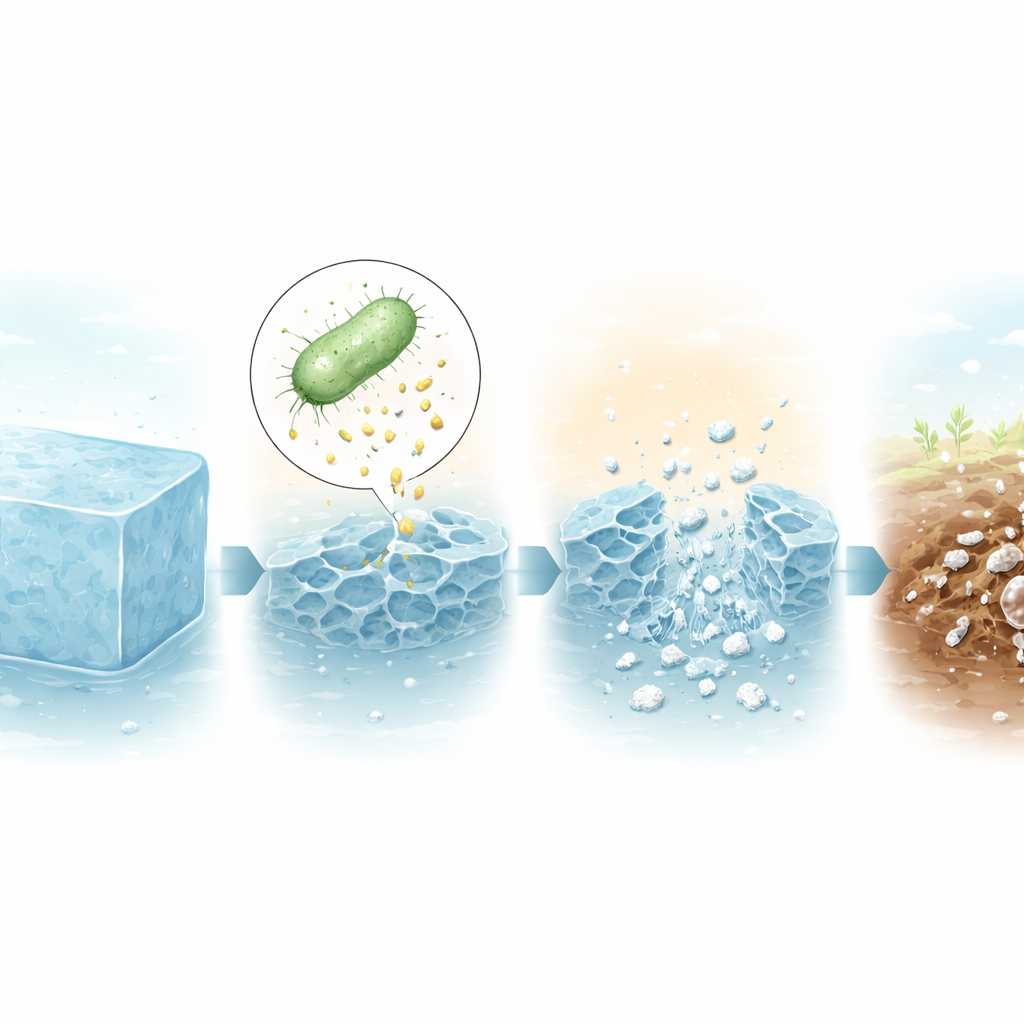
Next, the researchers asked which environmental conditions help these bacteria chew through the hydrogels most effectively. Using the CB16 strain, they tested different acidity levels (pH) and temperatures in liquid culture. At neutral pH (around 7) and a moderate temperature of 30 °C, CB16 produced the most simple sugars from CMC, showing that its enzymes were working at full strength. When hydrogel films were incubated with CB16, the greatest weight loss—over 40 percent in a week—also occurred at pH 7. Lower pH and higher temperatures slowed the process markedly. Microscopy images revealed that, over several days, the once‑smooth hydrogel surface became a tangled, porous web of fibers, a clear visual sign that the bacteria were carving up the polymer network.
From Lab Flasks Back to the Field
To move closer to real farming conditions, the team buried small pieces of different CMC materials in native soil held at controlled moisture and temperature for more than a month. They then measured how much carbon dioxide the soil released—a sign that microbes were breathing out the carbon they obtained from the hydrogels. Plain, uncrosslinked CMC gave off the most carbon dioxide, meaning it was the easiest for microbes to consume. Crosslinked hydrogels released less, and hydrogels reinforced with nano‑calcium carbonate released the least, suggesting that a tighter, more complex structure slows microbial access. Chemical analyses confirmed that the basic cellulose backbone was gradually shortened but not instantly destroyed, consistent with slow, steady breakdown.
Why This Matters for Greener Farming
Overall, the study shows that native soil bacteria can indeed digest CMC‑based hydrogels, especially under mild, plant‑friendly conditions similar to those in real fields. Hydrogels made from CMC hold water well enough to support crops in dry, sandy soils, yet they do not appear to linger indefinitely as foreign residues. Instead, local microbes slowly convert them into smaller fragments and, ultimately, into carbon dioxide and other natural soil components. This balance—long enough lifetime to help crops, but eventual return to the soil cycle—makes CMC hydrogels promising tools for improving soil health and conserving water without adding persistent plastics to the land.
Citation: Watcharamul, S., Uafuabundee, V., Teerawitchayakul, W. et al. Isolation of soil cellulolytic bacteria and their temperature- and pH-dependent decomposition of carboxymethylcellulose-based hydrogels. Sci Rep 16, 10946 (2026). https://doi.org/10.1038/s41598-026-45660-5
Keywords: cellulose-degrading bacteria, biodegradable hydrogels, soil water retention, sandy agricultural soils, sustainable soil amendments