Clear Sky Science · en
Effective and sustainable methylene blue removal from wastewater using palm kernel cake
Turning farm leftovers into clean water helpers
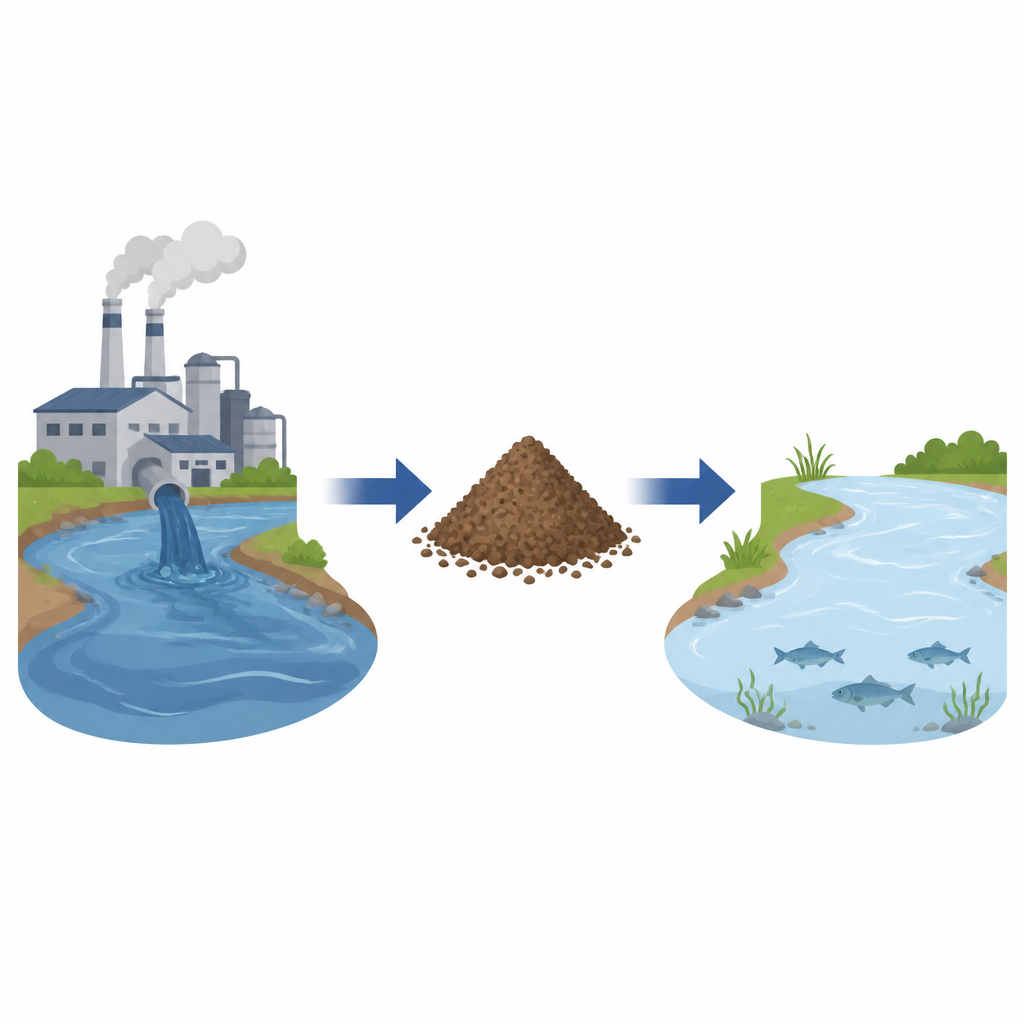
Colorful clothes and fabrics come with a hidden cost: bright, long lasting dyes that can linger in rivers and lakes for years. One of these dyes, methylene blue, is widely used and can harm fish, ecosystems, and even human health if it builds up in water. This study explores an unexpected ally against this pollution: palm kernel cake, a low value by product from palm oil mills, and asks whether this leftover plant material can cheaply and safely pull methylene blue out of wastewater.
Why dyed water is a growing problem
Textile factories use large amounts of synthetic dyes to color fabrics, then often discharge hot, strongly colored wastewater into nearby waterways. Even tiny amounts of these dyes can be seen by eye, and many are toxic or suspected to be cancer causing. Methylene blue in particular can affect breathing, blood chemistry, and skin and tissue health if people or animals are exposed to it. Conventional cleanup methods such as advanced oxidation or commercial activated carbon can work well, but they are often expensive, energy intensive, and difficult to regenerate, which limits their use in regions that most need better water treatment.
A simple use for an overlooked waste material
Palm kernel cake is produced in large quantities when palm oil is extracted from seeds, especially in Southeast Asia. Much of it is used as low grade animal feed or discarded. In this work the researchers tested raw, unmodified palm kernel cake as an adsorbent, meaning a solid material that can grab and hold molecules from water. They ground, washed, and dried the material, then mixed measured amounts of it with methylene blue solutions of different dye concentrations, acidity levels, and temperatures. Without any chemical activation, the material removed up to 81 percent of the dye at a mildly alkaline pH of 8 within about 90 to 120 minutes, showing that a cheap agricultural residue can noticeably lighten polluted water.
How the dye sticks to the plant particles
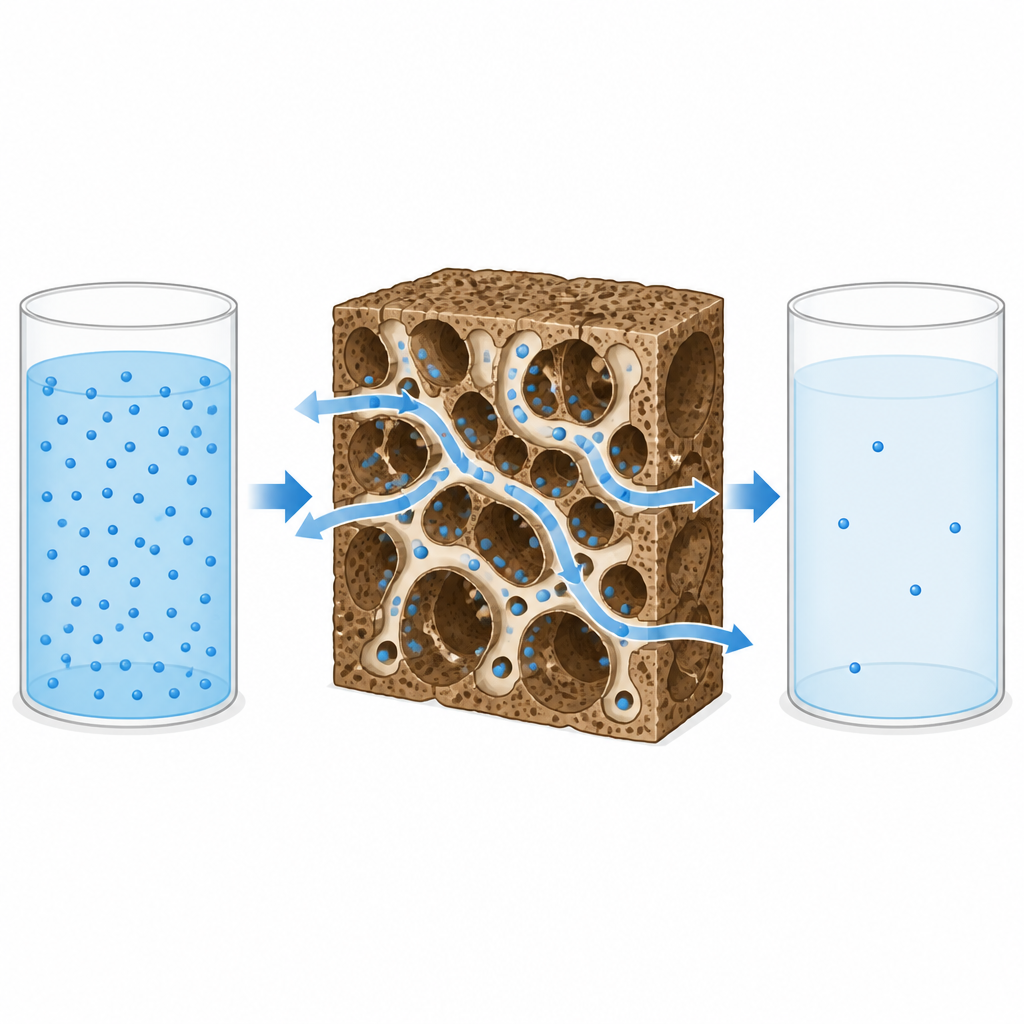
To understand what happens on the particle surfaces, the team combined several types of analysis. Microscopy images showed that palm kernel cake has a rough, porous structure that offers many internal nooks for dye molecules to occupy, and that this texture becomes coated with dye after treatment. Infrared spectroscopy revealed plant based chemical groups such as carboxyl and hydroxyl units that can carry negative charges in water. Because methylene blue carries a permanent positive charge, it is strongly attracted to these negative sites, allowing electrostatic forces to pull dye molecules onto the surface. Additional interactions, including hydrogen bonding and stacking between flat aromatic rings in the dye and in the plant material, help hold the dye in place as it diffuses into the pores.
Measuring capacity, speed, and energy
The researchers used widely accepted mathematical models to interpret how much dye the material can hold and how fast it works. An equation known as the Langmuir isotherm matched the data best and predicted a theoretical upper limit of about 151.5 milligrams of methylene blue per gram of palm kernel cake under ideal conditions, although the measured capacity in the tested solutions was lower, at 4.8 milligrams per gram. Time based measurements followed a so called pseudo second order pattern, which in this case points to dye molecules gradually diffusing into the interior of the particles rather than reacting chemically. Calculations of activation energy and other thermodynamic quantities showed that the process is spontaneous but mild and is dominated by physical forces instead of strong chemical bonding, which helps when the material needs to be cleaned and reused.
Built in reusability for practical use
For any filter material to be truly useful in a treatment plant, it must survive many use cycles. The team therefore repeatedly loaded the palm kernel cake with dye and then rinsed it with acid and base solutions to strip the dye away. After four full adsorption and desorption cycles, the material still retained about 96.5 percent of its original dye removal ability, indicating that its structure and surface chemistry remain largely intact. This resilience, together with the low cost and abundance of palm kernel cake and the lack of chemical pre treatment, points toward a practical route for turning an existing agricultural waste stream into a local tool for cleaning textile wastewater.
What this means for cleaner rivers
In everyday terms, the study shows that a cheap by product from palm oil production can serve as a reusable sponge for certain blue dye molecules in water. The dye clings to the plant particles through gentle electrical and molecular attractions as it seeps into their pores, and this attachment is strong enough to clear much of the color yet weak enough that the material can be washed and used again. While more work is needed to test higher dye levels, flowing systems, and real factory effluents, the results suggest that materials once treated as waste could help tackle visible and harmful dye pollution in a more sustainable and affordable way.
Citation: D.M., R.P., Haizul Akma, W.S., Krishnaiah, D. et al. Effective and sustainable methylene blue removal from wastewater using palm kernel cake. Sci Rep 16, 15264 (2026). https://doi.org/10.1038/s41598-026-45652-5
Keywords: methylene blue, palm kernel cake, textile wastewater, adsorption, agricultural waste